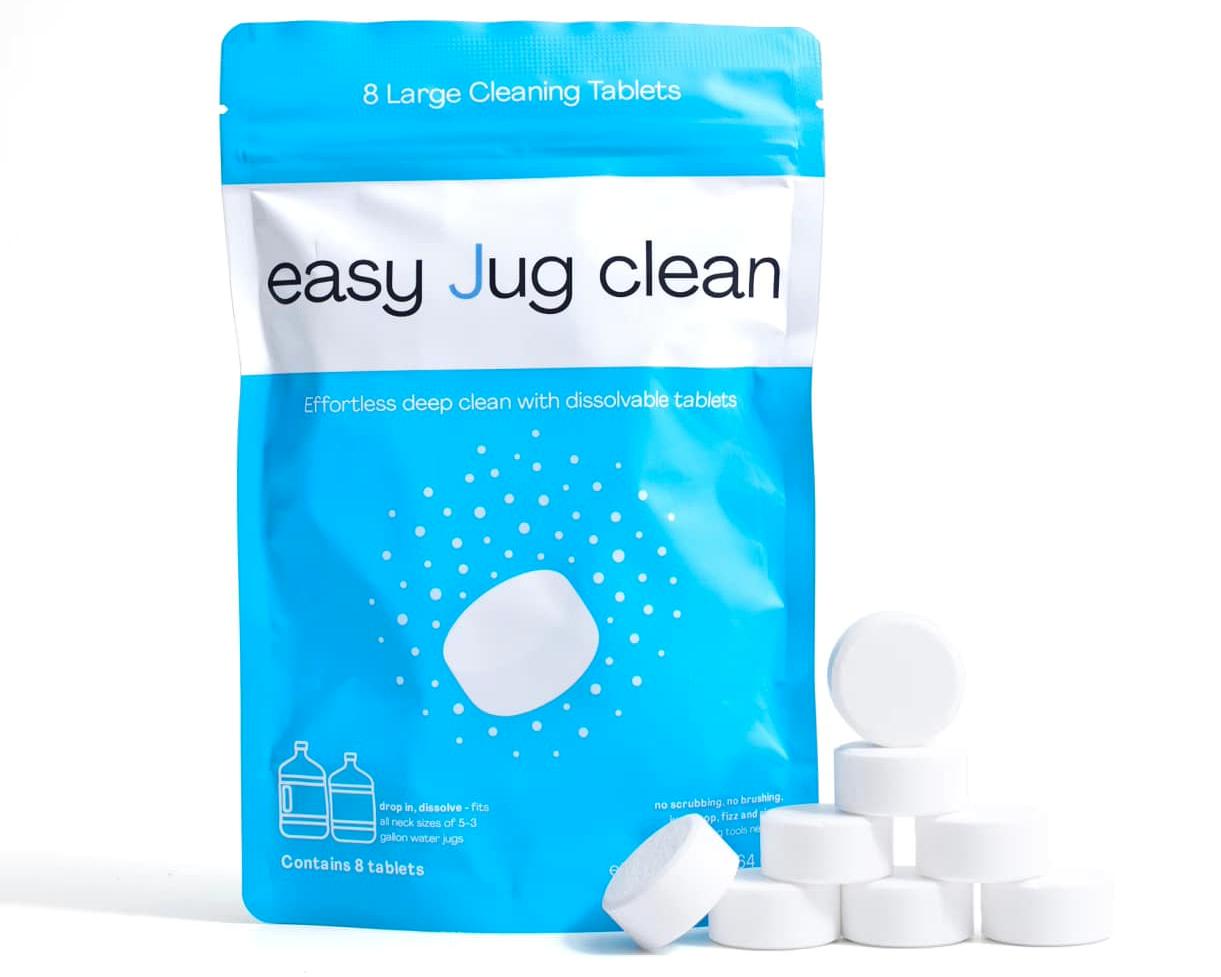
Easy Jug Clean vs. Generic Water Container Tablets: What's the Difference?
Reading time: ~6 minutes | Product Comparison Generic Tablets Easy Jug Clean
What Generic Tablets Typically Contain
The majority of generic effervescent water container tablets are built around a basic two-ingredient effervescent system: sodium bicarbonate (baking soda) and citric acid. The citric acid serves double duty as the effervescence driver and a mild descaling agent. Some add a basic surfactant — often a synthetic rather than plant-derived compound. Most stop there. The result is a tablet that fizzes, provides mild acid-based descaling for fresh deposits, and leaves the interior somewhat cleaner than plain water.
What generic tablets typically lack: an active oxidizing sanitizer (the component that actually kills bacteria and destroys biofilm), a dual-chelating system for thorough mineral removal, a plant-derived surfactant for safer residue profile, a surface conditioner to protect plastic, and the formulation calibration specific to 3–5 gallon containers.
Side-by-Side Ingredient and Function Comparison
| Function / Ingredient | Easy Jug Clean | Typical Generic Tablet |
|---|---|---|
| Active oxygen sanitizer | ✅ Sodium percarbonate — genuine pathogen reduction | ❌ Usually absent — fizz only |
| Biofilm EPS penetration | ✅ Active oxygen degrades EPS matrix | ❌ No oxidizing chemistry to penetrate matrix |
| Primary descaling agent | ✅ Sodium citrate (chelating) | ⚠️ Citric acid (acidulant — partial effect) |
| Secondary descaling agent | ✅ Sodium gluconate (chelating) | ❌ Not present — single mechanism only |
| Surfactant | ✅ Cocoyl glucoside — coconut-derived, biodegradable | ⚠️ Variable — often petroleum-derived synthetic |
| Surface conditioner | ✅ Glycerin — protects and maintains plastic | ❌ Not standard |
| Full ingredient disclosure | ✅ All 9 ingredients published and explained | ⚠️ Variable — often "proprietary blend" |
| Formulated for 3–5 gallon jugs | ✅ Specifically designed for this container size | ⚠️ Often general-purpose — sports bottles, various sizes |
| Breakdown products | ✅ Water, oxygen, sodium carbonate — all food-safe | ⚠️ Variable — depends on surfactant type used |
The Key Question: Does It Actually Sanitize?
The most important functional difference is the presence or absence of an active oxidizing sanitizing agent. A tablet that fizzes, applies citric acid, and leaves a mild deodorizing effect has cleaned the jug in the sense of disturbing and partially removing surface contamination. It has not sanitized the jug in any regulatory or microbiological sense — it has not achieved meaningful pathogen reduction, and it has not penetrated and destroyed biofilm EPS matrices.
For households using jug water as their primary drinking source — and particularly for households with infants, elderly members, or immunocompromised individuals — the difference between "cleaned" and "sanitized" is not semantic. It's the difference between reducing visible contamination and achieving actual microbial safety.
Watch Easy Jug Clean's active oxygen sanitize a 5 gallon water jug without scrubbing:


 Order now — get it by