Building a Weekly Water Jug Sanitizing Routine That Actually Sticks
Reading time: ~6 minutes | Habit Formation Weekly Routine Jug Cleaning System
Why Water Jug Cleaning Routines Break Down
Habit researchers identify three primary failure modes for hygiene routines: the task requires too much effort at the moment of execution, there is no reliable environmental trigger that initiates the behavior, and the invisible nature of the contamination provides no compelling feedback that reinforces the habit. All three apply perfectly to water jug cleaning with traditional methods — a brush and bucket requires setup, effort, and cleanup; there's no automatic trigger; and a jug that looks fine feels fine regardless of its actual contamination state.
The strategic answer is to reduce the effort barrier, install a reliable trigger, and create or borrow a visible feedback mechanism that reinforces the behavior after the fact.
The Six-Component Habit Architecture for Weekly Jug Cleaning
Anchor to an existing weekly event
Habit formation research consistently shows that new behaviors stick when anchored to existing, reliable behaviors — what researchers call "implementation intentions" or habit stacking. Choose a recurring weekly anchor: Sunday evening after dinner, Monday morning before breakfast, the day you take out the recycling. The anchor provides the trigger without requiring mental scheduling bandwidth.
Make the setup frictionless — tablets visible and accessible
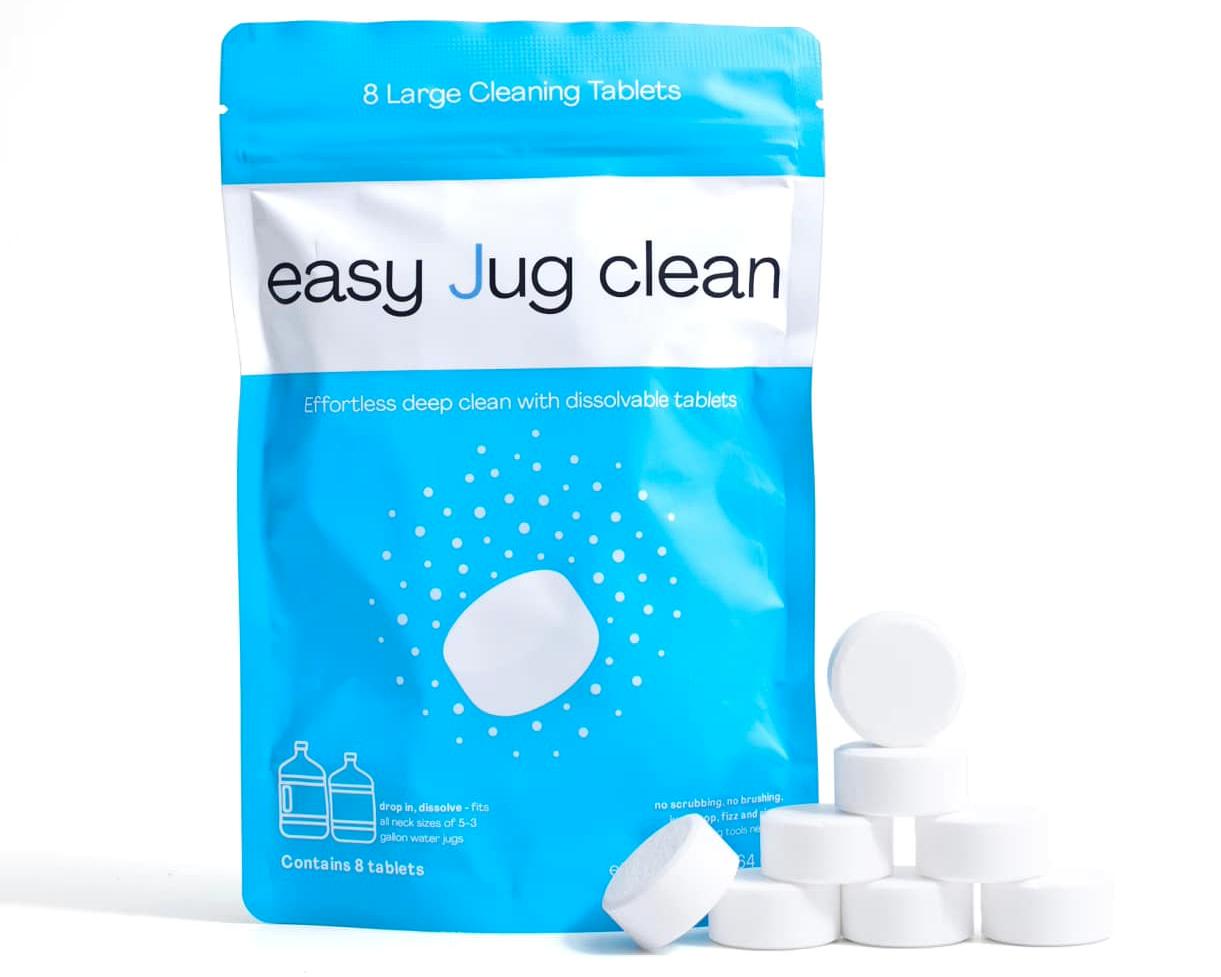
Keep your Easy Jug Clean tablets in the most prominent possible position near the jug or dispenser. The moment you see the tablets is a retrieval cue. If they're in a cabinet, behind other products, or stored away from where the jug lives, the friction of retrieval adds to the behavioral cost of the task. Out-of-sight often becomes out-of-routine.
Use the jug change as the natural trigger
Many households change the 5 gallon jug on roughly a weekly basis — empty jugs are the most natural cleaning trigger available. If you treat every empty jug as a mandatory cleaning event before the new jug goes on, the cleaning frequency aligns automatically with the natural jug replacement cycle. This requires no separate scheduling, no remembered date, and no willpower — the empty jug provides the cue.
Optimize for minimal active effort — the 5-minute window
The Easy Jug Clean treatment requires under 5 minutes of actual effort (filling halfway, dropping tablets, rinsing). The 20-minute soak is unattended time — you're not doing anything. Start the treatment during a meal, during morning coffee, or while watching something, and the "effort" is essentially nil. When the effort barrier approaches zero, routine compliance approaches 100%.
Set one phone reminder — just for the first six weeks
Neuroscience research suggests 66 days (approximately 10 weeks) for a new behavior to become automatic. A weekly phone reminder for the first 6–8 weeks provides external scaffolding while the internal habit forms. After those weeks, the anchor event and environmental cue (visible tablets) typically sustain the behavior without the reminder.
Create a visible success signal
Habits are reinforced by small rewards or evidence of progress. For jug cleaning, a simple system works: a small calendar or tracking sticker near the dispenser where you mark each completed cleaning. The visual record of consecutive weeks provides both the feedback the invisible contamination prevention can't offer and a mild social commitment device if others in the household can see it.
Watch Easy Jug Clean's active oxygen sanitize a 5 gallon water jug without scrubbing:


 Order now — get it by