Coconut-Derived vs. Petroleum-Derived Surfactants: Why It Matters in Your Water Jug Cleaner
Cocoyl GlucosideSLS vs APGsSurfactant Origin · Reading time: ~7 minutes
Two Very Different Manufacturing Pathways
⚙️ Petroleum-Derived Surfactants
Manufacturing origin: Derived from petroleum feedstocks — specifically, fatty alcohols produced by hydrogenation of fatty acid methyl esters from mineral oil fractions, or by direct synthesis from ethylene oligomerization.
Common types in cleaning products:
- Sodium lauryl sulfate (SLS) — harsh anionic surfactant; GHS skin irritant classification
- Sodium laureth sulfate (SLES) — SLS with ethylene oxide treatment; potential 1,4-dioxane contamination from ethoxylation process
- Linear alkylbenzene sulfonates (LAS) — industrial-grade anionic; common in cheap dish soaps
- Polysorbates — ethoxylated sorbitan esters; 1,4-dioxane contamination risk
The 1,4-dioxane concern: Ethoxylation — the industrial process used to produce SLES and polysorbates — generates 1,4-dioxane as a byproduct. 1,4-dioxane is a probable human carcinogen (EPA Group B2) that is not removable by rinsing (it doesn't bind to treated surfaces but can persist in residual liquid). Products containing ethoxylated surfactants can contain trace 1,4-dioxane.
🥥 Coconut-Derived Alkyl Glucoside Surfactants
Manufacturing origin: Produced by reacting coconut oil fatty alcohols (C8–C16 chain lengths) with glucose (from corn starch) under acid catalysis — an entirely plant-based synthesis pathway with no petroleum-derived feedstocks.
Common types:
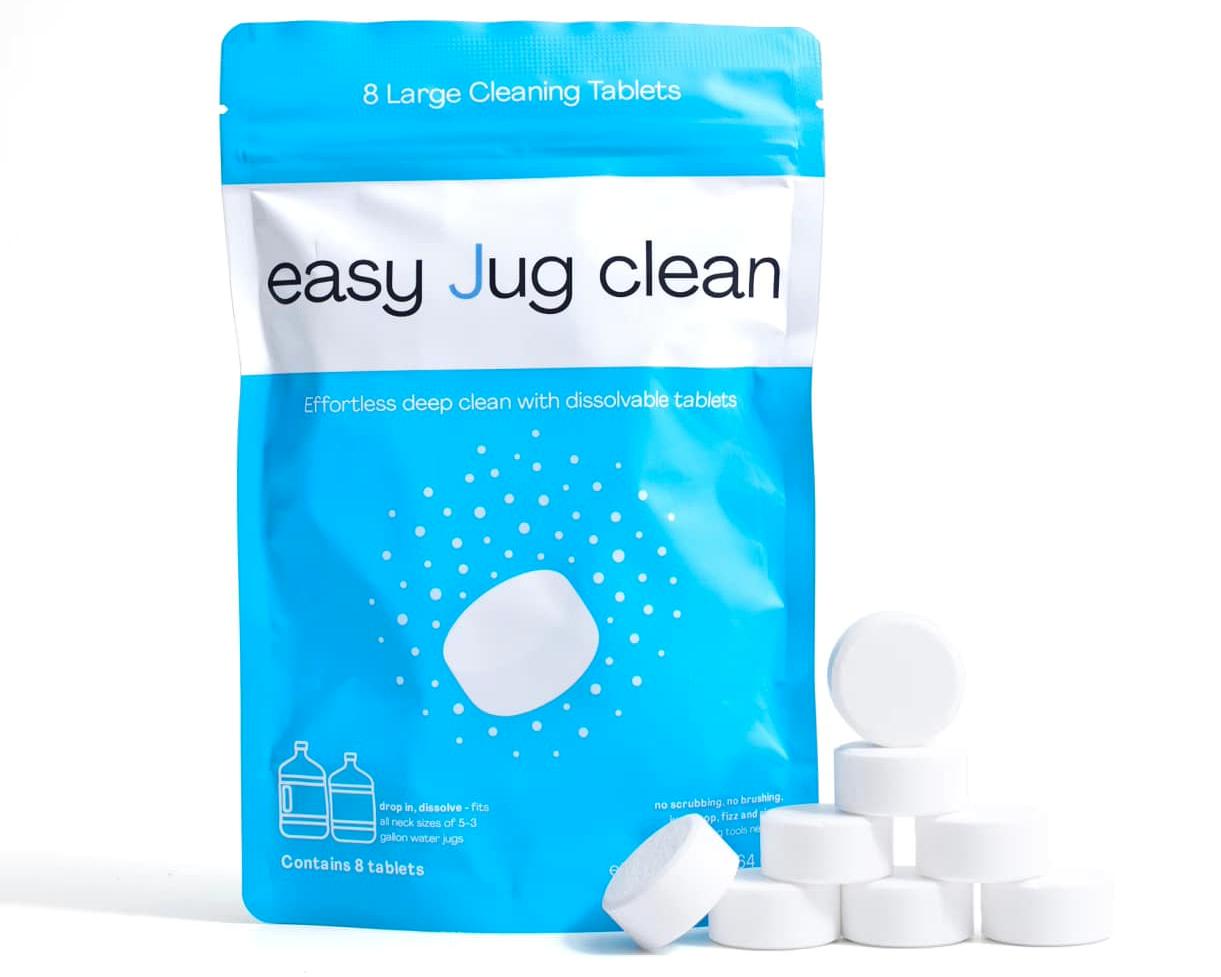
- Cocoyl glucoside — used in Easy Jug Clean; INCI-listed; widely used in infant care
- Caprylyl/capryl glucoside — shorter chain; used in ultra-mild formulations
- Decyl glucoside — medium chain; baby shampoos and sensitive skin care
- Lauryl glucoside — longer chain; slightly better degreasing performance
No ethoxylation, no dioxane: Alkyl glucoside synthesis does not use ethylene oxide at any stage — there is no pathway by which 1,4-dioxane can form. The absence of this process step eliminates the principal carcinogen contamination concern associated with ethoxylated surfactants.
Four Properties That Differentiate Them in a Drinking Water Application
Property 1: Mucous Membrane Compatibility
SLS is classified as a skin and mucous membrane irritant at concentrations above 0.5% — which is why it's associated with canker sores in toothpaste users and eye irritation in shampoo. Cocoyl glucoside has no mucous membrane irritancy classification — it's used in eye-safe formulations precisely because of this. For water that people consume (and that therefore contacts oral mucosa), a surfactant residue from cocoyl glucoside is meaningfully safer at trace contact than SLS or SLES residue.
Property 2: Biodegradation Pathway
Cocoyl glucoside biodegrades through hydrolysis of the glycosidic bond — splitting into fatty alcohol and glucose, both of which are substrates for common environmental bacteria. This is a clean, predictable degradation pathway with non-toxic endpoints. Petroleum-derived sulfonates biodegrade more slowly and through more complex pathways; linear alkylbenzene sulfonates (LAS) in particular have documented aquatic toxicity effects at low concentrations and are regulated in wastewater in many jurisdictions.
Property 3: Surface Adsorption to Plastic
Anionic surfactants (SLS, SLES, LAS) carry a negative charge on the hydrophilic head. Food-grade plastic surfaces carry slightly negative surface charge. The electrostatic interaction between like charges produces — counterintuitively — some adsorption through specific binding geometry interactions. Non-ionic alkyl glucosides have no charge and rely entirely on van der Waals forces for any surface interaction, resulting in substantially lower surface adsorption and more complete removal during gravity-rinse protocols.
Property 4: Safety Classification Across Regulatory Frameworks
Cocoyl glucoside holds EWG Skin Deep "1" (lowest hazard), Whole Foods Premium Body Care accepted status, EU Ecolabel approval, and is permitted in certified organic personal care formulations. SLS/SLES are not permitted in certified organic formulations and carry EWG scores of 3–4 (moderate hazard) for the ethoxylated variants. The regulatory gap between the two classes in the most stringent safety evaluation frameworks is significant.
See how Easy Jug Clean cleans a 5 gallon water jug in 20 minutes — no scrubbing required:
✅ Plant-Derived. Food-Safe. No Ethoxylation. No Compromise.
Q: How can I tell which type of surfactant is in a competing water jug cleaning product?
Look for the INCI (International Nomenclature of Cosmetic Ingredients) name on the label. Names ending in "-glucoside" (cocoyl glucoside, decyl glucoside, lauryl glucoside) are alkyl glucosides — the plant-derived class. Names ending in "-sulfate" or "-sulfonate" (sodium lauryl sulfate, sodium laureth sulfate, ammonium laureth sulfate) are petroleum-derived anionic surfactants. Names ending in "-polysorbate-" indicate ethoxylated compounds with potential 1,4-dioxane contamination risk. If the product label says "surfactant" without naming the compound, the manufacturer is not being transparent about this distinction.


 Order now — get it by