The Best Way to Clean a 5 Gallon Water Jug (And Why Most Methods Don't Cut It)
Category: Water Jug Hygiene | Best Method 5 Gallon Jug Comparison Guide
What "Best" Actually Means When Cleaning a 5 Gallon Jug
Before diving into the comparison, it's worth defining the criteria — because "best" is meaningless without a standard. The best way to clean a 5 gallon water jug should do all of the following:
- Kill bacteria and pathogens — including those hiding in biofilm on interior walls
- Remove mineral deposits and scale — the chalky residue left by hard water
- Reach 100% of interior surfaces — including the curved bottom and narrow neck
- Leave zero harmful residue — because this is a drinking water container
- Be practical and repeatable — a method you skip because it's too inconvenient isn't actually helping anyone
- Be safe for both plastic and glass jugs
With those six criteria in mind, let's put every popular method on trial.
Method-by-Method Verdict: Every Popular Jug Cleaning Approach Ranked
Method 1: The Long-Handled Jug Brush
The jug brush is the most instinctive choice — it looks like a purpose-built tool, so it must work, right? The problem is physics. A 5 gallon water jug has a narrow neck (typically 48mm), a deep cylindrical body, and a curved bottom. Even the longest jug brush struggles to reach the bottom while maintaining the pressure needed to scrub. And the curved walls? The brush head makes contact at a shallow angle that skims the surface rather than scrubbing it.
Worse, the bristles themselves create a problem: over time, repeated mechanical scrubbing micro-scratches the interior plastic . Those invisible grooves become permanent hiding spots for bacteria — making every subsequent clean less effective than the last. And the brush head? It stays damp between uses, quietly growing the very bacteria you were trying to remove.
| Criterion | Score | Notes |
|---|---|---|
| Kills bacteria | ⚠️ Partial | Depends on soap used; misses hidden spots |
| Removes mineral scale | ❌ No | Mechanical scrubbing can't dissolve deposits |
| Reaches all surfaces | ❌ No | Bottom corners and curves left untouched |
| No harmful residue | ✅ Yes | If rinsed thoroughly |
| Practical / repeatable | ❌ No | Physical effort discourages weekly use |
| Safe for plastic | ⚠️ Risk | Bristles cause micro-scratching over time |
Method 2: White Vinegar Soak
Vinegar is the internet's all-purpose cleaning hero, and it gets recommended constantly for water jug cleaning . The honest truth: white vinegar at household concentration (5% acetic acid) is a mild descaler and deodorizer — nothing more. It is not classified as a sanitizer. It does not kill the full range of bacteria that colonize reused water containers. Several studies have shown that common waterborne bacteria survive exposure to diluted acetic acid at the concentrations used in home cleaning.
On mineral deposits, it performs better — the acid does dissolve some light calcium buildup. But for heavy-duty scale or biofilm , a vinegar soak simply doesn't have the chemical muscle. And the lingering sour smell is notoriously difficult to fully rinse from a deep 5 gallon container. Many users report their water tasting faintly acidic for days after a vinegar clean.
| Criterion | Score | Notes |
|---|---|---|
| Kills bacteria | ❌ No | Not a registered sanitizer |
| Removes mineral scale | ⚠️ Light only | Works on fresh deposits; fails on heavy buildup |
| Reaches all surfaces | ✅ Yes | Liquid fills the jug completely |
| No harmful residue | ⚠️ Risk | Acetic acid residue affects water taste |
| Practical / repeatable | ⚠️ Partial | Easy to do, but the smell is a deterrent |
| Safe for plastic | ✅ Yes | Mild acid; no plastic degradation at household concentration |
Method 3: Diluted Bleach Solution
Bleach (sodium hypochlorite) is undeniably effective at killing bacteria — that's not in dispute. The problem is everything else that comes with it. Getting the dilution ratio right matters enormously: too weak and it won't sanitize; too strong and you risk chlorine residue that is extremely difficult to rinse from the deep interior of a 5 gallon jug. Most households don't measure carefully.
Chlorine bleach also degrades polycarbonate and HDPE plastic over repeated use, causing the material to become brittle and cloudy — and potentially releasing microplastics into your water over time. Bleach does nothing to dissolve mineral scale. The fumes during cleaning are an irritant, and accidental contact with clothing, countertops, or children is a real-world hazard.
| Criterion | Score | Notes |
|---|---|---|
| Kills bacteria | ✅ Yes | Effective when correctly diluted |
| Removes mineral scale | ❌ No | No descaling action |
| Reaches all surfaces | ✅ Yes | Liquid coverage is complete |
| No harmful residue | ⚠️ Risk | Chlorine residue very hard to fully rinse |
| Practical / repeatable | ❌ No | Fumes, safety risks, and precise measuring make it inconvenient |
| Safe for plastic | ❌ No | Degrades plastic with repeated use |
Method 4: Baking Soda Paste or Soak
Baking soda (sodium bicarbonate) is popular as a natural deodorizer and mild abrasive. For odor control, it works reasonably well — it neutralizes some acids that produce musty smells. But as a cleaning agent for a 5 gallon water jug, it has serious shortcomings. As a paste, it's nearly impossible to coat interior walls without a brush, so you're back to the same reach problem. As a soak, the concentration is too low to break down biofilm or kill bacteria with any reliability. And baking soda is alkaline — it does essentially nothing against the mineral scale left by hard water, which also requires an acidic or oxidizing agent to dissolve.
| Criterion | Score | Notes |
|---|---|---|
| Kills bacteria | ❌ No | Not a sanitizer |
| Removes mineral scale | ❌ No | Alkaline — wrong chemistry for mineral deposits |
| Reaches all surfaces | ⚠️ Partial | Only as a soak; paste application requires a brush |
| No harmful residue | ✅ Yes | Food-safe and easy to rinse |
| Practical / repeatable | ⚠️ Partial | Low effort, but low effectiveness |
| Safe for plastic | ✅ Yes | No plastic degradation |
Method 5: Dish Soap and Hot Water
Dish soap is designed for one specific job: lifting food grease off hard surfaces that you can physically scrub. A 5 gallon water jug is none of those things. Pouring soapy water into a narrow-neck jug and shaking it results in the majority of the water pooling at the bottom while the walls — where biofilm and mineral buildup actually live — barely make contact with the solution. The soap can't penetrate biofilm. It can't dissolve mineral scale. And residual surfactants are notoriously hard to rinse completely from a 5 gallon container, leaving a soapy aftertaste and potential gut irritants in your drinking water.
| Criterion | Score | Notes |
|---|---|---|
| Kills bacteria | ❌ No | Dish soap is a degreaser, not a disinfectant |
| Removes mineral scale | ❌ No | No chemical action on mineral deposits |
| Reaches all surfaces | ❌ No | Pools at bottom; walls mostly untouched |
| No harmful residue | ⚠️ Risk | Surfactant residue affects taste and may irritate stomach |
| Practical / repeatable | ⚠️ Partial | Minimal effort, but minimal results |
| Safe for plastic | ✅ Yes | No degradation |
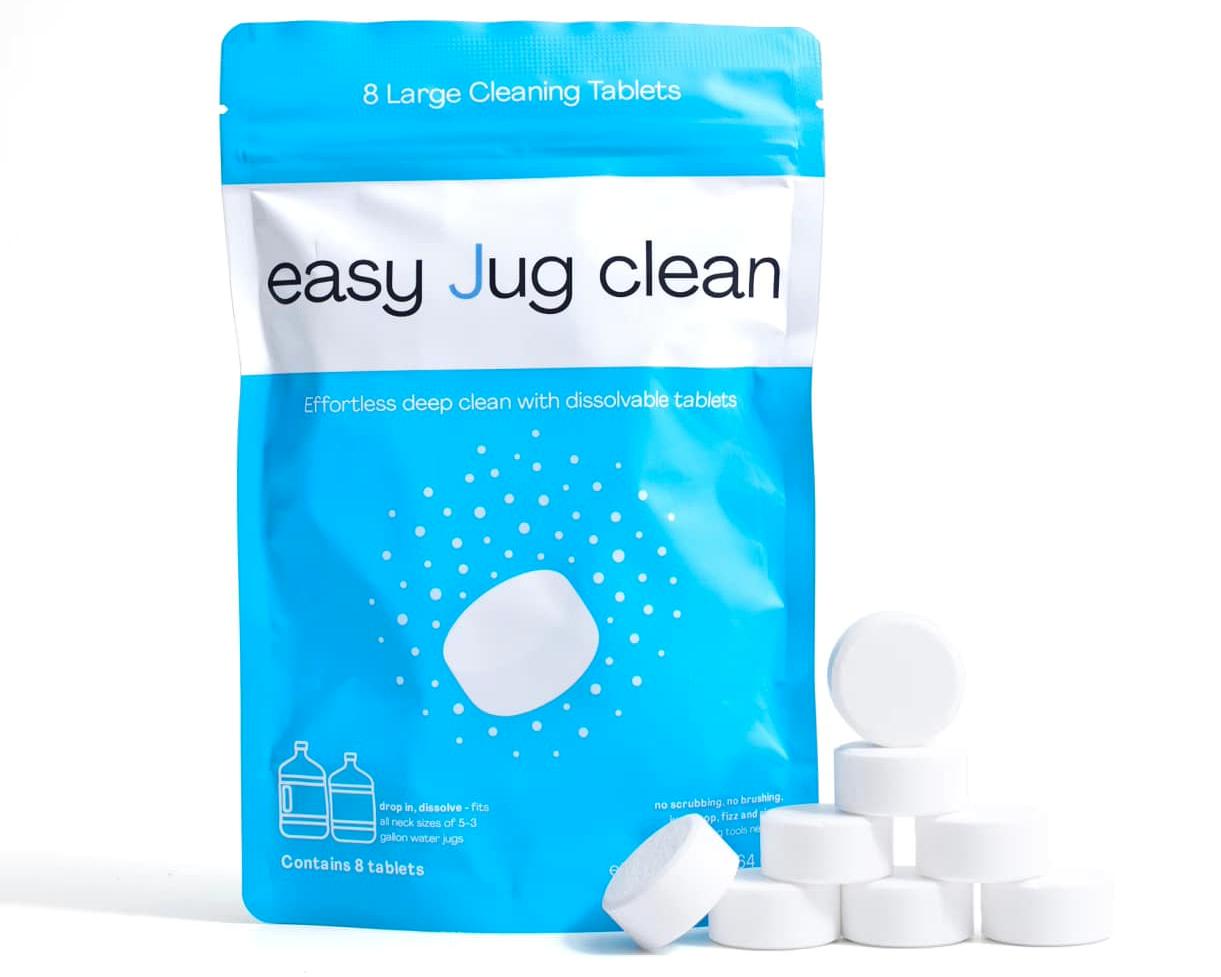
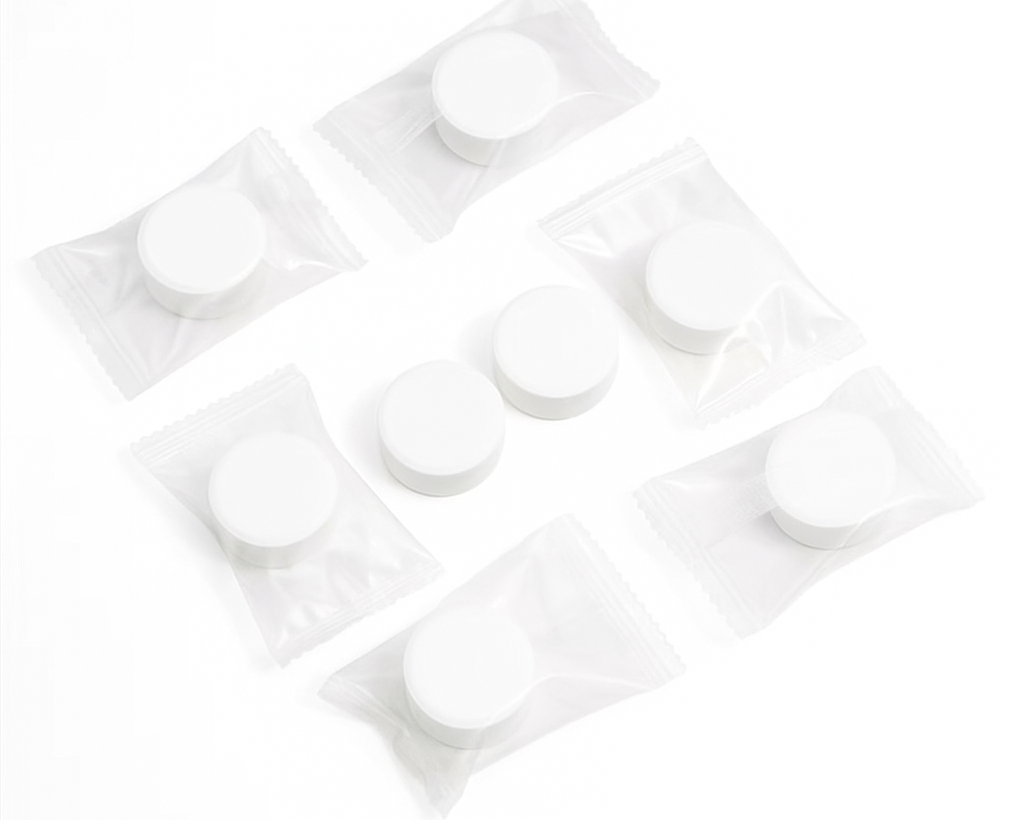
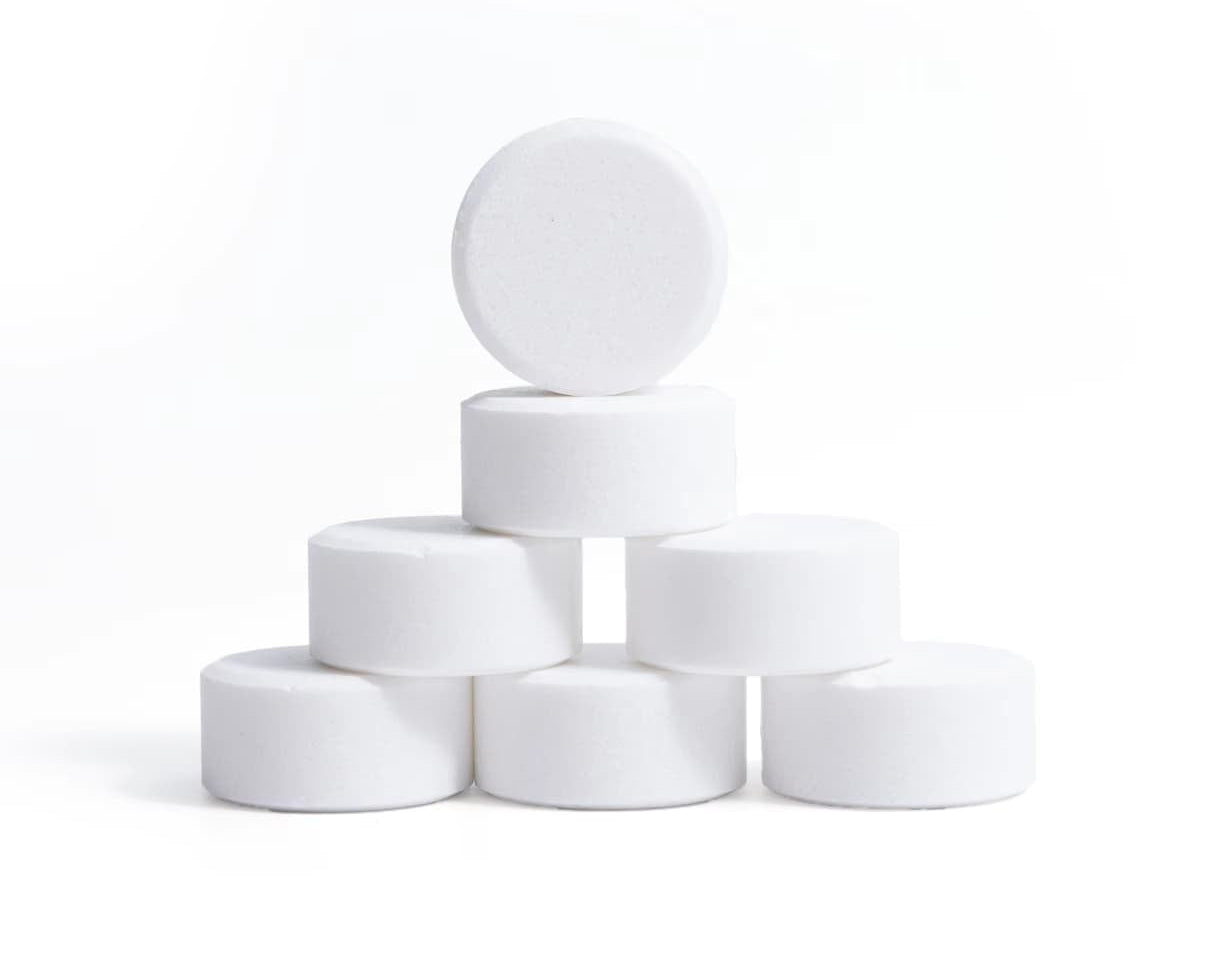
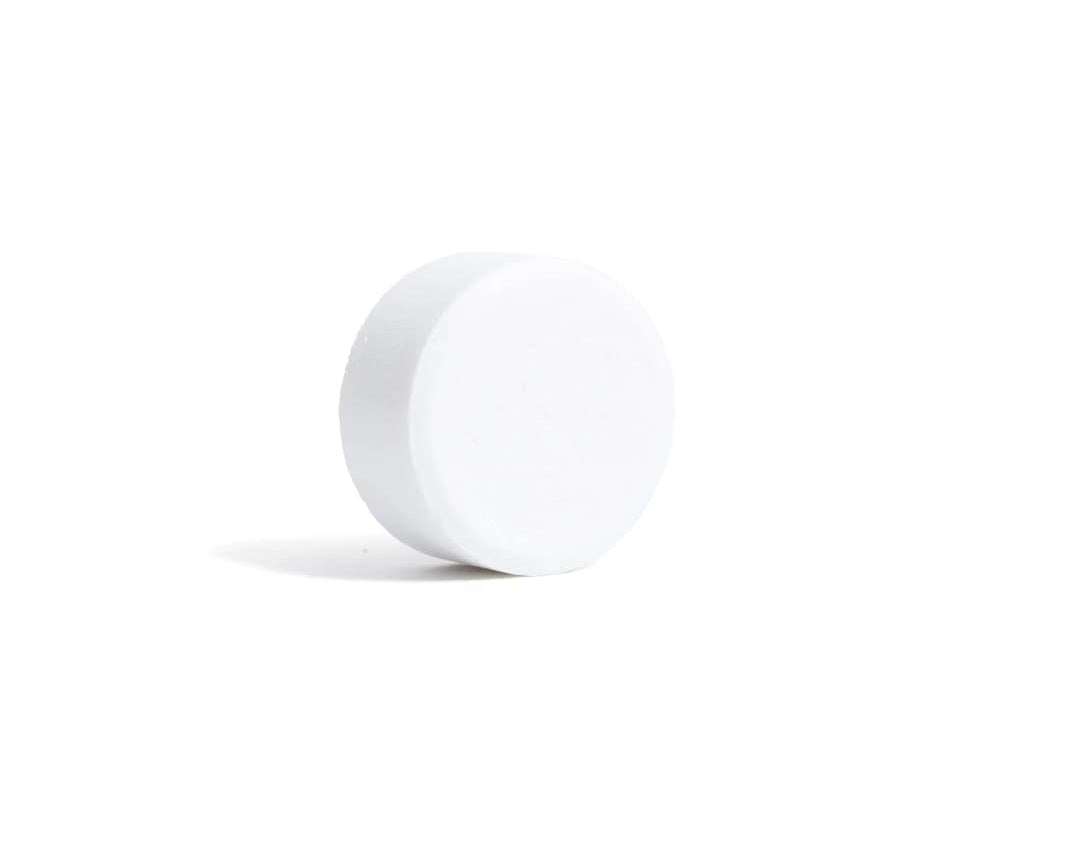
Method 6: Easy Jug Clean Effervescent Tablets
| Criterion | Score | Notes |
|---|---|---|
| Kills bacteria | ✅ Yes | Oxygen-powered sanitizing action throughout |
| Removes mineral scale | ✅ Yes | Targets calcium and hard water deposits directly |
| Reaches all surfaces | ✅ Yes | Fizzing bubbles coat every interior surface including corners |
| No harmful residue | ✅ Yes | Food-grade ingredients; safe after a simple rinse |
| Practical / repeatable | ✅ Yes | 2 tablets + 20 minutes — done. No tools, no mess |
| Safe for plastic & glass | ✅ Yes | Protects surface integrity; no degradation |
See how Easy Jug Clean cleans a 5 gallon water jug in 20 minutes — no scrubbing required:
🏆 The Best Way to Clean a 5 Gallon Water Jug Is Also the Easiest
Easy Jug Clean tablets do in 20 minutes what every other method struggles to do at all. 8 tablets per pack. One month of clean, safe water.
→ Try Easy Jug Clean Today — See Why 100+ Families Have Switched
The Science Behind Why Easy Jug Clean Outperforms Every DIY Method
Understanding why the tablet method works so well requires a quick look at what you're actually up against inside a reused water jug.
The Biofilm Problem
Biofilm is not just bacteria floating in water — it's a structured colony of microorganisms that has secreted a protective polymer matrix around itself, anchoring to the surface of your jug. This matrix is what makes biofilm resistant to simple soap-and-water cleaning. You need an oxidizing agent — something that chemically breaks down the protective matrix — to truly eliminate it. Easy Jug Clean's active oxygen release does exactly that.
The Mineral Scale Problem
If your tap water has any hardness at all (and most municipal water does), your jug is accumulating calcium and magnesium carbonate deposits with every refill. These deposits are alkaline by nature and require either an acid or an oxidizing agent to dissolve. Vinegar's acidity can touch light deposits, but Easy Jug Clean's formula combines acid action with oxygen release to tackle even stubborn, long-term buildup.
The Reach Problem
Any solution that relies on mechanical contact — brushes, cloths, sponges — will always be limited by the geometry of the jug. The narrow neck, curved bottom, and cylindrical walls create zones that are simply inaccessible without disassembling the container. The effervescent fizzing in Easy Jug Clean solves this by generating thousands of microbubbles that make contact with every square centimeter of the interior — no human hand required.
How to Use Easy Jug Clean for the Best Possible Results
How Easy Jug Clean Compares: The Full Scorecard
| Method | Kills Bacteria | Removes Scale | Full Coverage | Food-Safe | Effort | Overall |
|---|---|---|---|---|---|---|
| Jug Brush | ⚠️ | ❌ | ❌ | ✅ | 🔴 High |
|
| Vinegar Soak | ❌ | ⚠️ | ✅ | ⚠️ | 🟡 Med |
|
| Bleach Solution | ✅ | ❌ | ✅ | ⚠️ | 🔴 High |
|
| Baking Soda | ❌ | ❌ | ⚠️ | ✅ | 🟡 Med |
|
| Dish Soap | ❌ | ❌ | ❌ | ⚠️ | 🟡 Med |
|
| Easy Jug Clean | ✅ | ✅ | ✅ | ✅ | 🟢 Low |
|
Who Needs the Best Jug Cleaning Method Most
While everyone benefits from a clean water jug, certain households and settings face elevated risk and should prioritize both the frequency and quality of their cleaning routine:
- Families with young children or infants — immune systems that are still developing are more vulnerable to waterborne bacteria
- Households with elderly members — older adults face higher risk from the same pathogens that younger people brush off easily
- Office water dispensers — multiple users mean exponentially more contamination events per day
- Hot climates and warm rooms — bacteria multiply faster above 68°F (20°C), making weekly cleaning even more critical
- Homes on well water or with high-mineral tap water — scale builds up faster and requires a formula that can actively dissolve deposits
The Cost of the "Best" Method — Is It Worth It?
One concern people often raise about tablet-based cleaning is cost compared to DIY methods. Let's be honest about the numbers.
| Method | Cost Per Clean | Effective? | Real Value |
|---|---|---|---|
| Jug Brush (amortized) | ~$0.30 + effort | Partial | Low — cleaning is incomplete |
| White Vinegar | ~$0.20 | No | Near zero — not a sanitizer |
| Bleach Solution | ~$0.10 | Partially | Low — safety risks, no scale removal |
| Dish Soap | ~$0.10 | No | Near zero — wrong tool entirely |
| Easy Jug Clean | ~$0.62 | Yes — fully | High — complete clean every time |
At under 63 cents per full clean — with a result that actually meets all six criteria — Easy Jug Clean is the most cost-effective cleaning solution when you factor in what you're actually getting. Spending pennies less on a method that doesn't work isn't saving money — it's just drinking from a dirty jug.
The Best Cleaning Schedule for a 5 Gallon Water Jug
Even the best cleaning method only works if you use it consistently. Here's the optimal maintenance schedule most water safety experts align with:
- Every week: Full Easy Jug Clean tablet treatment — 2 tablets, 20–30 minute soak, rinse, dry
- Every month: Inspect the jug exterior and neck seal for cracks or discoloration; check the dispenser spigots
- Every 3 months: Deep-clean the water dispenser unit itself, not just the jug
- Immediately after illness: Clean the jug right away regardless of where you are in the weekly cycle
- At every refill: Wipe the neck and cap with a food-safe sanitizing wipe before placing the jug on the dispenser
Each pack of Easy Jug Clean gives you 8 tablets — exactly a month of weekly cleanings for one jug. Building it into your weekly routine takes less than a minute of actual hands-on time.
Frequently Asked Questions
Q: What is the single best method for cleaning a 5 gallon water jug?
Effervescent cleaning tablets — specifically Easy Jug Clean — are the most effective, safest, and most convenient method available. They are the only approach that simultaneously kills bacteria, removes mineral scale, reaches 100% of interior surfaces, and leaves food-safe residue behind. No other single method achieves all of these at once.
Q: Can I combine methods — for example, vinegar and then bleach?
Mixing or combining cleaning methods without fully rinsing between applications is dangerous. Vinegar (acid) and bleach (base) combined produce chlorine gas — a toxic inhalant. There is no need to combine methods when using Easy Jug Clean, which handles the full spectrum of jug contamination in a single treatment.
Q: Is the Easy Jug Clean tablet method safe for a jug I use for baby formula water?
Yes. Easy Jug Clean is formulated with food-grade, plant-based ingredients. After the recommended rinse cycle, no active cleaning agents remain in the jug. It is safe for all potable water storage, including water used for infant formula preparation.
Q: How do I know when my jug is clean enough after using the tablets?
After rinsing, your jug should be visually clear (no cloudiness or spots), odor-free, and the rinse water should run clear. If you notice any residual odor after rinsing, a second rinse with fresh water will resolve it completely.
Q: Does Easy Jug Clean work on a 3 gallon jug too?
Yes. The tablets are designed for 3 to 5 gallon water jugs in both plastic and glass. For a 3 gallon jug, 2 tablets still provide effective cleaning — the effervescent action adjusts naturally to the volume of water present.
The Verdict: There Is One Best Method, and It's Not What You'd Guess
If you came to this article expecting to hear that the humble jug brush or a splash of vinegar would do the job, the evidence tells a different story. The best way to clean a 5 gallon water jug is the one that does all the things cleaning is supposed to do — kill bacteria, remove scale, reach every surface, and leave no harmful trace — while being practical enough to become a weekly habit.
Easy Jug Clean is the only method that checks every box. It's not a compromise or a "pretty good" solution — it's what jug cleaning should have looked like from the start.


 Order now — get it by