Food-Grade Sanitizing Chemistry: What's Safe for Drinking Water Containers
Reading time: ~7 minutes | Food-Grade Chemistry Sanitizer Safety Drinking Water Containers
How "Food-Grade" Sanitizer Safety Is Defined
A food-grade sanitizing agent must meet three criteria: its active ingredient must be recognized as safe for food-contact surface use (FDA or GRAS classification, or EPA food-contact registration), its residues at expected trace levels after rinsing must not create a health hazard when consumed incidentally in food or water, and its breakdown products must also be food-safe — because sanitizing agents transform chemically during and after use, and the breakdown products, not just the original agent, enter the food system.
Common Sanitizing Agents — Food-Grade Assessment
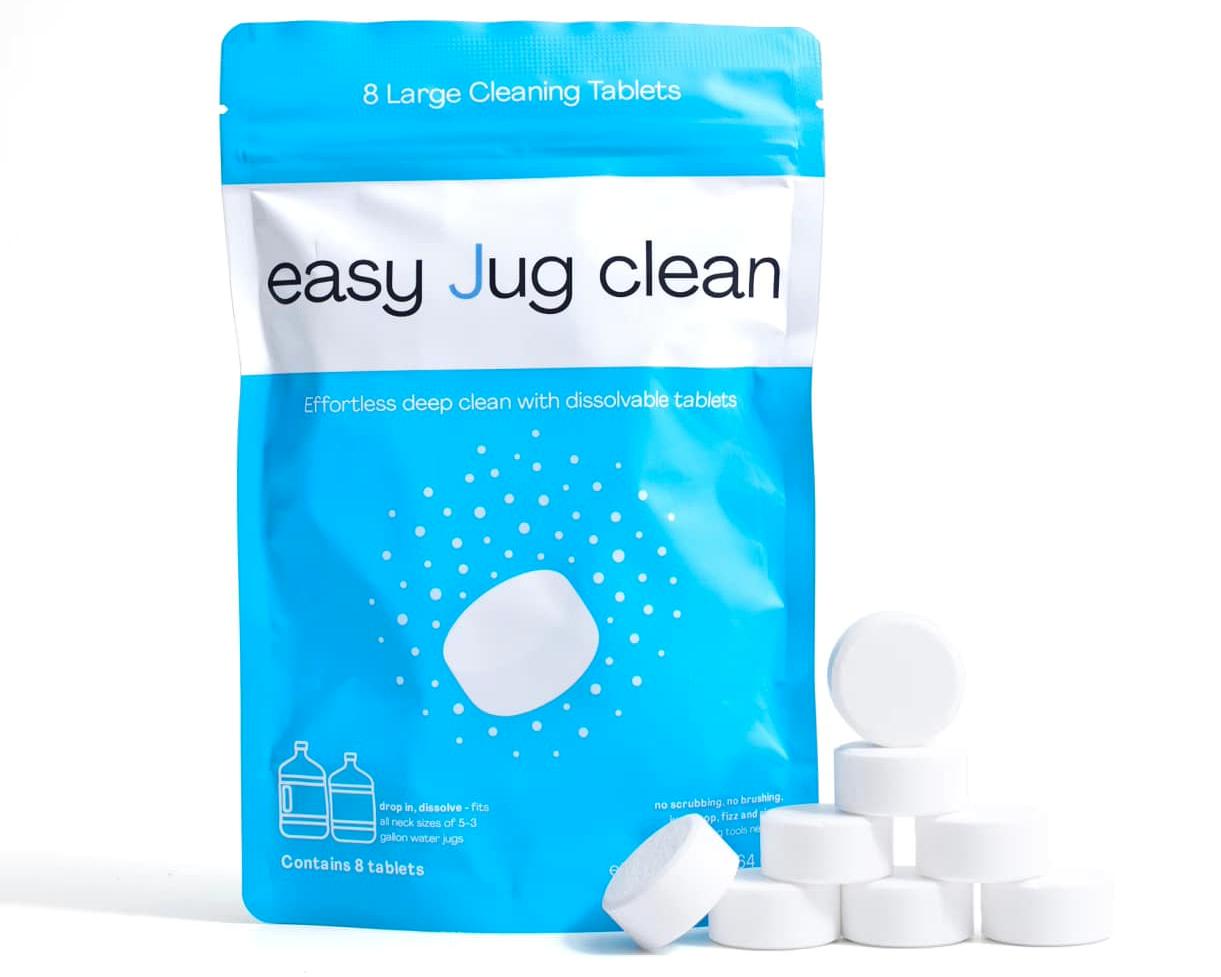
Sodium Percarbonate (Active Oxygen) — Used in Easy Jug Clean
✅ FOOD-GRADESodium percarbonate decomposes in water into sodium carbonate (washing soda — food-grade), water, and oxygen. No chlorine, no toxic byproducts. Used in certified-organic food processing and brewery sanitation for food-contact surfaces. Residues after rinsing: sodium carbonate (a mild alkali also used in food processing) and trace oxygen. FDA-recognized safe for food-contact applications. This is the cleanest residue profile of any available sanitizing chemistry for drinking water containers.
Sodium Hypochlorite (Household Bleach)
⚠️ CONDITIONALLY SAFE — REQUIRES THOROUGH RINSINGBleach at diluted concentrations is approved for food-contact surface sanitization — it's used in food service applications with mandated rinse protocols. The conditions matter: correct dilution (200ppm or below for food-contact surfaces) and complete rinsing afterward. In a 5 gallon narrow-neck jug, confirming complete rinsing is not possible visually, and higher concentrations bind to plastic in ways that require more than gravity-rinse removal. Residual chlorine in drinking water above permitted levels has documented health effects. Conditionally food-grade with application-specific risks in this container type.
Hydrogen Peroxide (3% Household Grade)
⚠️ CONDITIONALLY SAFE — CONCENTRATION DEPENDENT3% hydrogen peroxide is FDA-approved as a food additive and generally recognized as safe at food-contact surface use concentrations. It breaks down into water and oxygen. The conditional concern: higher concentrations (6%+) used for improved biofilm efficacy carry handling hazards and require more careful rinsing attention. At 3% with thorough rinsing, residue risk is minimal. The food-grade profile is good; the biofilm efficacy limitations at this concentration are the more significant practical issue.
Quaternary Ammonium Compounds (Quats)
❌ NOT APPROPRIATE FOR DRINKING WATER CONTAINERSQuats are highly effective sanitizers used widely in commercial food service. However, they are surface-active agents that bind tenaciously to surfaces and are very difficult to rinse completely from porous or complex surfaces. Quat residues on food-contact surfaces are a documented food safety concern — they are toxic to humans at elevated doses and are classified as potentially harmful above specific residue thresholds. Not appropriate for use inside 5 gallon water jugs that will hold drinking water.
Iodine-Based Sanitizers (Iodophors)
⚠️ CONDITIONALLY SAFE — STAINING AND TASTE CONCERNSIodophors are food-grade sanitizers used in brewing and dairy applications. At use concentrations they are food-safe, but they leave a characteristic iodine color (yellow/brown) and taste residue that makes them impractical for consumer drinking water containers. The staining and taste impact make this a poor fit for regular jug cleaning even though the chemistry is otherwise food-grade.
Watch Easy Jug Clean's active oxygen sanitize a 5 gallon water jug without scrubbing:


 Order now — get it by