Is Vinegar a Sanitizer? The Science vs. the Internet Myth
Reading time: ~6 minutes | Vinegar Sanitizer Myths Food Safety Science
What "Sanitize" Actually Means — The Regulatory Definition
Under EPA regulations, a product qualifies as a sanitizer if it achieves a 99.9% (3-log) reduction in target bacterial populations on non-food-contact surfaces or a 99.999% (5-log) reduction on food-contact surfaces within 30 seconds of application. This is not a subjective "feels clean" standard — it's a specific, tested, documented microbial reduction requirement. Products claiming to sanitize must be registered with the EPA and demonstrate these reduction rates in standardized testing.
Vinegar is not registered as an EPA sanitizer. This is not an oversight or a regulatory technicality — it reflects the actual antimicrobial performance of 5% acetic acid at standard concentrations and contact times.
The Research: What Vinegar Does and Doesn't Kill
Acetic acid does have some antimicrobial activity at certain concentrations and contact times. At higher concentrations (10–20%), it can kill some bacteria with extended contact. At 5% (household white vinegar), the picture is more complex and often misunderstood:
- Some bacteria are moderately affected at extended contact times — particularly acid-sensitive gram-positive species. This is the kernel of truth behind the vinegar sanitizer recommendation.
- Common waterborne pathogens show significant resistance to 5% acetic acid. E. coli, Salmonella, and Listeria — the bacteria most relevant to drinking water safety — show incomplete inactivation at household vinegar concentrations and practical contact times.
- Biofilm bacteria are substantially more resistant than planktonic bacteria to acetic acid at any concentration. The EPS matrix reduces acetic acid penetration, and bacteria within the matrix experience significantly lower effective concentrations than the bulk solution.
- Vinegar does not meet the 3-log or 5-log reduction standard for the pathogens relevant to drinking water containers at household concentrations and practical contact times.
Why the Myth Persists — The Two Grains of Truth
Vinegar's antimicrobial reputation comes from two legitimate observations that have been over-generalized:
1. Vinegar as a food preservative. Pickling uses vinegar to preserve food — it does inhibit bacterial growth and spoilage in this context. But preservation (inhibiting growth in an acidified food product over time) is different from sanitization (killing existing contamination on a surface within a specific timeframe). The principles overlap but the practical application and the performance requirements are not the same.
2. Vinegar kills some mold and some bacteria in some studies. Real, but incomplete. The specific mold species and bacterial species that vinegar affects effectively are not necessarily the species present in a water jug. Selecting studies that show positive results for vinegar without acknowledging the species range and concentration requirements creates the false impression of comprehensive antimicrobial efficacy.
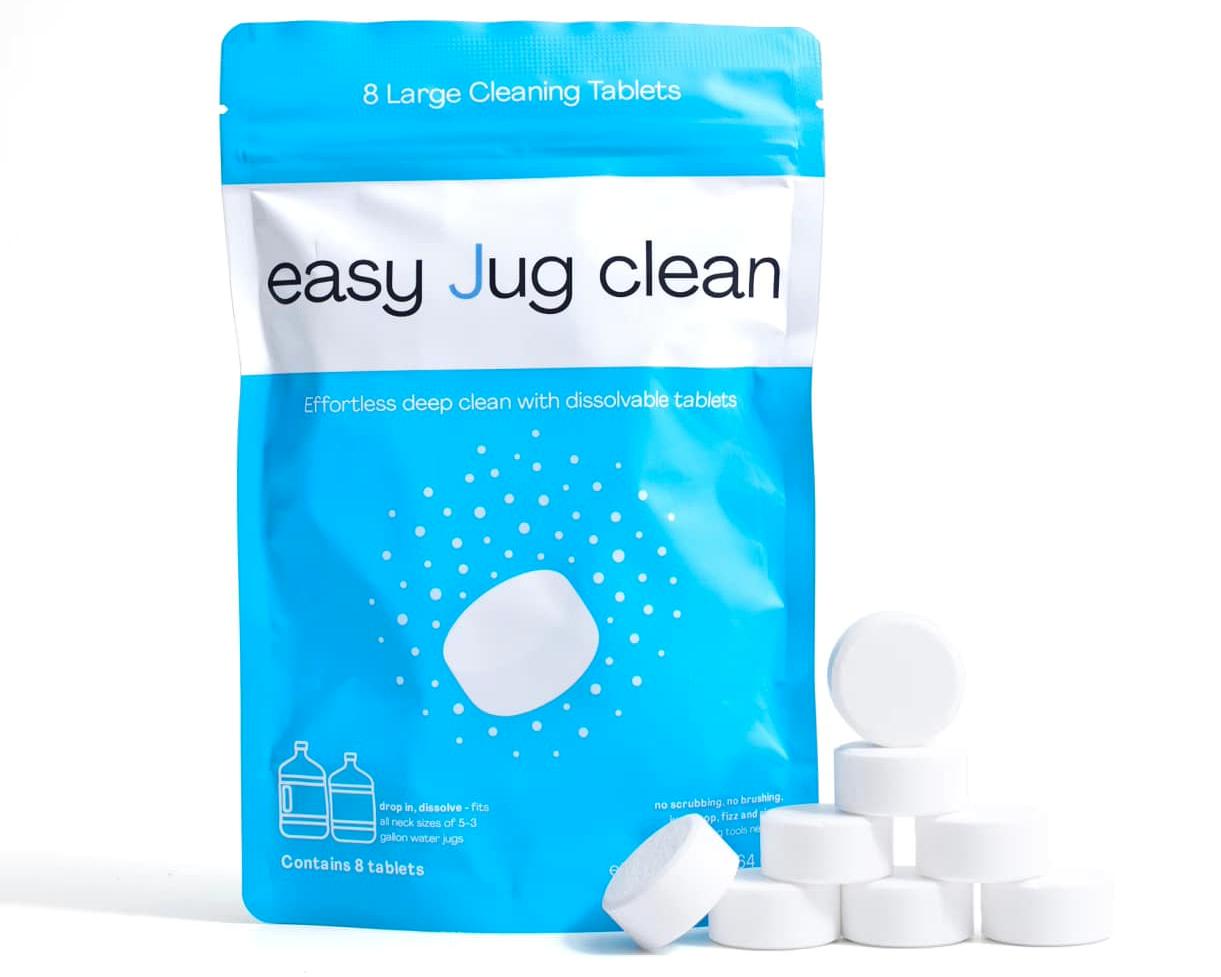
Watch Easy Jug Clean's active oxygen sanitize a 5 gallon water jug without scrubbing:


 Order now — get it by