How Temperature Affects Bacterial Growth in Your Water Jug
Reading time: ~6 minutes | Temperature Bacterial Growth Seasonal Cleaning
The Q10 Effect: Why Every 18°F (10°C) Temperature Increase Doubles Growth Rate
Biochemical reaction rates — including bacterial metabolism and reproduction — roughly double for every 10°C (18°F) increase in temperature. This "Q10 effect" applies to bacterial growth in water and on surfaces, creating an exponential relationship between storage temperature and contamination speed.
| Storage Temperature | Approximate Bacterial Doubling Time | Typical Days to Detectable Biofilm | Recommended Cleaning Interval |
|---|---|---|---|
| Below 40°F / 4°C (refrigerator) | Hours to days | 2–3 weeks+ | Up to 10 days |
| 55–65°F / 13–18°C (cool pantry) | 1–2 hours | 8–12 days | 7–8 days |
| 65–75°F / 18–24°C (standard room temp) | 30–60 minutes | 5–7 days | Every 7 days |
| 75–85°F / 24–29°C (warm kitchen/summer) | 20–30 minutes | 3–4 days | Every 4–5 days |
| Above 85°F / 29°C (hot climate/no AC) | 15–20 minutes | 2–3 days | Every 3 days |
Warm Rooms in Cold Climates: The Hidden Summer Risk
Even in cold-climate households, summer brings elevated temperatures that affect jug hygiene. A jug sitting on a kitchen counter in a home without air conditioning during a summer heat wave may be experiencing temperatures of 80–85°F (27–29°C) — conditions where bacterial populations can double every 20–25 minutes and detectable biofilm can establish in 3–4 days. Households that clean weekly in comfortable winter conditions without adjusting for summer kitchen temperatures are running a meaningful hygiene risk they may not be aware of.
Hot Climate Households: Building Temperature Into the Baseline Protocol
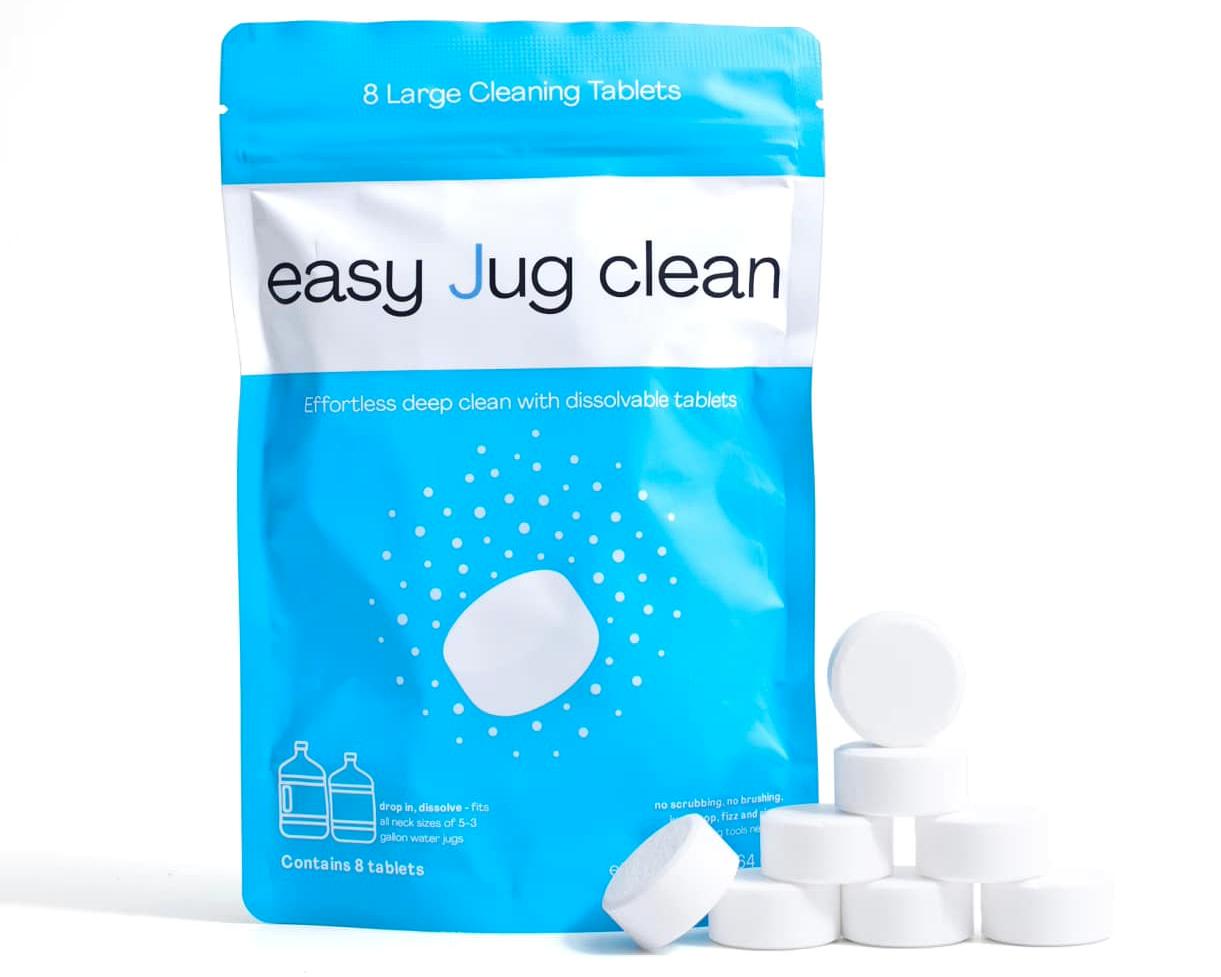
For year-round warm climate households — Texas, Florida, Arizona, the Gulf Coast, tropical regions — the 7-day cleaning interval is inadequate as a baseline standard. The recommended approach is to begin with a 4–5 day interval and adjust toward 3 days if the jug is stored in a room that regularly exceeds 80°F. With Easy Jug Clean, a 4-day schedule uses approximately 7–8 tablets per month — less than one extra pack per month above the standard supply.
Watch the right cleaning approach versus what a brush actually does to your jug:


 Order now — get it by