Reusable Water Bottle Hygiene at Home Gym Scale vs. Family Dispenser Scale
Reading time: ~5 minutes | Reusable Bottles Use Context Hygiene
Two Containers, Two Problems
The home-gym sports bottle is a single-user, daily-use, short-dwell container. One person fills it, drinks from it within hours, and rinses it before the next refill. The hygiene risk is concentrated in the contact zone (the spout, the lid, the mouthpiece) where the user's microbiome enters the container.
The family dispenser jug is a multi-user, multi-day-dwell, communal-source container. Several family members handle the dispenser interface. The water sits inside for days. The hygiene risk is distributed across the interior surface where bacteria establish biofilm during the dwell period, and the contact zone is the dispenser spigot rather than the jug itself.
These are categorically different microbiological problems with different containment strategies.
The Sports Bottle Hygiene Problem
The Contact-Zone Risk
Your sports bottle picks up your skin microbes, oral bacteria, and any environmental contamination from your gym routine — sweat, gym surface bacteria, equipment microbes. Almost all of this enters through the mouthpiece and lid. The interior body of the bottle stays relatively protected.
The Daily-Reset Hygiene Strategy
Effective sports bottle hygiene focuses on the contact zone, with a reset cycle that matches use frequency: rinse the mouthpiece after every use, wash the lid with soap and water daily, run the bottle through a dishwasher cycle weekly, soak with cleaner monthly. The strategy works because the daily reset prevents biofilm from establishing in the high-risk zones.
The Family Dispenser Hygiene Problem
The Distributed-Surface Risk
Family dispenser jugs accumulate hygiene risk across two separate areas: the jug interior (during dwell time) and the dispenser spigot (where multiple family members touch when drawing water). The risk is structural — built into the use cycle — and isn't addressable by attention to a contact zone.
The Periodic-Sanitization Strategy
Effective dispenser hygiene focuses on the interior surface, with a treatment cycle that matches dwell time: full sanitization of the jug at every refill, weekly cleaning of the spigot, monthly cleaning of the dispenser drip tray and reservoir. The complete dispenser sanitizing routine is fundamentally different from sports bottle hygiene.
The Routine Comparison
| Hygiene Action | Sports Bottle | Family Dispenser Jug |
|---|---|---|
| Daily attention | Rinse mouthpiece, refill | Wipe spigot, no jug intervention |
| Weekly attention | Lid + bottle wash with soap | Spigot sanitization wipe |
| Per-refill attention | Always (daily) | Critical — the only window for full clean |
| Active cleaning method | Dish soap, brush, dishwasher | Tablet treatment (biofilm + scale) |
| Drying approach | Inverted on rack — 4 hours | Inverted at angle — 12+ hours |
| Tools required | Standard kitchen tools | Purpose-built tablets |
| Failure mode if neglected | Smelly mouthpiece | Established biofilm, contamination |
The Hygiene Mistake That Bridges the Two
The most common hygiene failure in households that use both: applying sports bottle hygiene logic to the family dispenser. The user is conscientious about gym bottle cleaning, transfers that conscientiousness to the larger jug as "wipe the spigot," and concludes that the dispenser is well-maintained. The interior of the jug — where the actual hygiene problem lives — is never addressed.
Building a Two-Container Hygiene System
The integrated household water hygiene system covers both containers with appropriate methods:
- Sports bottles: Daily rinse, weekly soap wash, monthly tablet/dishwasher sanitization. Standard kitchen tools.
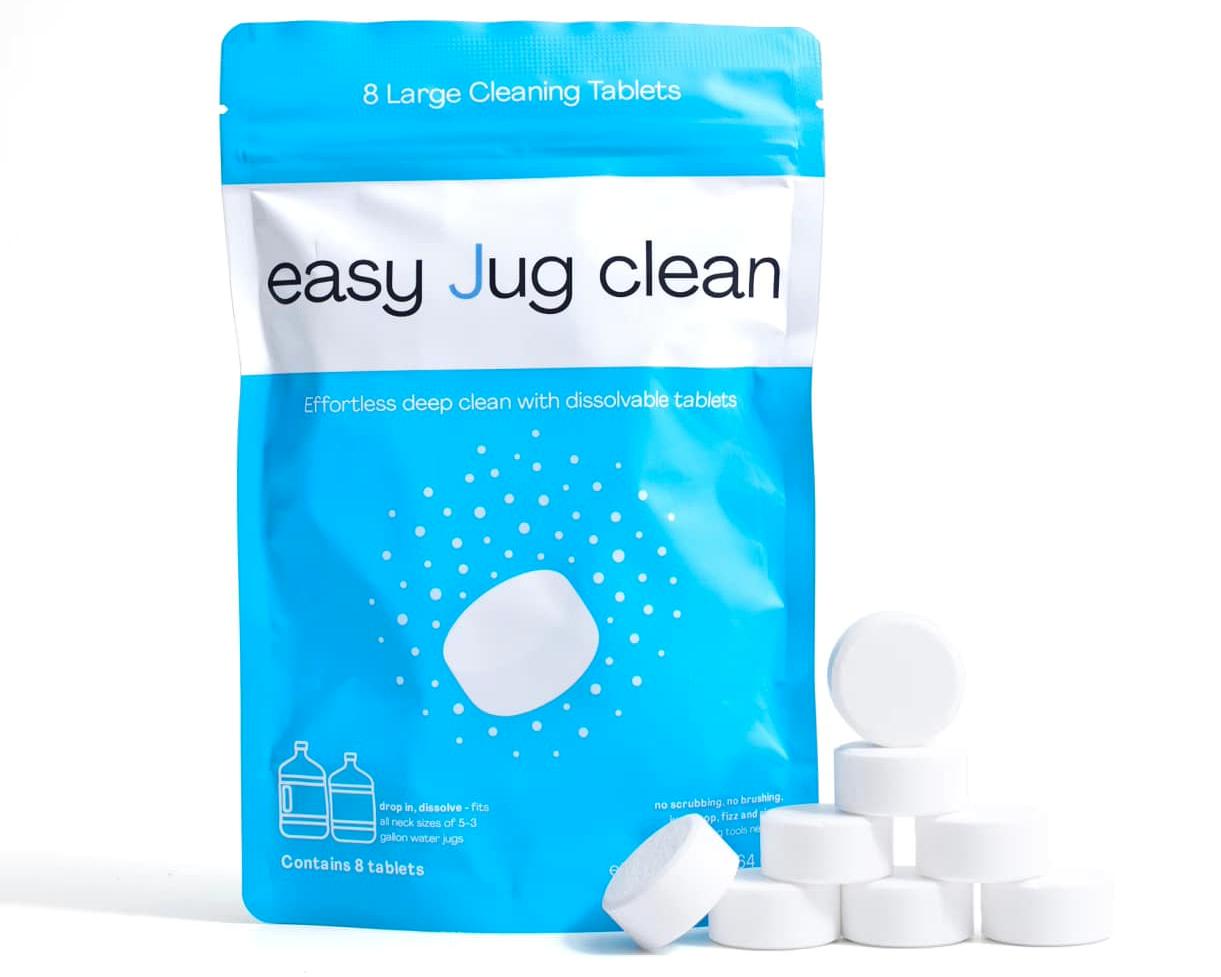
- Dispenser jug: Sanitization treatment at every refill or weekly, whichever comes first. Food-grade tablet treatment for biofilm and scale.
- Dispenser unit: Spigot wipe weekly, drip tray monthly, reservoir clean every 1-2 months.
✅ Complete the Household Water Hygiene System
Sports bottles get their routine. Dispenser jugs need theirs. Easy Jug Clean closes the gap — built for the cleaning problem dishwashers and brushes can't solve.
FAQ: Two-Container Hygiene
Q: My family uses both — should the cleaning frequency be the same?
No. Sports bottles get daily-frequency attention because they have daily-frequency contamination. Dispenser jugs get weekly-frequency attention because their dwell cycle is weekly. Match the cleaning frequency to the use cycle.
Q: Can I use the same cleaner for both containers?
Easy Jug Clean tablets work in any size container, but the dose is matched to large water bottles. For sports bottles, the appropriate tools are dish soap and a brush — using a large-jug tablet in a sports bottle is unnecessary overkill.
Q: Are the contamination types different in the two containers?
Yes. Sports bottles primarily accumulate human-source bacteria from saliva and skin contact. Dispenser jugs primarily accumulate environmental bacteria that establish biofilm during dwell time. Different bacterial profiles, different cleaning chemistries warranted.
The Bottom Line
Sports bottle hygiene and dispenser jug hygiene are different problems requiring different routines. Apply gym-bottle methods to the dispenser and you get a clean spigot and a contaminated interior. Apply both methods to their appropriate containers and the household water hygiene system actually works. The pillar guide walks through the dispenser side end to end.


 Order now — get it by