Sanitizing a Glass 5 Gallon Water Jug: What's Different and What Stays the Same
Reading time: ~5 minutes | Glass Jug Sanitization Glass vs Plastic
What Changes With Glass
Lower biofilm adhesion rate
- Non-porous glass surface provides fewer molecular anchor points for bacterial EPS matrix attachment
- Biofilm establishes somewhat more slowly on new glass than on plastic of equivalent age
- Weekly cleaning remains the correct interval — the rate difference is not large enough to safely extend intervals
Scale rinses more cleanly
- Glass is non-porous, so mineral deposits sit more purely on the surface rather than partially integrating with micro-fractures in the material
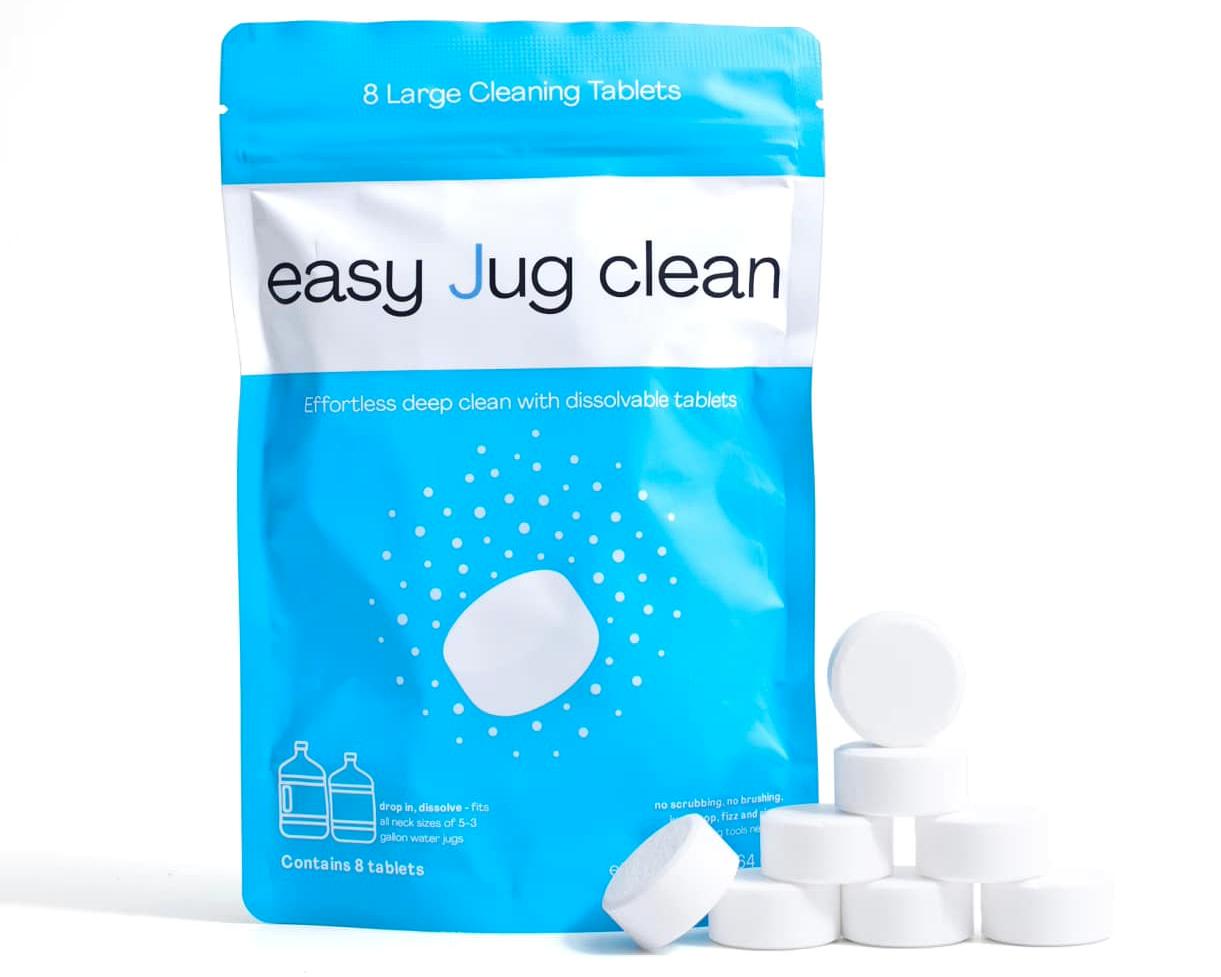
- Easy Jug Clean chelating treatment dissolves scale as effectively on glass as on plastic
- Post-treatment rinsing removes dissolved scale slightly more completely from smooth glass than from aged plastic
No plastic degradation concerns
- No polymer chain attack risk — glass is chemically inert to the oxidizing chemistry in Easy Jug Clean
- No BPA, BPS, or microplastic concerns regardless of cleaning chemistry
- The glycerin surface conditioner is still beneficial for maintaining glass surface energy
Temperature tolerance
- Food-grade glass tolerates higher temperatures than plastic — no degradation risk from warm water treatment
- Avoid sudden temperature changes (thermal shock) — don't use cold water immediately after a warm treatment on room-temperature glass
- Allow gradual temperature transition during treatment protocol
What Stays Exactly the Same
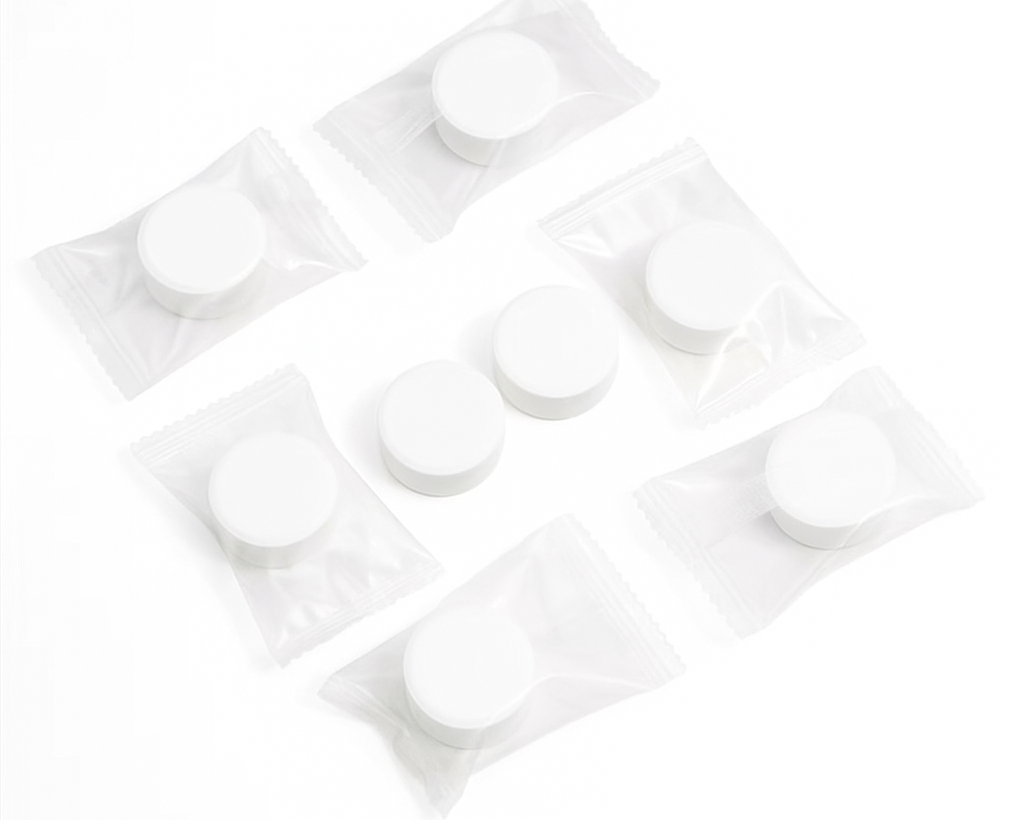
The biofilm formation mechanism is identical — bacteria attach, secrete EPS, form colonies, and disperse — regardless of substrate material. The same weekly cleaning interval applies. The same self-distributing liquid sanitizer requirement applies — the geometry of a glass 5 gallon jug is identical to a plastic one (same 48mm neck, same 3–5 gallon volume, same narrow-neck access constraints). Easy Jug Clean's 2-tablet, warm water, 20–30 minute soak protocol is unchanged for glass jugs. The dispenser also requires identical maintenance regardless of whether the jug is glass or plastic.
The only adjustment worth noting is the handling consideration: a full 5 gallon glass jug weighs approximately 53 pounds (48 lbs of water plus approximately 11 lbs of glass). This is a meaningful ergonomic and safety consideration — particularly when lifting the jug onto a top-loading dispenser — but has no impact on the sanitization protocol itself.
Watch Easy Jug Clean's active oxygen sanitize a 5 gallon water jug without scrubbing:


 Order now — get it by