Are Commercially Refilled Water Cooler Jugs Actually Clean When They Arrive
Reading time: ~6 minutes | Commercial Water Delivery Jug Cleanliness Water Safety
Are Commercially Refilled Water Cooler Jugs Actually Clean When They Arrive?
How Commercial Jug Refilling Actually Works
Water delivery companies operate with varying standards. Some use industrial-scale cleaning systems with pressure jets and sanitising chemicals. Others use manual washing with basic brushes and rinse cycles. The water itself — whether it's reverse osmosis, filtered, or mineral-added — goes through rigorous quality testing before it leaves the facility. But the jug is a separate matter.
Here's the typical commercial process:
1. Empty jug arrives at facility (may have sat in storage or transport for days)
2. Jug is rinsed, often with pressure jets
3. Interior is wiped or brushed
4. Final rinse with filtered water or a light sanitising solution
5. Jug is capped and loaded onto truck for delivery
That's the standard. But what actually happens depends on the facility's quality control, equipment maintenance, and how much time staff spend on each jug.
The Gap Between "Clean" and Actually Clean
Here's where the problem emerges: industrial cleaning standards for water delivery don't always match home-use safety standards.
Definition mismatch. A commercial facility might define "clean" as "water-worthy" — meaning the jug is safe enough to hold the water inside it. They're not necessarily focused on sanitising the entire interior or eliminating biofilm from the plastic walls. A surface rinse might be sufficient for their operational purposes, but it's not the same as deep cleaning.
Biofilm on old jugs. Many delivery companies use the same jugs for 5–10 years or longer. Over time, plastic develops microscopic pits where bacteria can lodge. Even aggressive pressure washing might not remove biofilm from these areas. An older jug may arrive "clean" by industry standards but still have dormant bacterial communities on its interior walls.
No sanitisation step. Most commercial operations don't include active sanitisation (like oxygen-based cleaning) after washing. They rely on a final fresh-water rinse. Fresh water stops new bacterial growth temporarily, but it doesn't eliminate existing biofilm.
What Happens Between Cleaning and Delivery
Even if a jug is perfectly clean when it leaves the facility, contamination can begin before it arrives at your door.
Storage time. Cleaned jugs might sit in warehouse storage for hours or even days before loading. Moisture inside a jug that isn't completely dry supports rapid bacterial growth. In warm warehouses (common in summer), bacteria can establish biofilm within 12–24 hours.
Transport conditions. Delivery trucks are rarely climate-controlled. Temperature fluctuations and humidity inside the vehicle create conditions where bacteria thrive. A jug that was clean 48 hours ago might have a significant bacterial population by delivery time.
Handling. Jugs are stacked, moved, and jostled. If the cap isn't perfectly sealed, air enters — bringing dust and microorganisms. Even tiny gaps let bacteria in.
The water inside is protected by the seal, so it remains clean. But the jug itself — the plastic that will be in contact with water when you use it — may have accumulated new contamination.
The Critical Distinction: Water ≠ Jug
This is the key confusion point. When water delivery companies test for safety, they're testing the water inside the jug. That testing is rigorous and generally reliable — the water is clean when it arrives.
But the jug walls are a separate issue. The water sits in contact with plastic for weeks. Any bacteria or biofilm on the interior walls can leach compounds into the water, affect taste and odour, and multiply over time. Some water delivery customers report noticing a taste or smell change as the jug sits — that's the plastic walls affecting the water, not the water itself becoming contaminated.
Cleaning a water jug properly addresses the plastic itself, not just the water. This is why proper sanitisation before use is the correct standard, regardless of the source of the jug.
Why You Should Sanitise Before Your First Use
Given all of this, the sensible approach is to sanitise delivered jugs before putting them into regular use. This isn't a criticism of water delivery companies — it's a recognition that the jug's cleanliness isn't guaranteed to the same standard as the water's purity.
What sanitisation does: It eliminates any biofilm on the interior walls, kills dormant bacteria, and ensures the jug won't affect the taste or odour of the clean water inside it. It resets the jug to a known clean state.
Especially important if:
- The jug is older (has been recycled through multiple refill cycles)
- You store it for more than a few days before use
- You notice any smell or off-taste in the first few days of use
- You're using the jug for office drinking water (higher contamination risk from multiple users)
Active oxygen sanitisation is the most effective method for eliminating biofilm without leaving chemical residue that could affect water taste.
The Role of Standards and Accountability
This isn't to say water delivery companies are negligent. Most are doing their best with equipment and processes designed for efficiency. But efficiency and deep cleaning aren't always aligned. A 5-gallon jug cleaned in 3 minutes looks clean and holds clean water. But a jug cleaned in 15 minutes with active sanitisation is on a different cleanliness level.
The water is regulated. The jug is not. That's a gap worth filling yourself.
The Complete Safety Picture
Safe water is both the water itself and the container it's stored in. Water delivery companies control one half of that equation. You control the other. By adding a simple sanitisation step when a new jug arrives, you close the gap and ensure the entire system — water plus jug — meets your cleanliness standards.
This is especially important in office settings, where multiple people touch the cooler and the jug each day. Understanding what's in your cleaner and how it works helps you make informed decisions about your water safety.
Don't Guess About Your Jug's Cleanliness
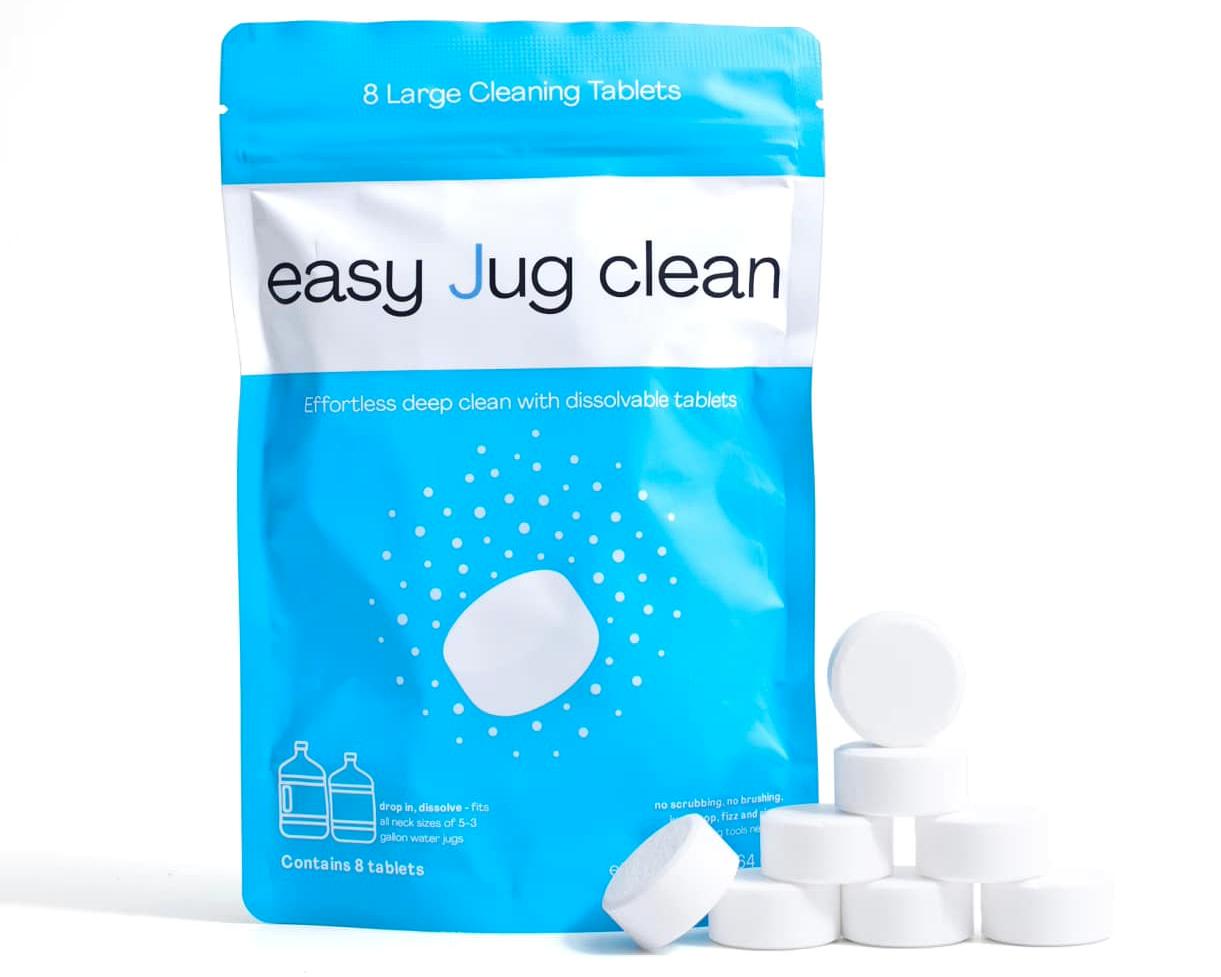
Easy Jug Clean ensures every jug is sanitised and biofilm-free. Just for 8 tablets — use one when a new jug arrives, and again every 2–3 weeks for ongoing safety.
Shop Easy Jug Clean
Watch Easy Jug Clean sanitize a water cooler jug the way refill services can't:


 Order now — get it by