How to Clean a Water Cooler Jug: The Method That Actually Sanitizes (Not Just Rinses)
Category: Water Cooler Hygiene | Water Cooler Jug Office Water Safety Sanitizing Guide
Why Water Cooler Jugs Are the Most Overlooked Cleaning Problem in Any Office
The office water cooler is one of those fixtures that everyone uses and nobody owns. The receptionist doesn't clean it. Facilities management assumes someone else does it. The person who replaces the empty jug gives it a rinse because it "looks fine." And so the same jug — or a rotation of them — gets refilled and reinstalled week after week without ever being genuinely cleaned.
This is not just an aesthetic problem. It is a documented health risk. Water cooler jugs are warm, dark, moist environments — the ideal incubator for bacterial growth. Every person who approaches the cooler breathes near the open dispenser neck. Hands touch the spigot. Airborne particles settle on the dispenser platform. In a shared office environment, a single contaminated jug serves dozens of people daily, multiplying the exposure risk with every cup poured.
At home, the same blind spot exists — just with slower accumulation. Families who diligently filter their drinking water, take care over what they eat, and maintain high household hygiene standards are often completely unaware that the 5-gallon jug on their dispenser hasn't been properly sanitized since they bought it. The water is clean when it goes in. The jug is not.
What makes this worse is that biofilm can begin forming inside a water jug within 24–48 hours of first use. By two weeks, a neglected jug may have established colonies of multiple bacterial species protected by a polymer matrix that makes them dramatically more resistant to simple cleaning. By a month, the jug that looks clear from the outside may be harboring contamination levels that would fail any food-service inspection.
Rinsing vs. Sanitizing: The Critical Distinction Nobody Explains
Most people use the words "rinsing" and "cleaning" interchangeably when describing their water cooler jug routine. They are not the same thing — and understanding the difference is the single most important insight in this entire article.
Rinsing uses water to physically dislodge and carry away loose material. It works on surface-level debris that is not chemically bonded to the container — like sediment, loose organic matter, and water that is already pooled inside. Rinsing is genuinely useful as a pre-cleaning step, or for removing residue after a proper cleaning treatment.
What rinsing cannot do: penetrate and destroy biofilm, dissolve mineral scale, kill bacteria that are anchored to the container surface, or reach the curved bottom and shoulder of a jug where contamination concentrates. Rinsing moves the water. It does not move what has bonded to the walls.
Sanitizing is the application of a chemistry that actively destroys microorganisms and disrupts the structures they build to protect themselves. For a water cooler jug, this requires an active agent — something with oxidizing power, chelating ability, or antimicrobial chemistry — that is in sustained contact with the interior surfaces for long enough to do its work.
The Four Cleaning Methods People Use — and Why They All Fall Short
1. A Quick Rinse with Tap Water
2. Dish Soap and Hot Water
3. White Vinegar Soak
4. Diluted Bleach Solution
✅ There Is a Better Way — and It Doesn't Require Any of This
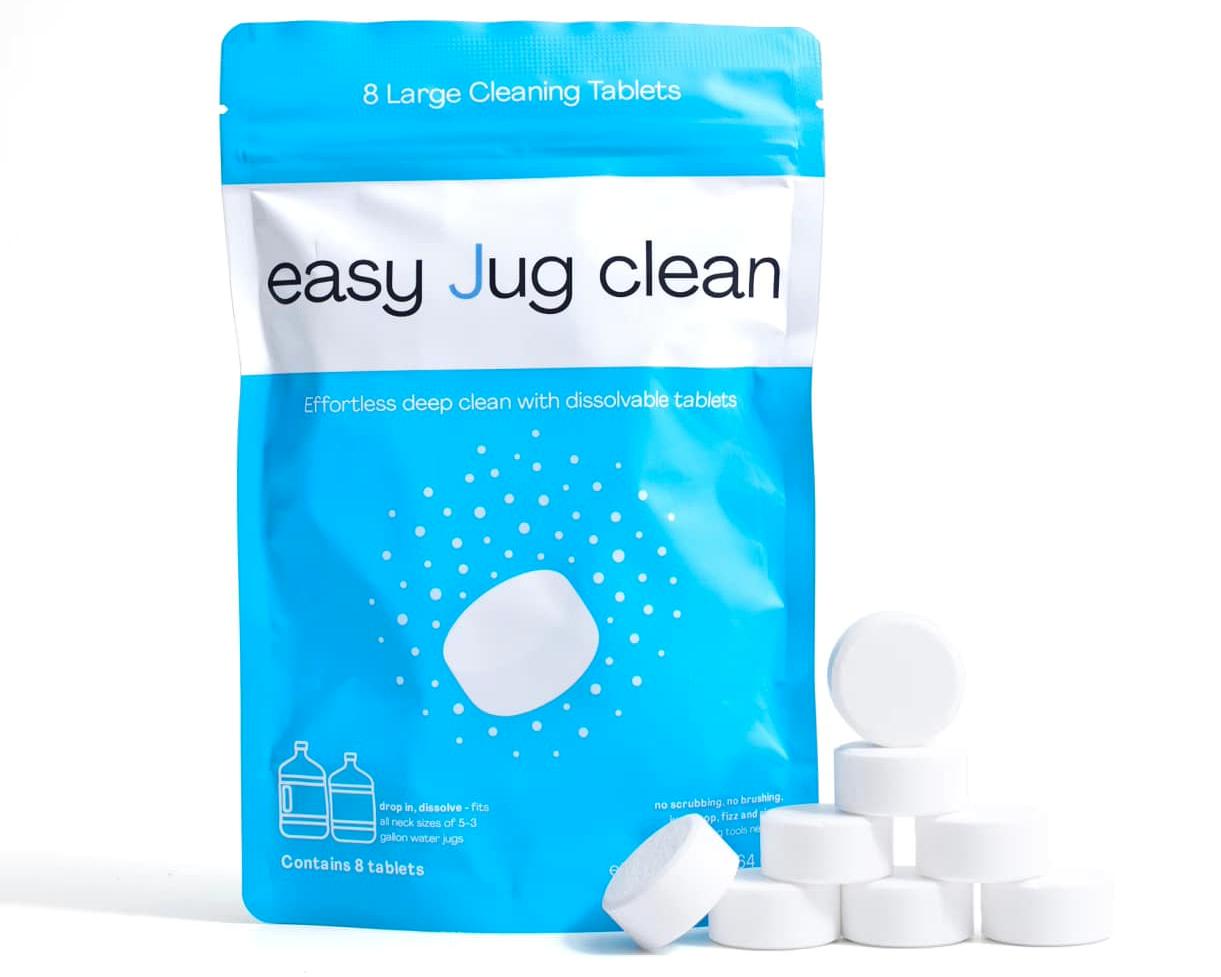
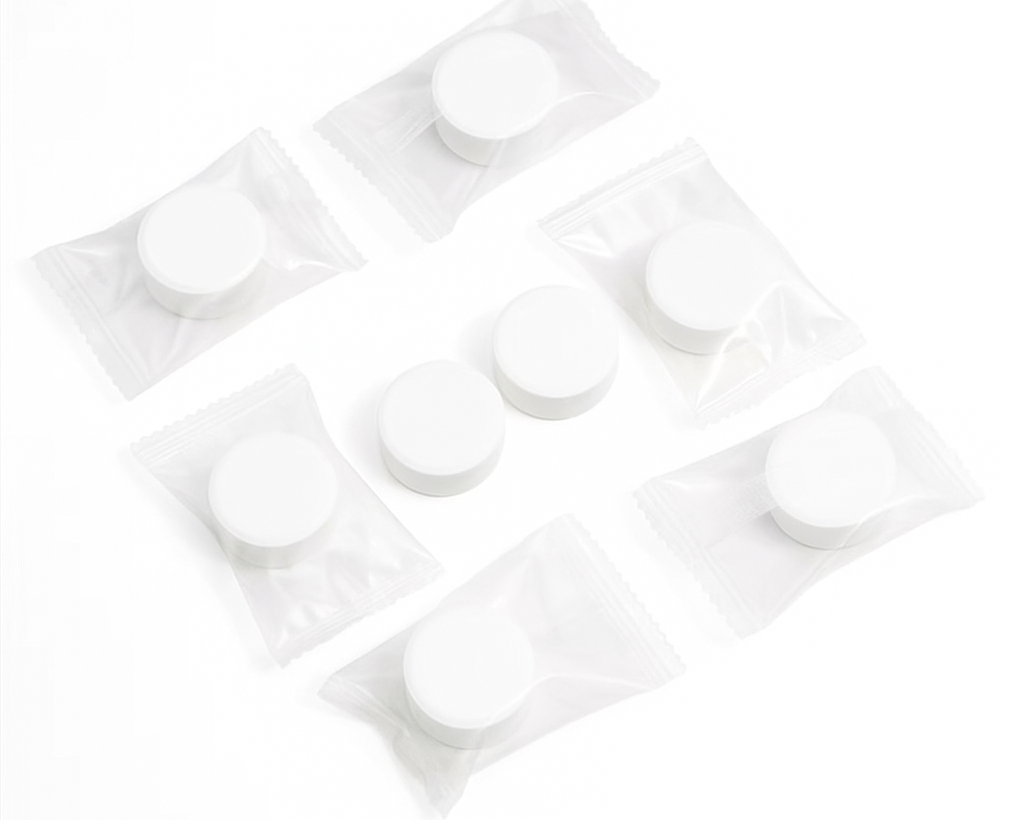
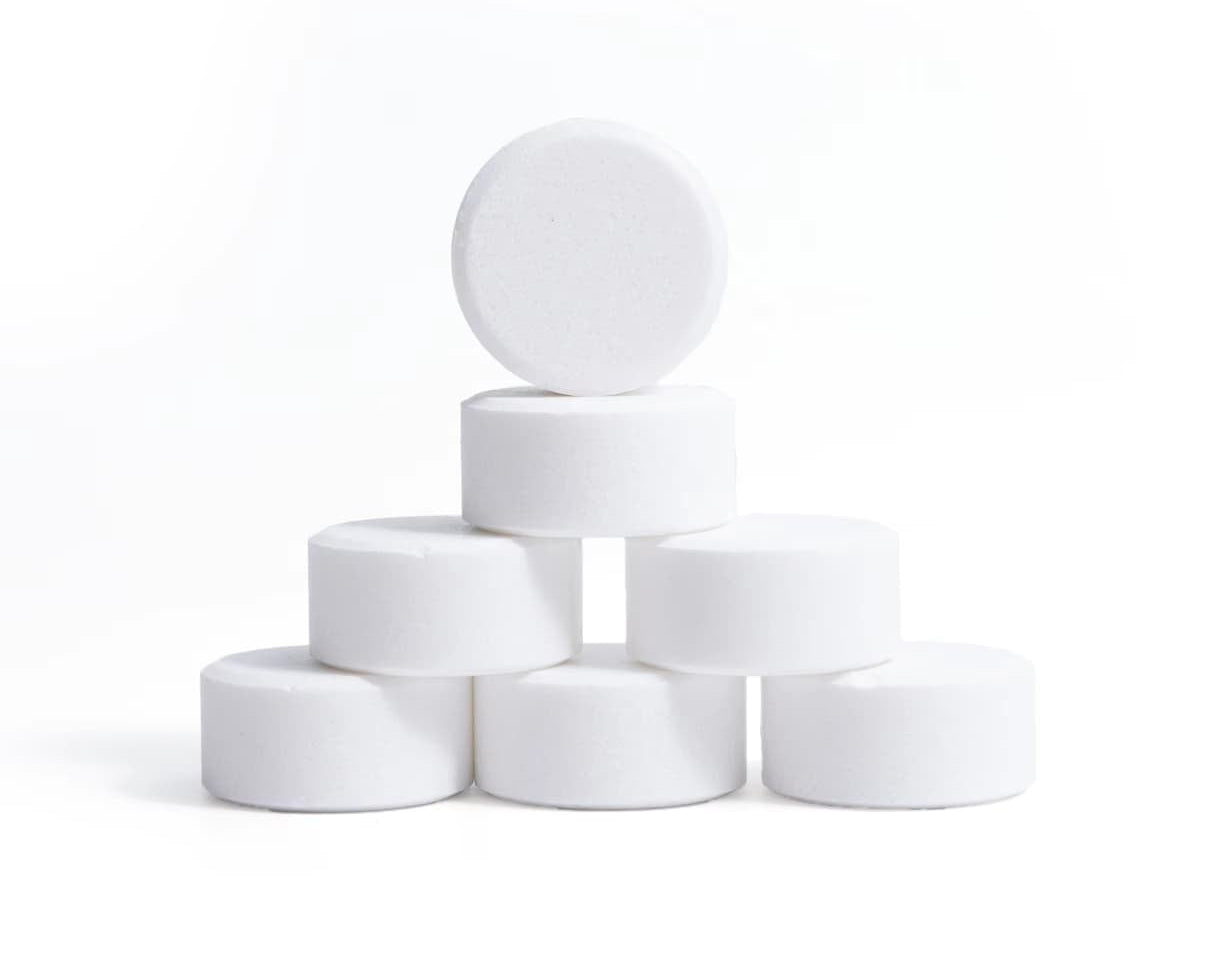
Easy Jug Clean was designed specifically for the inside of water cooler jugs. Drop 2 tablets into warm water, wait 20 minutes, rinse. Active oxygen destroys biofilm. Chelating agents dissolve mineral scale. Plant-based surfactants lift residue. No scrubbing. No harsh chemicals. No guesswork.
See how Easy Jug Clean sanitizes a water cooler jug in 20 minutes — no scrubbing required:
How to Actually Clean a Water Cooler Jug: The Right Method, Step by Step
This is the protocol that genuinely sanitizes your water cooler jug — rather than simply making it look cleaner. It works for both 3-gallon and 5-gallon jugs, plastic or glass, office or home.
The Office Water Cooler: A Shared Responsibility Problem
In a household, cleaning the water cooler jug is one person's decision. In an office, it belongs to everyone and therefore to no one. Office water cooler jugs are among the most contaminated reusable containers in any commercial building — not because office workers are less hygiene-conscious than home users, but because the social structure of a shared resource creates a systemic cleaning gap.
The person who empties the last of a jug and replaces it with a new one considers the job done. Nobody is responsible for cleaning the empty jug before it's returned to the supplier or the storage area. Nobody schedules a sanitizing treatment for the dispenser spigots. And because the cooler is always producing clear, cool water, there are rarely visible signals that anything is wrong — until there are.
Easy Jug Clean is ideally suited to office environments precisely because it removes every friction point from the cleaning process. There is no equipment to manage, no mixing ratios to calculate, no fumes, no special storage requirements. Drop two tablets. Wait. Rinse. Anyone on the team can do it in the time it takes to make a coffee.
How Often Should You Clean a Water Cooler Jug?
The answer depends on your usage context — but the starting baseline is every jug change, or at minimum every two weeks. The most common reason people don't clean their water cooler jug frequently enough is not indifference — it's that the previous cleaning method was so inconvenient that it became something to avoid.
| Usage Context | Recommended Frequency | Notes |
|---|---|---|
| Home — 1 to 2 people | Every 7–10 days | More frequent if jug sits in warm room or near sunlight |
| Home — family of 4+ | Every 5–7 days | After illness in household: clean immediately |
| Small office — under 10 people | Every 5–7 days | At minimum with every jug change |
| Shared office — 10 to 30 people | Every 3–5 days | Rotation schedule recommended; see office guide |
| High-traffic office — 30+ people | Every 2–3 days | Dedicated cleaning responsibility required |
| After long storage (30+ days) | Before first use | Always sanitize a stored jug before refilling |
Because temperature dramatically accelerates bacterial growth, these intervals should be shortened during summer months or any period when the cooler is near a heat source or in a room above 22°C (72°F). A jug that would be fine at weekly cleaning in winter may need cleaning every 4–5 days in a hot office in August.
3-Gallon vs. 5-Gallon Water Cooler Jugs: Same Cleaning Protocol, Adjusted Amounts
The distinction between a 3-gallon and a 5-gallon water cooler jug matters for how much water you fill during cleaning, but not for the fundamental approach. Both sizes share the same narrow neck, the same deep interior geometry, and the same biofilm accumulation patterns.
For a 3-gallon jug: use 2 Easy Jug Clean tablets in approximately 1–1.5 gallons of warm water — enough to fill the jug approximately halfway. The contact time remains 20–30 minutes. The same effervescent distribution mechanism reaches every surface regardless of jug volume.
For a 5-gallon jug: use 2 Easy Jug Clean tablets in approximately 2–2.5 gallons of warm water. Same protocol, scaled to size.
Signs Your Water Cooler Jug Needs an Immediate Sanitizing Treatment
Even between scheduled cleanings, certain signs indicate that a jug needs attention right away. Don't wait for the next scheduled clean if you notice any of the following — and understand that a jug showing these signs has been building contamination for some time:
- Off taste or smell in the water — any odour or flavour that wasn't there before is a biofilm or bacterial signature
- Visible clouding or whitish haze on jug walls — mineral scale has accumulated to visible levels
- A slimy or slippery feeling when you swirl the water — mature biofilm confirmed
- Dark spots or patches near the bottom or neck — potential mould growth
- Water that looks clear but has a flat or stale flavour — bacterial VOC production at sub-visible levels
- The jug has been in storage for more than 30 days — even with the cap on, residual moisture supports contamination over time
- Anyone who regularly drinks from the cooler has experienced unexplained GI symptoms — the cooler jug should be treated as a suspect and sanitized immediately
If you see multiple signs simultaneously, treat the jug twice — two back-to-back Easy Jug Clean treatments on consecutive days — to ensure thorough remediation of heavy long-term buildup.
The Complete Comparison: Methods for Cleaning a Water Cooler Jug
| Method | Removes Biofilm | Dissolves Mineral Scale | Safe Residue | Works in Narrow Neck | Effort |
|---|---|---|---|---|---|
| Rinse only | ❌ No | ❌ No | ✅ Yes | ✅ Yes | 🟢 Minimal |
| Dish soap + water | ❌ No | ❌ No | ⚠️ Residue risk | ⚠️ Partial | 🟡 Medium |
| Vinegar soak | ❌ No | ⚠️ Light only | ⚠️ Odour residue | ✅ Yes | 🟡 Medium |
| Diluted bleach | ✅ Yes | ❌ No | ⚠️ Requires heavy rinsing | ✅ Yes | 🔴 High + Risk |
| Jug brush + soap | ⚠️ Partial | ❌ Cannot dissolve | ⚠️ Residue risk | ❌ Reach limited | 🔴 High |
| Easy Jug Clean tablets | ✅ Yes — active oxygen | ✅ Yes — chelating agents | ✅ Food-grade safe | ✅ Complete coverage | 🟢 Drop & wait |
Frequently Asked Questions
Q: Is there a difference between a "water cooler jug" and a "5 gallon water jug"?
The terms are often used interchangeably. A water cooler jug typically refers to the polycarbonate or PET bottle — usually 3 to 5 gallons — that sits on or in a water cooler dispenser unit. The cleaning requirements, contamination risks, and recommended sanitizing methods are identical regardless of whether you call it a cooler jug, a dispenser bottle, or a 5-gallon water jug. Easy Jug Clean tablets work for all sizes from 3 to 5 gallons.
Q: Do I need to clean the water cooler dispenser unit as well as the jug?
Yes — ideally both. The jug and the dispenser form a connected system, and contamination can transfer in both directions. A sanitized jug placed on a contaminated dispenser will be re-contaminated quickly. At minimum, wipe the spigots and nozzle weekly with a food-safe sanitizing wipe, and clean the drip tray monthly. The jug should be sanitized with Easy Jug Clean at every jug change or on a weekly schedule — whichever comes first.
Q: How do I clean a water cooler jug that has been sitting empty for several months?
Any jug that has been stored for an extended period should be treated as potentially contaminated before refilling. Fill halfway with warm water, add 2 Easy Jug Clean tablets, and allow the full 30-minute soak. For jugs stored more than 3–6 months, two consecutive treatments on successive days are recommended. After the second treatment and rinse, inspect the interior visually before refilling — any persistent discoloration after two treatments is likely a permanent structural change to the plastic rather than removable residue.
Q: Can Easy Jug Clean be used in both top-loading and bottom-loading water cooler dispensers?
Yes. Easy Jug Clean tablets clean the jug itself — the polycarbonate or PET container that holds the water — regardless of whether your dispenser unit is top-loading or bottom-loading. The cleaning protocol (fill with warm water, drop 2 tablets, 20–30 minutes, rinse) is identical for both. For bottom-loading dispensers, the jug is removed from the cabinet for cleaning and returned once fully rinsed and dried.
Q: Our office orders pre-filled water cooler jugs from a delivery service. Do those need cleaning too?
Yes. Commercially supplied water cooler jugs are filled with clean water — but the jug itself may have been cleaned to varying standards between refill cycles at the supplier's facility. The water goes in clean. What happens after several days of use, handling by multiple people, and exposure to the office environment is a separate matter. Sanitizing the jug before each refill, or on a weekly schedule, is the appropriate standard regardless of water source.
The Bottom Line: Rinsing Is Not Cleaning. Sanitizing Is.
The word "clean" has been doing too much work for water cooler jugs for too long. A jug that has been rinsed is not clean. A jug that has been swirled with dish soap is not clean. A jug that has been soaked in vinegar is not sanitized. These methods produce clean-looking jugs — and that appearance of cleanliness is the problem, because it substitutes for the real thing without delivering it.
The method that actually sanitizes a water cooler jug is one that applies active chemistry to every surface for a sustained contact period — destroying biofilm at the matrix level, dissolving mineral deposits without abrading the plastic, and leaving behind nothing but clean water-ready plastic. Easy Jug Clean was designed specifically to do that, for exactly this container format, with the minimum possible friction.
Drop two tablets. Twenty minutes. Rinse. That is the complete method. It works for the 5-gallon jug on your home dispenser, the shared cooler in your break room, and every water cooler jug in between.


 Order now — get it by