How Scratched Plastic Water Jugs Become Bacteria Traps
Reading time: ~6 minutes | Micro-Scratches Bacterial Adhesion Plastic Damage
What Micro-Scratches Actually Look Like
Three Ways Scratches Make Bacteria Harder to Remove
1. Physical sheltering from cleaning solutions
Scratch valleys create hydrodynamic dead zones — areas of near-zero fluid velocity relative to the surrounding surface. Cleaning solutions flowing across a scratched surface don't penetrate into the scratch valleys with the same concentration as they reach open surfaces. Bacteria in scratch valleys receive diluted chemical exposure, reducing the effectiveness of any sanitizing treatment. This is quantifiable: biofilm in scratch recesses has been shown in research settings to survive chemical treatments at 3–5× the concentration needed to eliminate biofilm on smooth surfaces.
2. Reduced surface energy that weakens adhesion-breaking forces
Clean plastic has relatively uniform surface energy across its area. Scratches create areas of different surface chemistry — the exposed sub-surface polymer has different energy characteristics than the original surface layer. These energy variations create "sticky spots" where bacterial adhesion is thermodynamically more favorable. Cleaning solutions trying to break this adhesion encounter a higher energy barrier than they would on the original smooth surface.
3. Mineral scale preferentially deposits in scratch recesses
The nucleation energy required for calcium carbonate crystals to precipitate from solution is lower at surface irregularities than on smooth surfaces. Scratches become preferential mineral deposition sites — scale deposits fastest exactly where the surface is already compromised. Scale in scratch recesses then provides additional shelter for bacteria, creating a compounding protection structure that gets progressively harder to clean with every use cycle.
How Easy Jug Clean Addresses a Scratched Jug
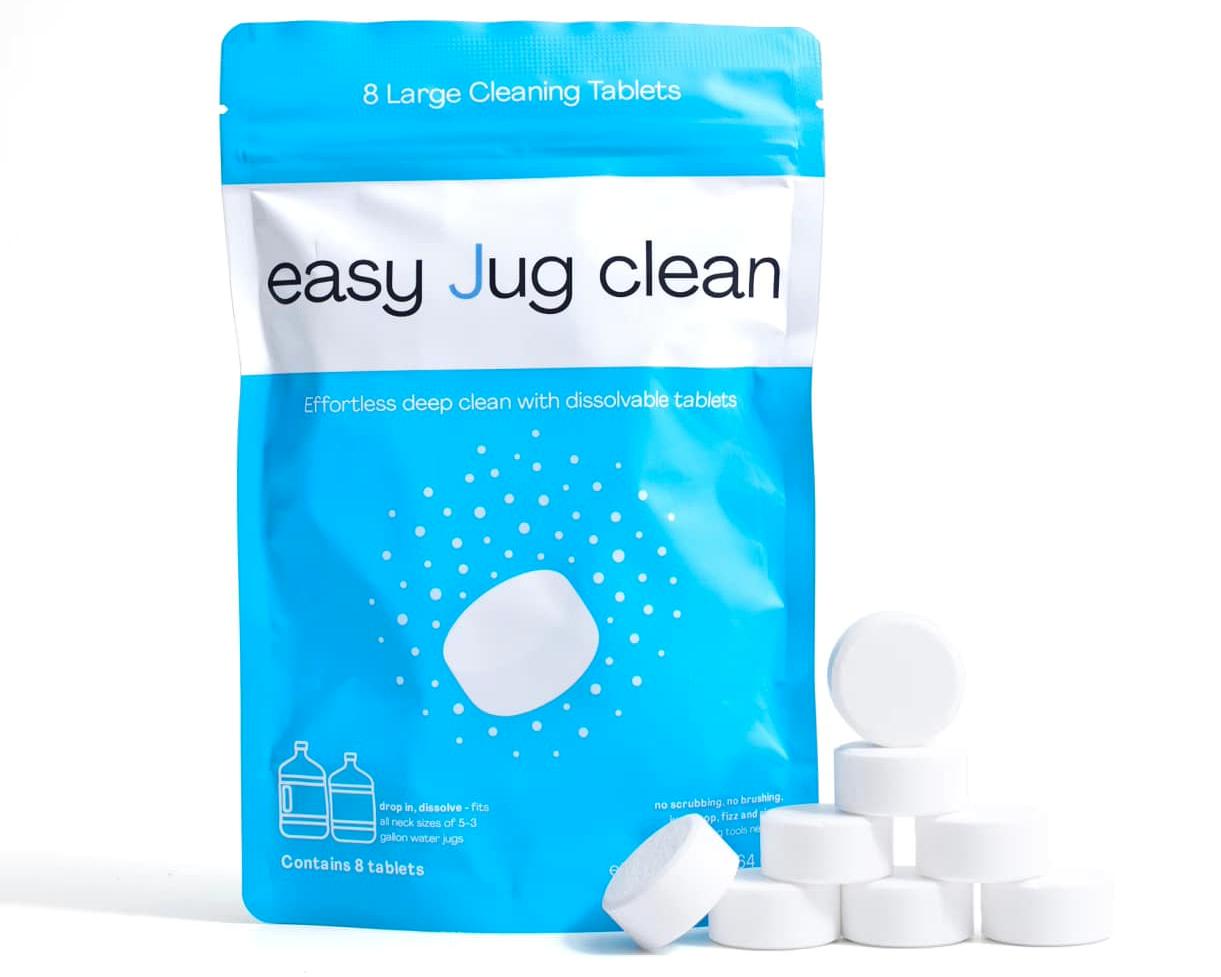
A scratched jug requires chemistry that penetrates into scratch recesses rather than flowing over them. Easy Jug Clean's active oxygen from sodium percarbonate is a dissolved species — it exists as reactive molecules in solution that diffuse into scratch valleys by concentration gradient, not by fluid flow. This means the active oxygen reaches into the sheltered recesses that flow-based cleaning solutions cannot access efficiently. The chelating agents dissolve mineral deposits from inside the scratches by the same diffusion mechanism. The glycerin surface conditioner then fills and smooths the micro-topography somewhat, reducing future bacterial adhesion advantage.
Watch the right cleaning approach versus what a brush actually does to your jug:
✅ Chemistry That Reaches Where Flow Can't
Easy Jug Clean's diffusing active oxygen penetrates scratch recesses that cleaning solutions flow over — combined with glycerin conditioning that reduces future bacterial adhesion advantage.


 Order now — get it by