drying 5 gallon water jugs in the open after cleaning them

How to Dry a 5 Gallon Water Jug Properly After Cleaning

Reading time: ~5 minutes Β |Β  Drying Technique Post-Cleaning 5 Gallon Jug

You've done the hard part β€” cleaned and rinsed your 5 gallon water jug. But how you dry it before refilling determines how quickly bacteria begin colonizing it again. A wet jug stored right-side-up with the neck sealed is a moist, dark environment that accelerates the very biofilm formation you just spent 20 minutes eliminating. Proper drying takes no extra effort β€” just the right position, location, and timing.

Why Drying Matters β€” The Microbiology

Bacteria require moisture to survive and reproduce. On a completely dry surface, most waterborne bacteria cannot maintain metabolic activity or begin the process of surface attachment that leads to biofilm formation. A jug that is fully dried before being capped or refilled gives bacteria almost no foothold for establishing themselves between cleaning cycles. A jug that is stored damp β€” even with residual water droplets β€” provides exactly the moisture needed for rapid recolonization.

⚠️ The most common drying mistake: Rinsing the jug, shaking out the excess water, and immediately capping it right-side-up. This traps residual moisture inside with no airflow, in a warm cap-sealed environment. By the time you go to refill it the following day, bacterial attachment has already begun on those still-damp surfaces. All the cleaning work is undermined in the first few hours.

The Correct 4-Step Drying Protocol

1
Shake out all visible water immediately after the final rinse. Hold the jug upside down and give it several firm shakes to dislodge pooled water from the bottom. Tilt at angles to ensure water drains from the curved shoulder area near the neck. Remove as much bulk water as possible before positioning for air drying.
2
Place inverted at an angle on a clean drying rack. Invert the jug completely β€” neck pointing down β€” on a drying rack, bottle drainer, or clean folded towel. The angle matters: a perfectly vertical inversion can create a partial seal at the neck if it sits flat against the rack surface. Tilting slightly (15–30Β°) allows air to circulate through the neck while water drains freely. A dedicated bottle drying stand is ideal if you clean your jug regularly.
3
Allow a minimum of 60 minutes β€” longer is better. In a well-ventilated kitchen at room temperature, most residual moisture evaporates from a clean inverted jug within 60–90 minutes. In humid climates or warmer rooms, allow 2 hours. If you plan to store the jug rather than refill immediately, allow it to dry for at least 3 hours before loosely capping for storage.
4
Inspect before capping or refilling. Before placing the jug on the dispenser or sealing it for storage, hold it up to light and check for residual moisture on interior surfaces. If you see droplets on the walls (particularly common near the shoulder), return to inverted position for another 30 minutes before proceeding.

Drying vs. Storing: Two Different Scenarios

Scenario Drying Time Needed Capping?
Refilling immediately after cleaning 60–90 minutes minimum No cap needed β€” fill directly
Storing empty for 1–3 days 2–3 hours minimum Loosely cap β€” do not seal airtight while any moisture remains
Storing empty for 1 week+ 3+ hours, confirm fully dry Cap sealed β€” store in cool, dark location
Storing empty for extended period Fully dry β€” overnight if uncertain Cap sealed β€” clean again before first use after storage
πŸ’‘ Drying in humid climates: In tropical or coastal environments where ambient humidity exceeds 70%, passive air drying takes significantly longer. If you're in a high-humidity environment (Southeast Asia, coastal cities, summer months in the US South), consider placing the inverted jug near a fan or air conditioning vent to accelerate drying. A dehumidifier in the storage area also helps maintain drier conditions between cleaning cycles.

What Not to Do When Drying

  • Don't use a cloth or towel to dry the interior. Towels introduce bacteria and fibers directly onto the freshly cleaned surface β€” undoing a significant portion of the cleaning work.
  • Don't use heat to accelerate drying. Placing a plastic jug in a low oven, near a stovetop, or in direct sunlight to dry faster risks plastic deformation and UV degradation. Room temperature air drying is always the correct approach.
  • Don't cap a jug with any detectable interior moisture. When in doubt, invert for longer β€” the extra time is always worth it.
  • Don't store the jug right-side-up while it dries. Water pools at the bottom and cannot drain or evaporate efficiently from this position.
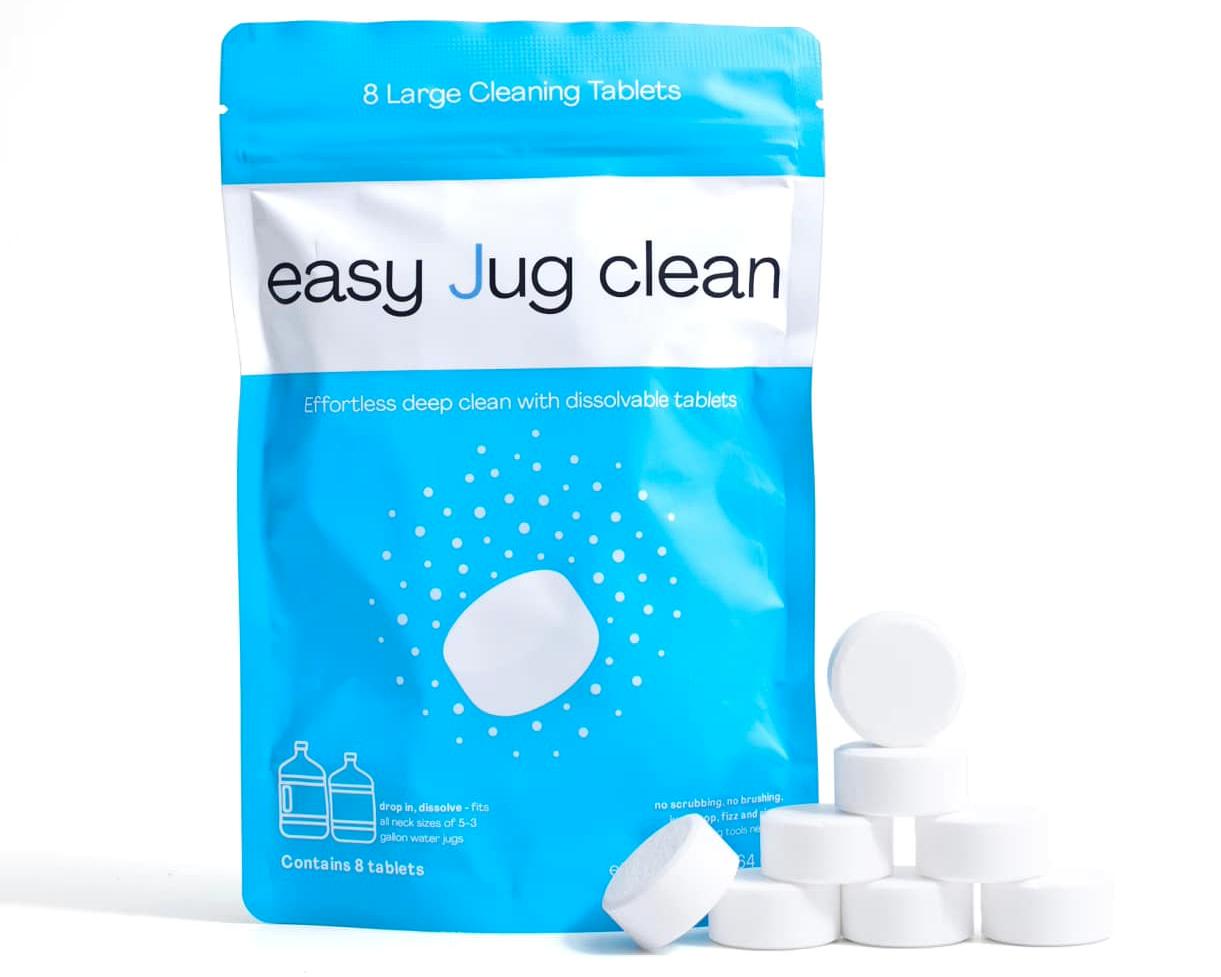
βœ… The complete drying and cleaning cycle: Easy Jug Clean treatment (20 minutes) β†’ 3 thorough rinses β†’ shake out excess water β†’ invert on drying rack for 60+ minutes β†’ refill or loosely cap for storage. This full cycle β€” cleaning and drying β€” is what genuinely interrupts the biofilm lifecycle between weekly cleaning sessions.

Β 

See how Easy Jug Clean cleans a 5 gallon water jug in 20 minutes β€” no scrubbing required:

Β 

βœ… Clean in 20 Minutes. Dry in 60. Safe Water All Week.

Easy Jug Clean does the cleaning in 20 hands-free minutes. Proper drying takes care of the rest. for a full month's supply.

β†’ Get Easy Jug Clean

Frequently Asked Questions

Q: Can I refill my jug immediately after cleaning and rinsing without drying?

Technically yes β€” filling immediately prevents the drying period but also prevents the moisture problem by filling the jug with fresh water rather than leaving it damp. If you intend to refill immediately after cleaning, go ahead. The drying protocol applies when you won't be refilling right away.

Q: Does drying affect the effectiveness of Easy Jug Clean's surface conditioning?

The glycerin surface conditioning from Easy Jug Clean is deposited on the jug surface during the cleaning soak and remains after rinsing. It is not affected by the drying process.

Related Reading


Back to blog