5 gallon water jug in high heat temperature

What High Heat Does to Your Plastic Water Jug (And Why It's a Problem)

Reading time: ~6 minutes Β |Β  Heat Damage Plastic Safety Chemical Migration

The instinct to use hot water β€” boiling water, very hot tap water, or even brief heat soaks β€” to sanitize a water jug makes intuitive sense. Heat kills bacteria. Boiling water sterilizes medical equipment. Why wouldn't it work on a water jug? Because the temperature required to kill biofilm bacteria in a soak conflicts directly with the temperature at which food-grade plastics begin to deform, release chemical compounds, and sustain permanent structural damage. The heat that helps bacteria hurts the jug.

The Temperature-Effect Scale for Common Jug Plastics

Up to 105Β°F
(40Β°C)
Safe for all common jug plastics (HDPE, Tritan, polycarbonate). Warm water range β€” the recommended temperature for Easy Jug Clean treatment. No plastic changes occur. Effective for chemistry-based cleaning.
105–140Β°F
(40–60Β°C)
Caution zone for HDPE β€” approaching maximum rated temperature. Minor surface softening begins. Chemical migration rate starts increasing as polymer chain mobility increases. Tritan generally handles this range; polycarbonate may show early BPA migration at the upper end.
140–160Β°F
(60–71Β°C)
HDPE begins deforming β€” visible dimensional changes and warping. Chemical migration increases significantly as polymer chains become more mobile. Polycarbonate releases BPA at measurable rates. Plastic taste and odor become noticeable as volatile compounds release from the softening matrix.
Above 160Β°F
(71Β°C)
Structural damage territory. HDPE can sustain permanent deformation. Hot-fill warping (where the jug body becomes misshapen under internal heat) is a real risk at these temperatures. Chemical migration rates at levels that create taste and safety concerns. Boiling water (212Β°F / 100Β°C) would severely damage or destroy any food-grade plastic 5 gallon jug.

The Bactericidal Temperature Problem

The temperatures required to kill biofilm bacteria in a water soak are substantially higher than the safe range for plastic jugs. Free-floating bacteria begin dying at approximately 145Β°F (63Β°C) with extended exposure β€” already in the damage zone for HDPE. Biofilm bacteria, protected by their EPS matrix, require higher temperatures or longer exposure times than planktonic bacteria for equivalent kill rates. Achieving reliable biofilm killing through heat alone in a plastic jug would require temperatures that cause significant plastic damage.

This is the fundamental incompatibility: the heat that sanitizes effectively also damages the plastic, increasing chemical migration and creating a jug that is physically compromised by the very action taken to make it safer.

The Sunlight / Car Interior Problem

Passive heat exposure β€” leaving a jug in a car during summer, storing in a hot garage, or placing in direct sunlight β€” can reach damaging temperatures without any deliberate sanitizing intent. A car interior on an 85Β°F day can reach 140–160Β°F. A jug left in such an environment even for a few hours can sustain thermal damage that increases chemical migration and accelerates plastic degradation. This is one reason cool, dark storage is emphasized for 5 gallon water jugs: not just for bacterial growth rate reasons, but for material integrity reasons.

Why Room-Temperature Chemistry Outperforms High Heat

The heat-based sanitization logic fails for plastic jugs. But the bacteria still need to be killed. The answer is chemistry that works at safe temperatures β€” specifically, active oxygen from sodium percarbonate, which achieves the same bacterial membrane disruption and EPS matrix degradation that heat achieves, but through chemical oxidation rather than thermal denaturation, at temperatures well within the safe range for all food-grade plastics.

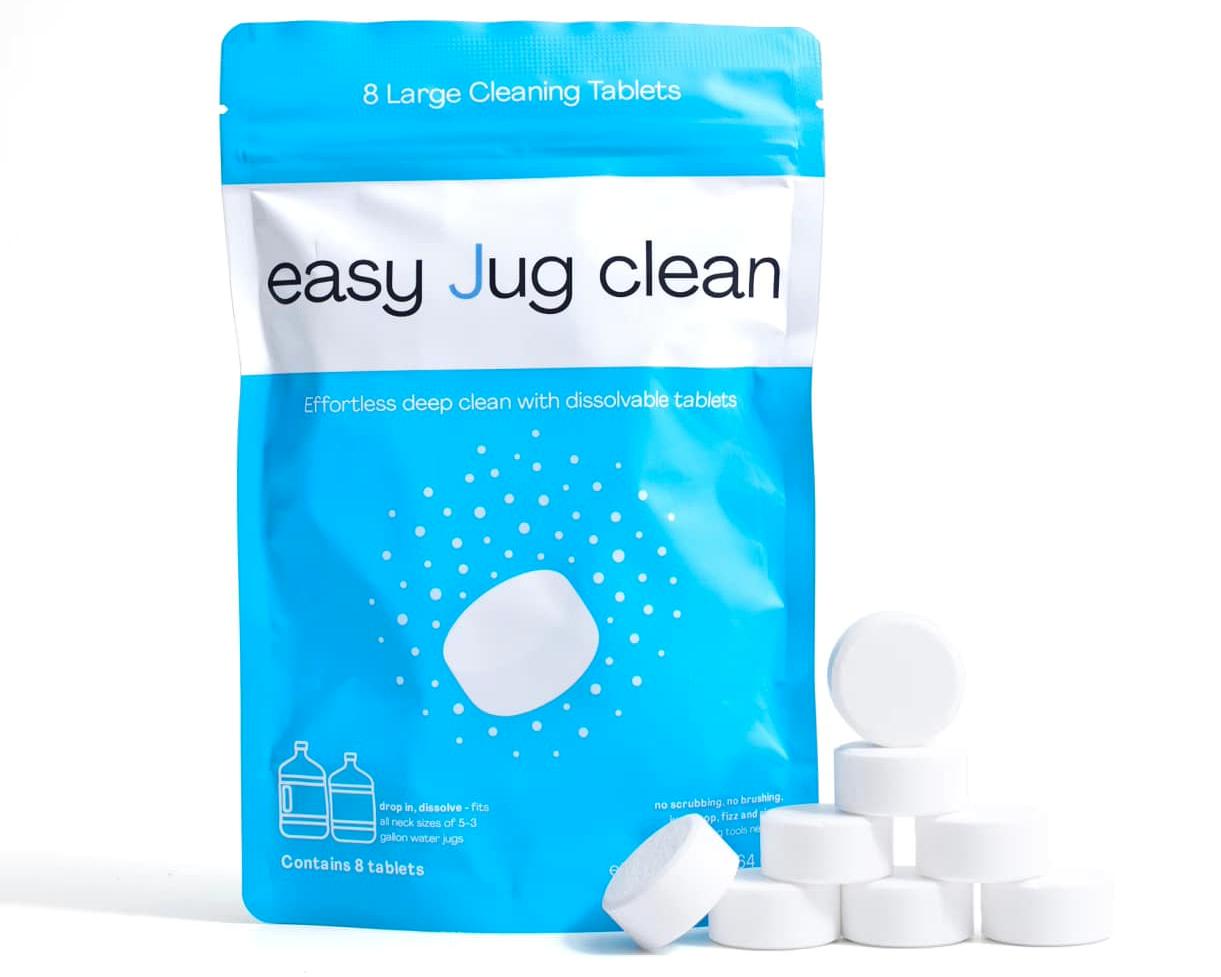
βœ… The room-temperature solution: Easy Jug Clean operates at warm (not hot) water temperatures β€” 95–105Β°F (35–40Β°C), which is optimal for tablet dissolution and active oxygen release, and well within the safe operating range for all common jug plastic types. The cleaning and sanitizing work is done by chemistry, not heat β€” preserving your jug's plastic integrity while achieving the same bacterial and biofilm elimination that heat would produce at damaging temperatures.

Β 

See how Easy Jug Clean cleans a 5 gallon water jug in 20 minutes β€” no scrubbing required:

Β 

βœ… Effective Sanitization at Safe Temperatures β€” Every Time

β†’ Get Easy Jug Clean β€”

Related Reading


Back to blog