Mold in a 5 Gallon Water Jug: How to Spot It and Get Rid of It
By the Easy Jug Clean Research Team
Home › Articles › Mold in a 5 Gallon Water Jug: How to Spot It and Get Rid of It
Reading time: ~7 minutes | MoldWater Jug Safety5 Gallon Jug
You hold your jug up to the light and see it — dark spots near the bottom seam, pink patches near the neck, or a greenish haze on the walls. This isn't the chalky white of mineral scale or the invisible sliminess of early biofilm. This is visible mold growth, and it requires immediate action. Here's how to identify what you're seeing, understand the health implications, eliminate it completely, and make sure it doesn't come back.
Is It Mold, Biofilm, or Something Else? How to Tell
Black or dark brown spots — Most likely mold (Cladosporium, Aspergillus, or similar). Typically appears in corners, at the bottom seam, and around the neck where moisture accumulates. Has a fuzzy or flat appearance depending on species. This is the mold type associated with respiratory and allergic reactions in sensitive individuals.
Pink or reddish-pink patches — Usually Serratia marcescens, a pigmented bacterium rather than true mold, but equally concerning. Commonly forms in moist environments and produces a characteristic pink to orange-red color. Associated with urinary tract infections and, in immunocompromised individuals, more serious opportunistic infections.
Green patches or discoloration — Often algae growth (particularly if the jug has been in light) or mold species like Penicillium. Green contamination in a jug that has been exposed to light indicates algal photosynthesis is occurring — meaning the contamination has been present long enough for light-dependent growth.
White or off-white fuzzy spots — Could be mold (many species appear white in early growth stages), yeast colonies, or — less urgently — calcium carbonate scale deposits. Texture helps distinguish: fuzzy or irregular = mold/yeast; uniform chalky coating = scale.
The Health Risks of Mold in a Drinking Water Jug
⚠️ Why mold in a water jug is a genuine health concern: Mold species produce mycotoxins — toxic secondary metabolites that can cause acute illness, allergic reactions, and respiratory symptoms in susceptible individuals. Even mold species that don't produce significant mycotoxins can trigger immune responses in people with mold allergies or asthma. Serratia marcescens (the pink bacterium) is an opportunistic pathogen associated with hospital-acquired infections in immunocompromised patients — and it thrives in the same moist household environments that produce pink bathroom grout. Drinking water from a visibly mold-contaminated jug is not safe for any member of the household, and the contamination warrants immediate aggressive treatment.
The 5-Step Mold Elimination Protocol
1
Do not use the jug until treatment is complete. Stop using the jug immediately upon discovering visible mold. Discard any water currently in the jug and any water that may have been dispensed recently if mold was already visible.
2
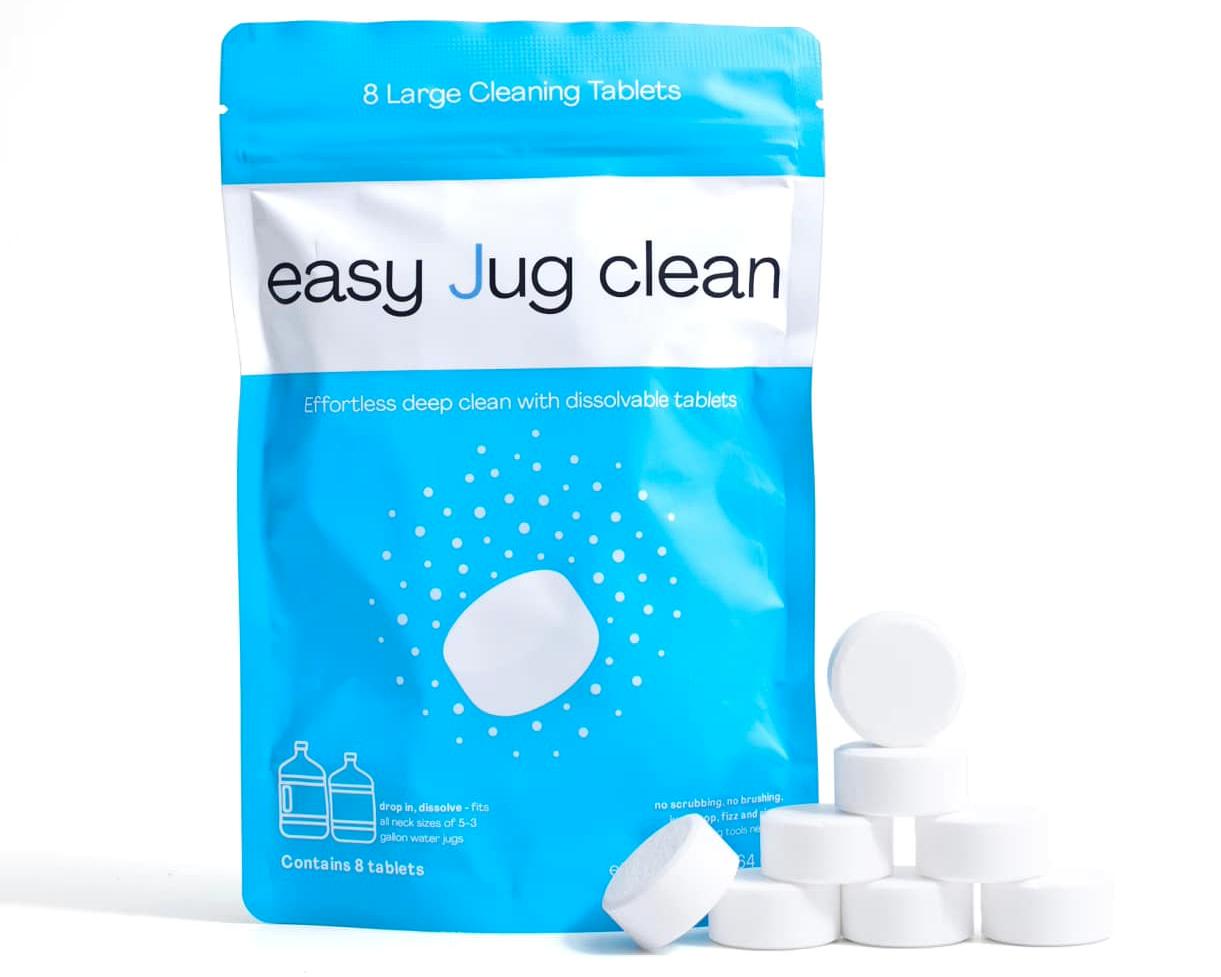
Perform an aggressive first treatment — 3 tablets, full 30-minute soak. Fill the jug halfway with warm water and drop in 3 Easy Jug Clean tablets (rather than the standard 2). The increased active oxygen concentration provides extra margin against mold species. Allow the full 30-minute soak without interruption. Give the jug a thorough rotation at the 15-minute mark to ensure the shoulder and neck areas receive full contact time.
3
Drain, inspect, and assess. Pour out the cleaning solution and hold the jug up to light. In most cases of moderate mold growth, the spots will have cleared or significantly reduced. If any visible mold remains, proceed directly to a second treatment without refilling.
4
Second treatment if needed (standard 2-tablet dose, full soak). Heavy or long-established mold colonies may require a second treatment. This is normal for a jug that has been neglected for an extended period. After the second treatment, drain and inspect again before rinsing.
5
Three complete rinse cycles, then full air-dry before returning to use. After confirmed mold elimination, rinse three times with clean water and allow the jug to air-dry inverted for at least 2 hours before refilling. Check the cap, neck, and dispenser probe for any mold that may have transferred from the jug — clean these with a sanitizing wipe before replacing the jug on the dispenser.
When to Discard Instead of Treat
⚠️ Replace the jug if: Mold spots remain visible after two complete treatment cycles. The plastic has visible pitting or surface degradation in the mold-affected areas. Mold is present in the neck threads or jug sealing surfaces in a way that prevents adequate treatment access. The jug is old (5+ years) and the mold may have penetrated micro-fractures in the plastic that treatment cannot reach. A mold-contaminated jug that doesn't fully clear with treatment is not safe to return to service.
Why Mold Grew in the First Place — And How to Prevent It
Mold requires three conditions to grow: moisture, organic nutrients, and suitable temperature. Inside a regularly used 5 gallon water jug, all three conditions are present unless disrupted by a proper cleaning routine. The key factors that accelerate mold growth:
Infrequent cleaning — mold requires time to establish; weekly cleaning consistently interrupts this timeline
Warm storage location — mold grows fastest between 77–86°F (25–30°C); cool, dark storage slows it significantly
Inadequate drying before storage — residual moisture is the most direct mold precursor
Light exposure — algal growth (green contamination) requires light; store jugs away from direct sunlight
✅ Prevention is far easier than treatment: Weekly Easy Jug Clean treatment eliminates the biofilm substrate, actively oxidizes mold spores before they can establish colonies, and leaves the jug surface in a condition that is significantly less hospitable to mold growth. No jug maintained on a consistent weekly tablet cleaning schedule should develop visible mold.
Watch how Easy Jug Clean eliminates water jug odors permanently — not just masks them:
✅ Eliminate Mold and Keep It Gone
Easy Jug Clean's active oxygen formula is effective against mold, bacteria, and biofilm in a single 20-minute treatment. Weekly use prevents mold from ever establishing in the first place.
Q: Is it safe to drink water from a jug that had mold if I've now cleaned it?
After completing the full mold elimination protocol (two treatment cycles if necessary, three rinse cycles, confirmed visual clearance, and full air-drying), the jug is safe to return to use. If any visual indication of mold remains after treatment, do not use the jug until it is fully clear or replace it.
Q: Can mold in a water jug make you sick?
Yes, particularly for individuals with mold allergies, asthma, or compromised immune systems. Drinking water from a mold-contaminated jug exposes you to mold spores and mycotoxins. Even healthy adults may experience gastrointestinal symptoms from contaminated water. Do not use a visibly moldy jug until fully treated and cleared.
It was really easy to clean, just drop it in and let it fizz and do its cleaning magic! The jug smelled and looked soooo clean after using this, I couldn’t believe it.



 Order now — get it by