Mycotoxins, Mold, and Drinking Water: What the Science Says
Reading time: ~6 minutes | Mycotoxins Health Science Risk Assessment
Note: This article presents general scientific information. It is not medical advice. For personal health concerns related to mold or mycotoxin exposure, consult a qualified healthcare provider.
What Mycotoxins Are
Mycotoxins are secondary metabolites produced by certain mold species — chemical compounds that aren't essential for the mold's basic survival but provide ecological advantages, often by deterring competitors or predators. Most mold species don't produce significant mycotoxins. The species that do are well-characterized and largely associated with specific food contamination contexts (grain storage, peanuts, certain dairy products) where mycotoxin science has been most actively studied.
Common mycotoxin-producing species include:
- Aspergillus flavus and A. parasiticus — produce aflatoxins, the most studied mycotoxins, primarily a concern in stored grains and nuts
- Aspergillus ochraceus and certain Penicillium species — produce ochratoxin A, found in coffee, wine, and some dried fruits
- Fusarium species — produce fumonisins, trichothecenes, and zearalenone, primarily in cereal grains
- Stachybotrys chartarum — produces several trichothecene mycotoxins, primarily a concern in damp building materials (the so-called "toxic black mold")
- Penicillium species — some produce patulin and other mycotoxins, primarily a concern in fruit products
The Mycotoxin Science Comes from Agriculture, Not Water Containers
Most of what's well-documented about mycotoxin health effects comes from studies of contaminated food crops, occupational exposure in farming and grain handling, and indoor air quality research in damp buildings. The contamination levels in these contexts are typically much higher than what occurs in residential water containers — sometimes by orders of magnitude.
The science on residential water jug mycotoxin levels specifically is thin. Direct measurements of mycotoxins in mold-contaminated water jugs aren't commonly published. What we can infer comes from:
- The species typically found in water jugs (mostly Cladosporium and Penicillium, with occasional Aspergillus)
- The known mycotoxin profiles of those species
- The conditions required for mycotoxin production (which often require specific stress factors)
- The exposure pathway (ingestion of contaminated water, typically in modest quantities)
What's Likely True About Mycotoxins in Water Jugs
Mycotoxin Production Requires Specific Conditions
Even mycotoxin-producing species don't always produce them. Production typically requires specific environmental triggers — stress conditions, specific nutrient availability, certain temperature and humidity ranges. A mold colony in a water jug may or may not be actively producing mycotoxins depending on conditions during its growth.
Levels in Residential Water Jugs Are Typically Low
Estimated mycotoxin levels in typical residential water jug contamination are likely far below acutely dangerous concentrations. The contamination in a household jug is usually limited compared to the heavily contaminated agricultural products where mycotoxin levels are routinely measured.
Chronic Low-Level Exposure Is the Realistic Concern
Boiling Doesn't Eliminate Mycotoxins
Most mycotoxins are heat-stable and survive boiling. If water from a moldy jug is boiled, the live mold spores are killed, but any mycotoxins present remain. This is one of the few situations where boiling water doesn't address the contamination concern.
Who Should Be More Cautious
The same elevated-risk groups that warrant extra caution about mold exposure generally apply to mycotoxin concerns:
- Pregnant individuals (some mycotoxins have known reproductive toxicity at higher doses)
- Infants and young children (developing systems, smaller body mass)
- Immunocompromised individuals (reduced ability to clear toxic compounds)
- Elderly adults with significant health conditions
- People with diagnosed mycotoxin sensitivity
For these groups, ongoing exposure to a moldy water source is not a "monitor and see" situation — it's a "stop using and address immediately" situation.
The Practical Implications
For most healthy adults, the mycotoxin concern from a brief exposure to a residential moldy water jug is small. The appropriate response is to stop using the contaminated water, treat the container thoroughly, and resume use only after the contamination is eliminated.
For longer exposure (weeks to months of drinking from a contaminated jug) or for higher-risk household members, the response should be more proactive: stop the exposure immediately, consider talking to a healthcare provider, and consider replacing rather than cleaning the jug if the contamination was extensive.
✅ Eliminate the Mycotoxin Source by Eliminating the Mold
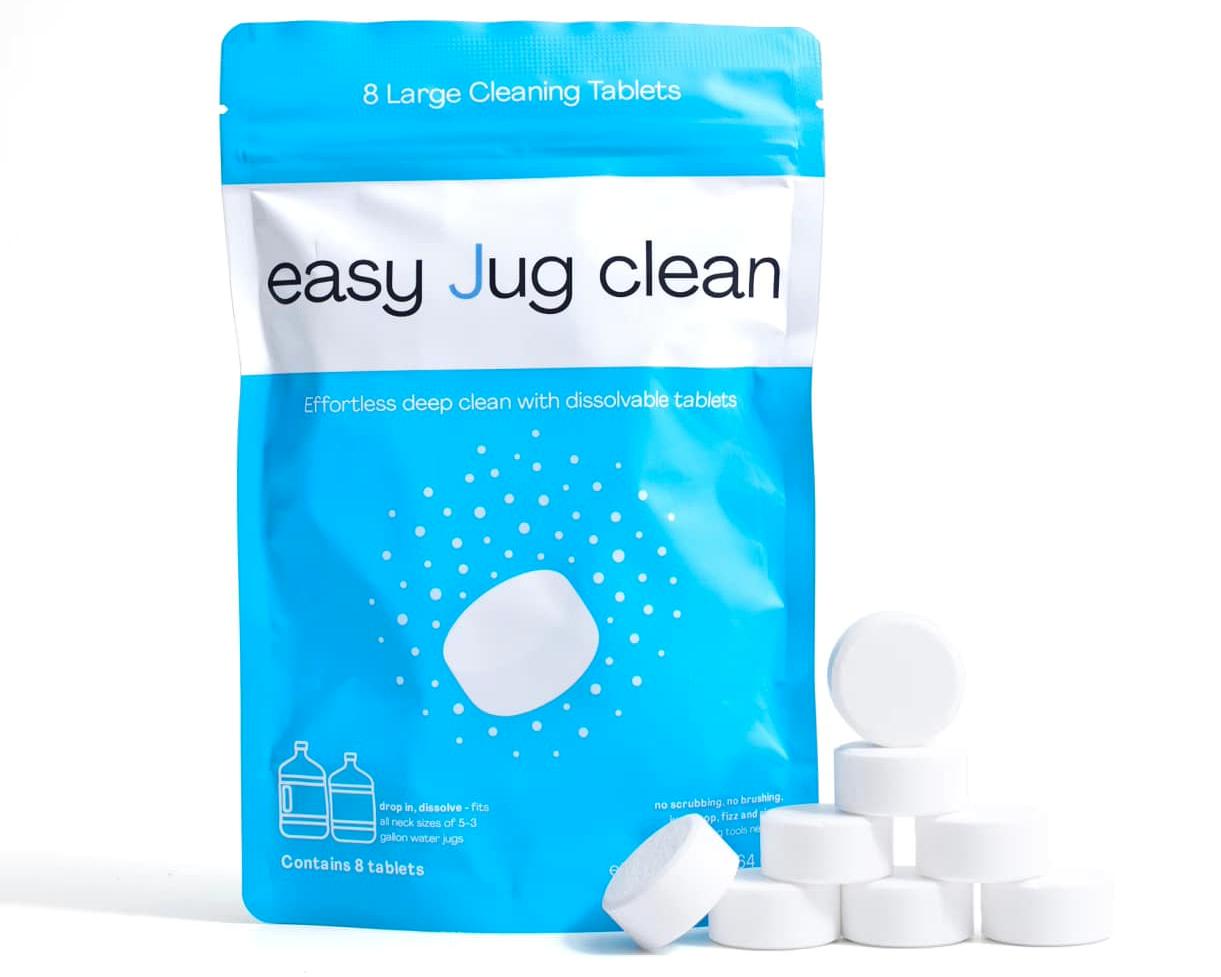
Easy Jug Clean's active oxygen treatment removes the mold colonies that produce mycotoxins and the biofilm scaffold they grow on. Two tablets, 30 minutes for first-time mold removal, weekly maintenance afterward.
FAQ: Mycotoxins and Drinking Water
Q: Can I test my water for mycotoxins?
Yes, but residential lab testing for mycotoxins in water specifically is uncommon and expensive, and the interpretive value of a single measurement is limited. For most household situations, the practical response is to address the contamination rather than measure it.
Q: Are mycotoxins linked to specific health symptoms?
Various studies have associated different mycotoxins with different effects — immune effects, neurological effects, reproductive effects, kidney and liver effects — but the science on residential exposure is still evolving and individual responses vary widely. Talk to a healthcare provider about specific concerns rather than self-diagnosing from internet sources.
Q: Will Easy Jug Clean remove mycotoxins from the water itself?
Easy Jug Clean is designed to clean the container, not to treat water already in it. If you suspect mycotoxin contamination, discard the contaminated water rather than treating it; clean the container; refill with fresh water. Don't try to remediate water you suspect is contaminated.
Q: How concerned should I be about mycotoxins from a single mold incident?
For a typical adult with a one-time discovery of mold in a residential water jug: low concern, prompt remediation. The mycotoxin question becomes more relevant for chronic exposure or for high-risk household members.
The Bottom Line
Mycotoxins are real, well-characterized in agricultural contexts, and present a more complex picture in residential water container contamination — where direct measurement studies are sparse and the inferred risk is generally low for healthy adults but warrants caution for sensitive groups. The practical response in either case is the same: eliminate the contamination, prevent recurrence, and consult a healthcare provider for any specific health concerns. The cleaning protocol handles the source.


 Order now — get it by