Synthetic vs. Plant-Based Surfactants: Why the Difference Matters in Your Water Jug
SurfactantsCocoyl GlucosideIngredient Safety · Reading time: ~7 minutes
How Surfactants Work — The Shared Mechanism
Synthetic vs. Plant-Based: The Key Differences
Petroleum-Derived Synthetic Surfactants
- Examples: Sodium lauryl sulfate (SLS), sodium laureth sulfate (SLES), linear alkylbenzene sulfonates (LAS)
- Common in: Dish soaps, general-purpose cleaners, many "water container cleaning" products
- Efficacy: High cleaning power against grease and oils
- Skin contact: Known irritants; SLS classified as a skin sensitizer at repeated exposure
- Residue behavior: Anionic surfactants bind more strongly to plastic surfaces; harder to rinse completely
- Biodegradability: Variable — some are readily biodegradable, some persist in waterways
- Drinking water application: Not ideal — residue concerns at trace levels in sensitive individuals
Plant-Derived Alkyl Glucoside Surfactants
- Examples: Cocoyl glucoside (from coconut + glucose), caprylyl/capryl glucoside, decyl glucoside
- Common in: Infant shampoos, organic personal care, food-contact safe cleaners
- Efficacy: Excellent for organic material removal; appropriate for the contamination profile of water jugs
- Skin contact: Non-irritating; considered safe for sensitive skin and infant use
- Residue behavior: Non-ionic structure means lower plastic surface affinity; rinses more completely
- Biodegradability: Readily biodegradable — breaks down fully in the environment
- Drinking water application: Food-safe residue profile; used in food processing applications
Why the Drinking Water Container Application Makes the Difference Critical
In most cleaning applications, surfactant type matters primarily for environmental reasons and skin safety during cleaning. In a drinking water container, a third factor becomes paramount: residue safety after rinsing in a confined, narrow-neck container that cannot be physically dried or inspected.
Anionic synthetic surfactants (SLS, SLES) have a documented affinity for plastic surfaces — they adsorb through electrostatic attraction between the negatively charged sulfate group and the surface charge of food-grade plastics. This adsorption makes them resistant to complete removal by gravity-rinsing. In a 5 gallon jug where rinsing is limited to pouring clean water in and pouring it out, a fraction of the surfactant film remains. This residue then dissolves slowly into stored water over the subsequent days, introducing synthetic surfactant molecules into your drinking water at low but repeated concentrations.
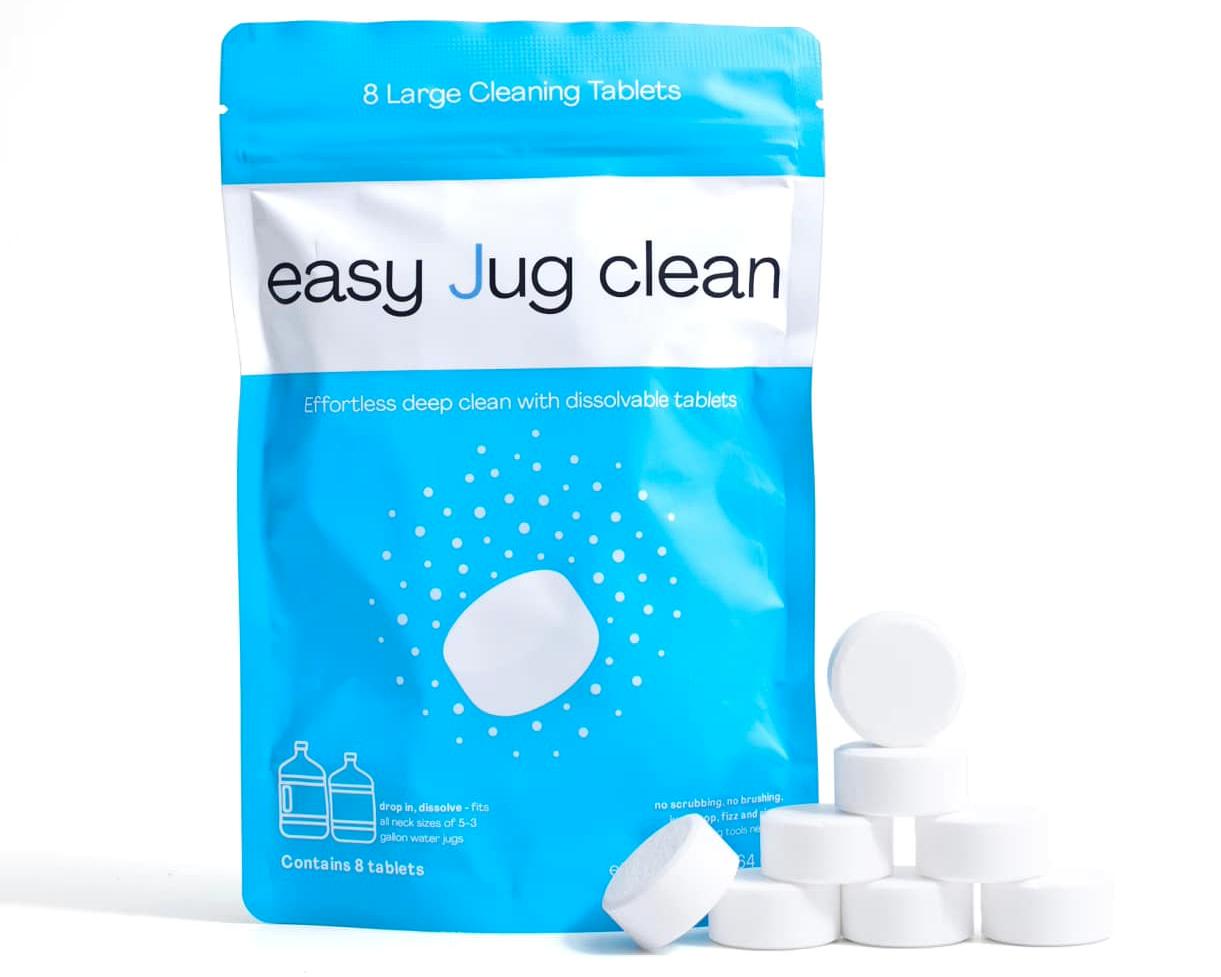
Non-ionic alkyl glucoside surfactants (like cocoyl glucoside in Easy Jug Clean) have substantially lower affinity for plastic surfaces because they lack the charged functional group that drives adsorption. They rinse more completely, leave lower residue concentrations, and their residue products — glucose and fatty alcohol fragments — are food-safe at any trace level.
Cocoyl Glucoside: Why Easy Jug Clean Uses It Specifically
Cocoyl glucoside is derived from coconut fatty acids and glucose (plant sugars). It is classified as non-ionic, mild, and biodegradable. Its safety profile is so well-established that it appears as an ingredient in products designed for infant skin — the most demanding safety category in personal care. In Easy Jug Clean, its role is specifically to lift and suspend the organic debris liberated by active oxygen chemistry after biofilm destruction — acting as the final phase of the cleaning system rather than the primary cleaning agent.
See how Easy Jug Clean cleans a 5 gallon water jug in 20 minutes — no scrubbing required:
✅ Coconut-Derived. Food-Safe. Rinses Clean.
Q: Does the surfactant type affect cleaning performance, or just safety?
Both, but differently. Petroleum-derived anionic surfactants are stronger degreasers — they perform better when the cleaning challenge is removing oils and fats. Alkyl glucosides are gentler but fully effective for the actual contamination in water jugs: biofilm organic residue, mineral-adjacent organics, and general dissolved organics in water. The cleaning performance difference only matters for challenges the surfactant was designed for — cocoyl glucoside is well-matched to what water jugs actually contain.


 Order now — get it by