Why Narrow-Neck Containers Are Notoriously Difficult to Clean Manually
Narrow NeckManual CleaningAccess Geometry · Reading time: ~7 minutes
The Five Geometric Constraints That Define the Problem
The 48mm Neck Bottleneck
Standard 5 gallon water jug necks measure 48mm (roughly 1.9 inches) in diameter. No adult hand fits through this opening. Every cleaning tool must pass through this aperture as its access point. The neck immediately limits what can enter — its diameter, its rigidity, and any tool wider than the neck is excluded outright. Flexible tools can enter but lose directional control once inside. The neck is the constraint from which all other problems flow.
The Body-to-Neck Diameter Ratio
A 5 gallon jug's cylindrical body is approximately 9–10 inches in diameter versus the 1.9-inch neck. The ratio is roughly 5:1 — meaning any tool entering through the neck must extend its reach to cover 5 times its entry diameter. To scrub the far side wall, a brush must angle laterally inside the jug, reducing its effective scrubbing force (which depends on perpendicular contact) to near zero. You're essentially painting with a stick whose handle is the wall — no leverage, no perpendicular force.
The 18-Inch Depth Requirement
A full 5 gallon jug stands approximately 19–20 inches tall. The neck is at the top, and the bottom — where sediment settles and biofilm accumulates preferentially — is 18 inches below the access point. Reaching the bottom requires a tool long enough to travel this distance, and by the time a brush head is 18 inches from the neck fulcrum, the leverage physics mean the handle motion at the top produces minimal perpendicular force at the bottom. A brush scrubbing 18 inches down is essentially just swaying, not scrubbing.
The Shoulder Taper
The tapered zone between the cylindrical body and the neck is the area where the jug's diameter transitions from ~9 inches to ~1.9 inches over 2–3 inches of height. A brush inserted through the neck immediately enters this taper — the brush head is too large to angle toward the shoulder walls, and the narrow neck prevents the wrist rotation needed to address this zone. This area is often the warmest and most consistently moist part of the jug interior, and it's essentially unreachable by any mechanical cleaning tool.
The Curved Bottom Transition
The curved radius where the cylinder bottom meets the side walls creates a zone where perpendicular brush contact is geometrically impossible. A brush approaching from above can only contact the flat center of the bottom or the walls at a tangential angle — never the curved transition simultaneously. This curved junction is where pooled water sits longest and bacteria establish fastest, and it is never adequately cleaned by any brush configuration that must enter through a 48mm neck.
Why Sloshing and Shaking Don't Compensate for Mechanical Gaps
The intuitive fallback when a brush can't reach is to fill the jug with soapy water and shake it — using fluid dynamics to distribute the cleaning agent. The problem is that the agitation mechanism for a narrow-neck container is precisely limited by the same neck geometry. Fluid exiting and entering through a 48mm neck during shaking creates a jet effect in the neck zone but generates relatively low-shear, laminar flow patterns in the jug body — particularly in the bottom corners and shoulder zones where high-turbulence agitation is most needed.
Studies on cleaning efficiency in constrained containers consistently show that mechanical shaking of liquid cleaners through a narrow opening produces flow velocities at the lower internal surfaces that are insufficient to dislodge established biofilm. The biofilm needs either high shear stress (turbulence sufficient to mechanically disrupt the EPS matrix) or chemical disruption (oxidizing chemistry that attacks the matrix molecules directly). Shaking provides neither adequately in the dead zones of a narrow-neck container.
How Container Design Determines Cleaning Method
| Container Type | Neck-to-Body Ratio | Manual Cleaning Feasibility | Required Cleaning Approach |
|---|---|---|---|
| Open bowl / wide-mouth container | 1:1 (full access) | Complete — hand can reach all surfaces | Any method works |
| Wide-mouth jar (mason jar) | ~1:1.5 | High — brush achieves good perpendicular contact | Brush or liquid both effective |
| Standard water bottle (32oz) | ~1:3 | Moderate — long brush helps; lower zones difficult | Brush + tablet combination recommended |
| Wine bottle | ~1:5 | Poor — bottle brushes miss shoulder and lower thirds | Chemical soak preferred |
| 5 gallon water jug | ~1:5 + 18" depth | Inadequate — confirmed 60–70% surface gap | Self-distributing chemical treatment only |
Watch the right cleaning approach versus what a brush actually does to your jug:
✅ The 48mm Neck Problem — Permanently Solved
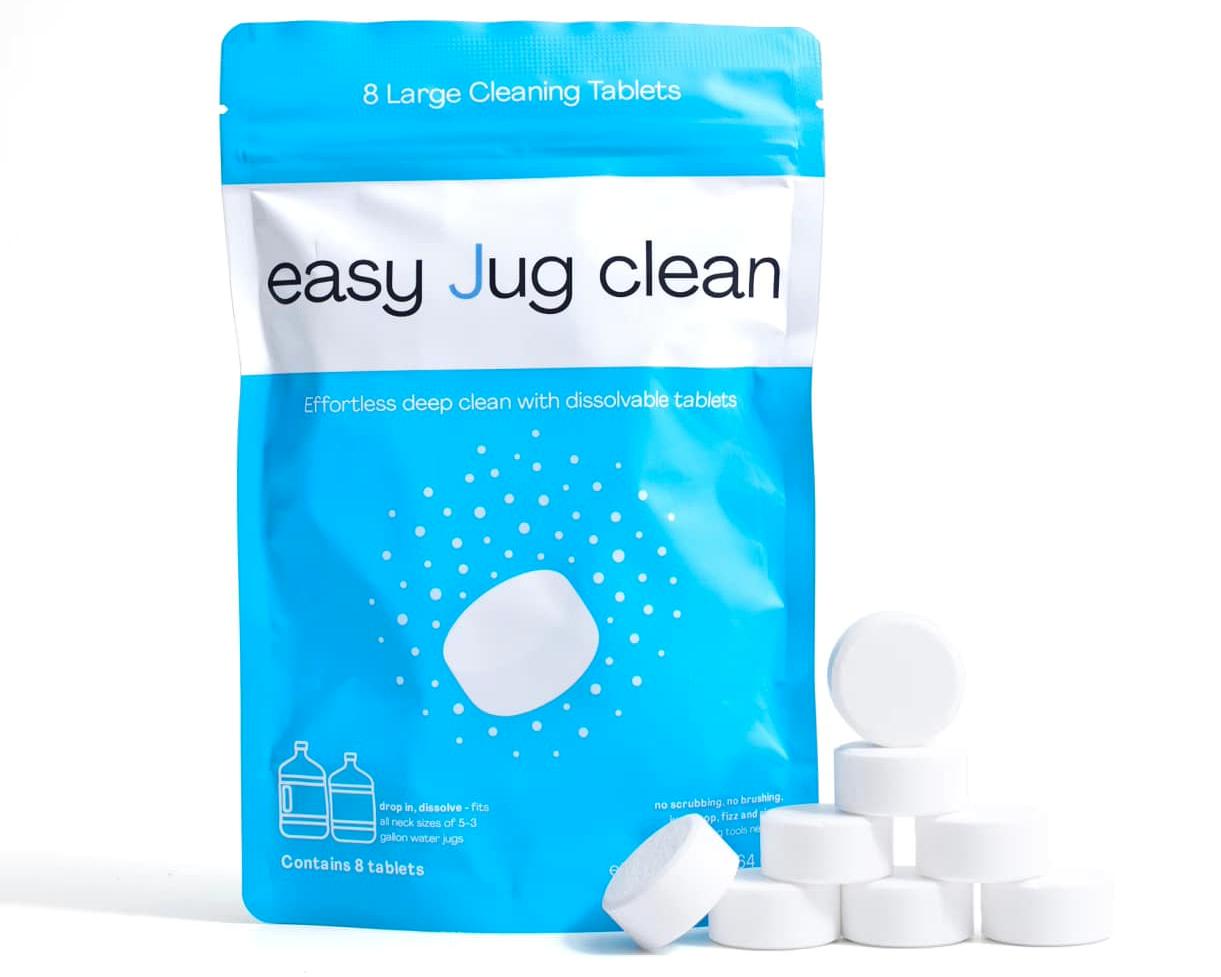
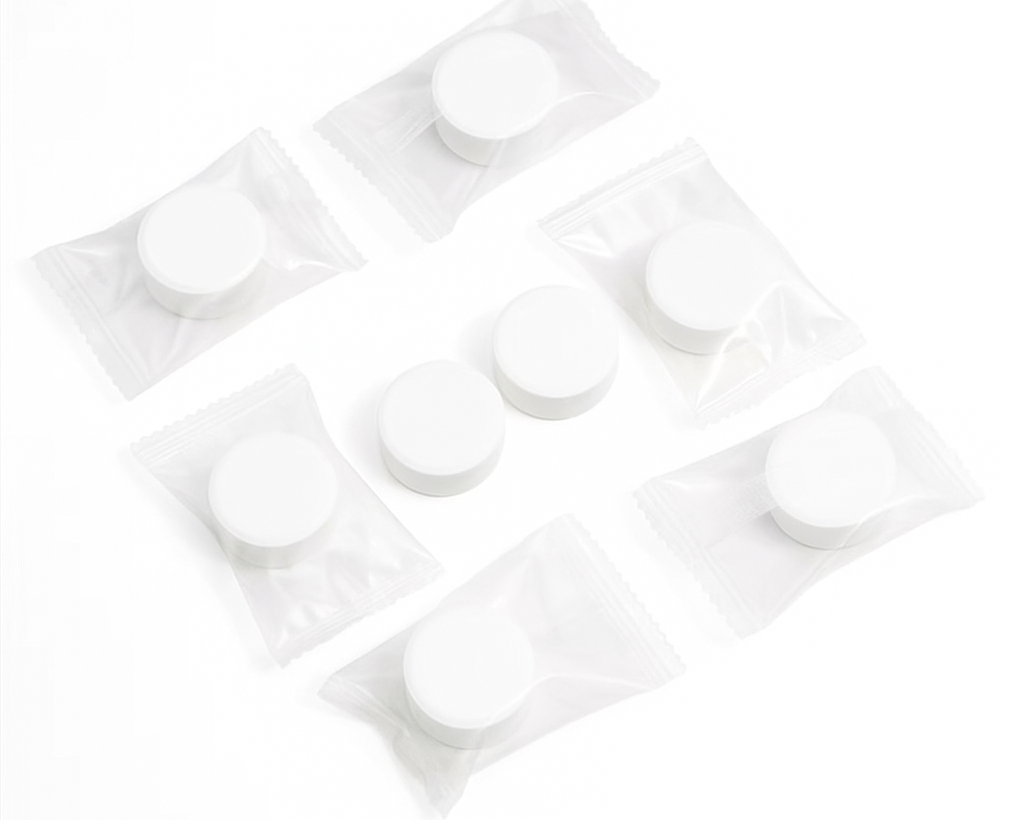
Easy Jug Clean works because it doesn't need to reach through the neck. Two tablets. Full-volume soak. Twenty minutes. Every surface covered.
Q: Are there specialized brushes designed to address the narrow-neck problem?
Several bottle brush manufacturers make extra-long handles and flexible-neck designs specifically marketed for 5 gallon jugs. These improve access to the lower walls modestly but cannot solve the fundamental constraints: the shoulder zone remains inaccessible, the bottom corners remain unreachable, and the leverage physics mean force delivery degrades with depth regardless of handle length. A better brush still leaves 40–50% of the critical surfaces inadequately cleaned — a smaller gap, but not a solution.


 Order now — get it by