pH is the single most consequential variable in water jug cleaning chemistry that most people never think about. It determines how effectively the active sanitizing agents work, how safely the solution treats the plastic container, how well mineral deposits dissolve, and whether residue left after rinsing changes the taste or safety of the water stored subsequently. Getting pH right isn't a chemistry classroom exercise β it's the difference between a cleaning system that works and one that creates its own problems.
How pH Affects Each Cleaning Task
Bacterial Kill Rate and Active Oxygen Efficacy
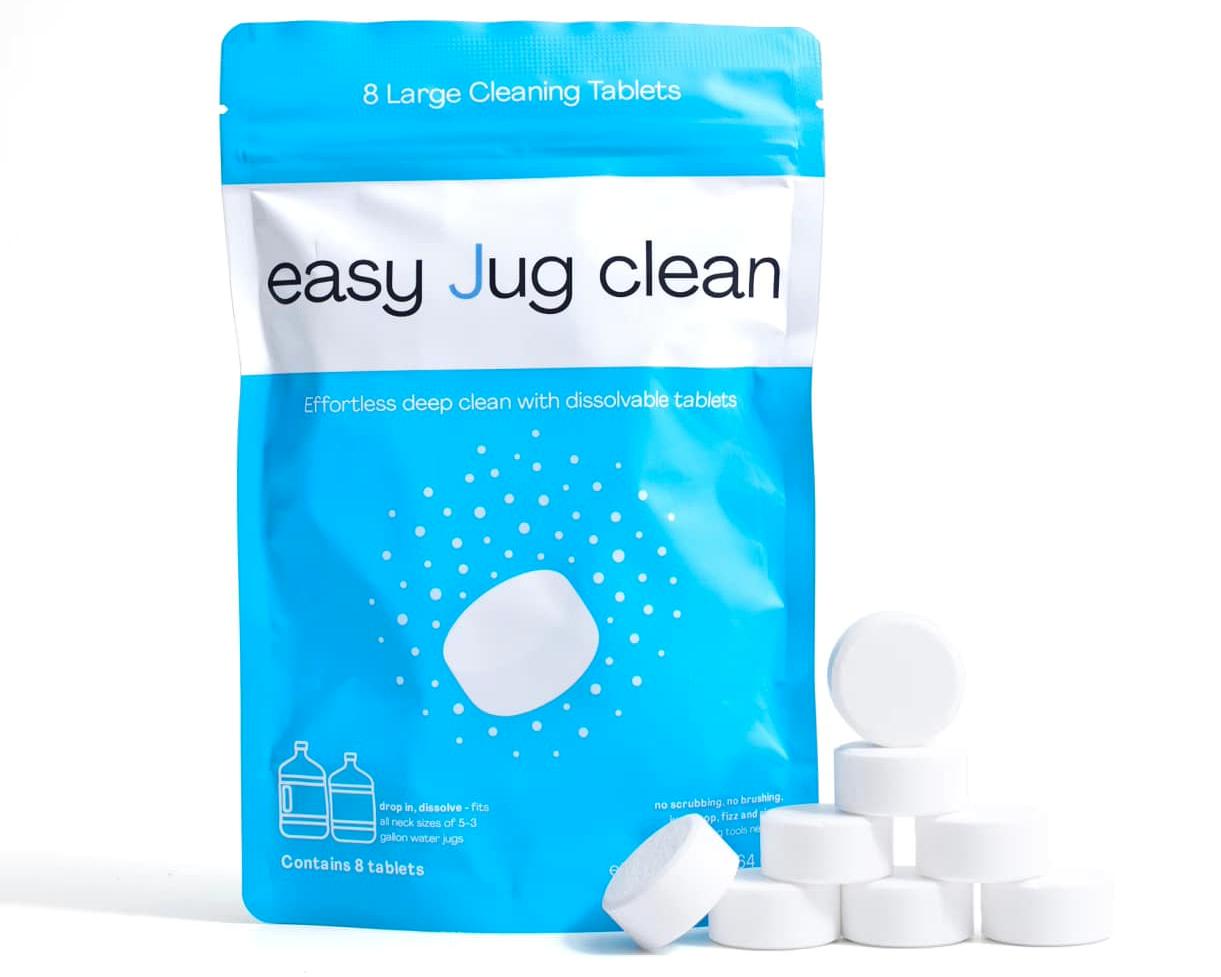
Sodium percarbonate (the active oxygen source in Easy Jug Clean) releases the highest proportion of reactive oxygen species at slightly alkaline pH β approximately 8.5β10.5. Below pH 7, active oxygen releases faster but at reduced effective concentration for biofilm penetration. Above pH 11, the hypercarbonate species dominates and reactivity declines. The sodium bicarbonate in Easy Jug Clean serves specifically as a pH buffer that maintains the solution in the optimal active oxygen range throughout the 20-minute soak β preventing pH drift that would reduce sanitizing efficacy.
Mineral Scale Dissolution
Calcium carbonate scale dissolves most readily at acidic pH β below 7. The chelating agents in Easy Jug Clean (sodium citrate and sodium gluconate) work through a different mechanism than simple acid dissolution: they bind calcium ions by chelation rather than protonation, which means they remain effective across a wider pH range β including the mildly alkaline range where active oxygen is most effective. This is a key advantage of chelation over acid-based descaling: you don't have to sacrifice sanitizing pH to achieve descaling.
Plastic Surface Safety
pH 1β3
Strong acids β vinegar (pH 2.4), citric acid solutions. Slow hydrolysis of polycarbonate; potential surface etching on HDPE over multiple treatments. Not appropriate for sustained contact with food-grade plastic jugs.
pH 4β6
Weak acids. Minimal polymer impact on HDPE; low-level hydrolysis risk for polycarbonate. Better than strong acids but still not ideal for repeated use.
pH 7β10.5
OPTIMAL ZONE for water jug cleaning. Neutral to mildly alkaline β safe for all food-grade plastic types. Maximum active oxygen efficacy. Chelating agents functional. Residue water-quality neutral. Easy Jug Clean operates in this range.
pH 11β12
Strong alkalis β washing soda, high-concentration bleach solutions. Beginning of alkaline hydrolysis risk for some plastics. Reduced active oxygen efficacy. Skin irritant at these concentrations.
pH 13β14
Caustic alkalis β industrial cleaners, concentrated NaOH. Significant plastic degradation risk. Not appropriate for any home drinking water container application.
Post-Treatment Water Taste and Safety
The pH of residual cleaning solution in a jug affects the first few fills of water after treatment. Acidic residues (from vinegar, citric acid cleaners) slightly acidify stored water β detectable as flatness or mild sourness. Strongly alkaline residues (from bleach or high-pH cleaners) create a slightly metallic or alkaline taste. Easy Jug Clean's sodium bicarbonate buffer and the alkaline nature of sodium carbonate (the breakdown product of sodium percarbonate) leaves a very mildly alkaline residue that is undetectable at water-fill dilution ratios and is associated with no health concerns at trace levels.
π¬ The optimal cleaning pH window: 8.5β10 is the sweet spot where active oxygen efficacy peaks, chelating agents remain fully functional, HDPE and Tritan are unaffected by pH-related degradation, and post-rinse residue has negligible impact on water quality. Easy Jug Clean's formulation β sodium bicarbonate as buffer, sodium percarbonate as active oxygen source, sodium citrate as chelating agent β is specifically designed to operate within this window throughout the full 20β30 minute soak duration.
β Why the formulation matters: A cleaning tablet that produces a solution outside the optimal pH window either reduces sanitizing efficacy (too acidic), reduces chelating efficacy (too alkaline), damages plastic (too acidic with polycarbonate), or creates residue concerns (too alkaline). Easy Jug Clean's nine-ingredient system keeps the solution in the optimal range through the full treatment β not by chance, but by design.
Β
Watch the right cleaning approach versus what a brush actually does to your jug:
Β
β Formulated to the Right pH β By Design, Not Accident