Active Oxygen vs. Chlorine Bleach: Which Is Safer for Cleaning Water Containers?
Active OxygenBleach ComparisonSanitizer Safety · Reading time: ~7 minutes
Head-to-Head Comparison: Every Relevant Criterion
| Criterion | ☠️ Chlorine Bleach (NaOCl) | ✅ Active Oxygen (Sodium Percarbonate) |
|---|---|---|
| Bacterial kill rate | Effective at correct concentration and contact time | Effective at correct concentration and contact time |
| Biofilm EPS penetration | Partial at household concentrations — 200ppm often insufficient for mature biofilm | Strong EPS matrix degradation through oxygen radical chain reaction |
| Trihalomethane (THM) formation | Produces THMs on contact with organic material — WHO Group 2A carcinogens | No chlorine species — no THM formation possible |
| Residue after rinsing | Free chlorine, organochlorines, potential haloacetic acids | Sodium carbonate, water, oxygen — all food-safe |
| Plastic surface effect | Oxidative chain scission — progressive polymer degradation with each treatment | Lower oxidative potential — below threshold for significant polymer degradation |
| Microplastic release | Increases with each treatment as surface degrades | Minimal — glycerin conditioning actively reduces release rate |
| Mineral scale removal | None — no chelating or acidic chemistry | Sodium citrate + gluconate chelating removes scale simultaneously |
| Concentration precision required | Critical — too dilute = no sanitization; too concentrated = harmful residue | Pre-calibrated tablets — correct concentration every time |
| Handling safety | Caustic at working concentration; mucous membrane irritant; requires ventilation | Food-safe tablet — safe to handle, no fumes, no ventilation required |
| Narrow-neck rinse confidence | Cannot visually confirm complete removal from 5-gallon jug interior | Food-safe breakdown products make complete residue removal less critical |
| Certified organic / food processing use | Not permitted in certified organic food processing | Used in certified organic food processing and brewery sanitization |
| Effective use in this specific application | Works but introduces multiple secondary concerns | Designed specifically for food-contact container sanitization |
The Shared Mechanism — Why Both Can Sanitize
The Decisive Factor: Secondary Chemistry
When two options both achieve the primary goal (sanitization), the comparison moves to secondary effects. Bleach's secondary chemistry — THM formation, organochlorine production, plastic degradation — is well-documented and represents genuine, if low-probability, risks in repeated use in a drinking water container. Active oxygen's secondary chemistry — sodium carbonate, water, oxygen — is not only safe but beneficial (sodium carbonate has mild descaling properties and contributes to a slightly alkaline residue pH that inhibits immediate bacterial re-attachment).
Active oxygen wins on safety, residue profile, and material compatibility. For the complete 5 gallon water jug cleaning process using an active-oxygen based formula, here's the method.
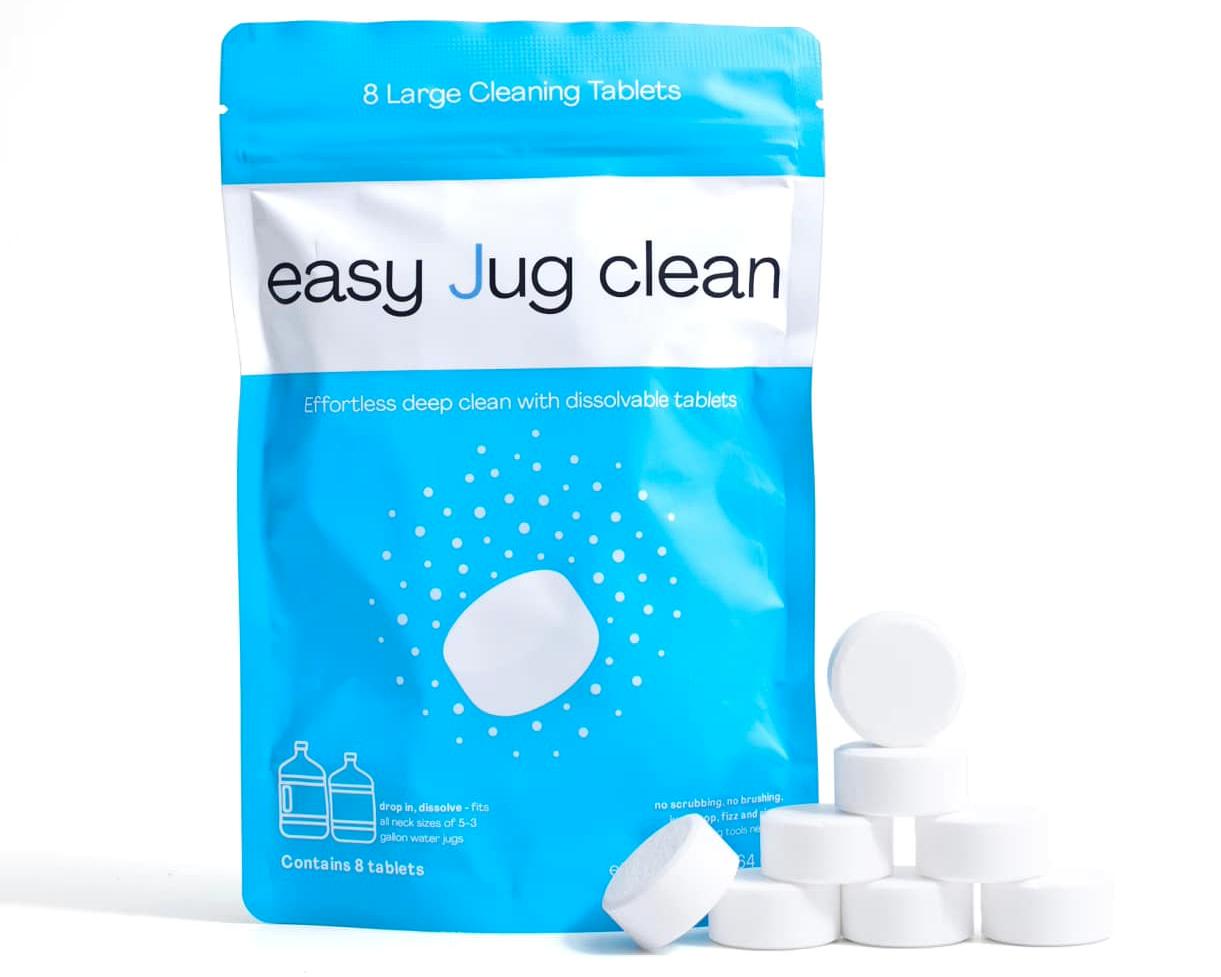
Watch Easy Jug Clean's active oxygen sanitize a 5 gallon water jug without scrubbing:
✅ Active Oxygen. Superior Sanitization. Safer Chemistry. One Tablet.
Q: Is there ever a situation where bleach would be preferable for water container sanitization?
In emergency situations without access to sodium percarbonate products — natural disasters, extended camping, preparedness scenarios — the CDC's bleach protocol is a valid fallback and has genuine value in those contexts. The trade-offs described above are acceptable in an emergency use scenario. For regular household weekly maintenance of an actively used water jug and dispenser system, active oxygen is the better choice by every relevant measure.


 Order now — get it by