Glass vs Plastic 5 Gallon Water Jugs: Which Is Easier to Keep Clean?
Reading time: ~6 minutes | Glass Jugs Plastic Jugs Comparison
Head-to-Head Comparison
| Factor | Glass Jug | Plastic Jug (BPA-free) |
|---|---|---|
| Odor absorption | ✅ None — glass is non-porous | ⚠️ Some — plastic can absorb odors over time |
| Scratch resistance | ✅ Excellent — glass doesn't scratch from cleaning | ⚠️ Moderate — brush cleaning causes micro-scratches |
| Biofilm formation rate | ✅ Slightly lower — smoother surface | ⚠️ Slightly higher — micro-scratches provide anchor points |
| Mineral scale buildup | Same — both accumulate scale equally | Same — calcium deposits on both surfaces |
| Chemical leaching | ✅ None | ⚠️ Minimal with modern BPA-free plastics; risk increases with age/UV |
| Weight | ❌ Heavy — 5 gal glass jug weighs ~11 lbs empty | ✅ Lighter — ~2–3 lbs empty |
| Breakage risk | ❌ High — shatters if dropped | ✅ Low — plastic is impact-resistant |
| UV resistance | ✅ Excellent — glass doesn't UV-degrade | ⚠️ Degrades with extended UV exposure |
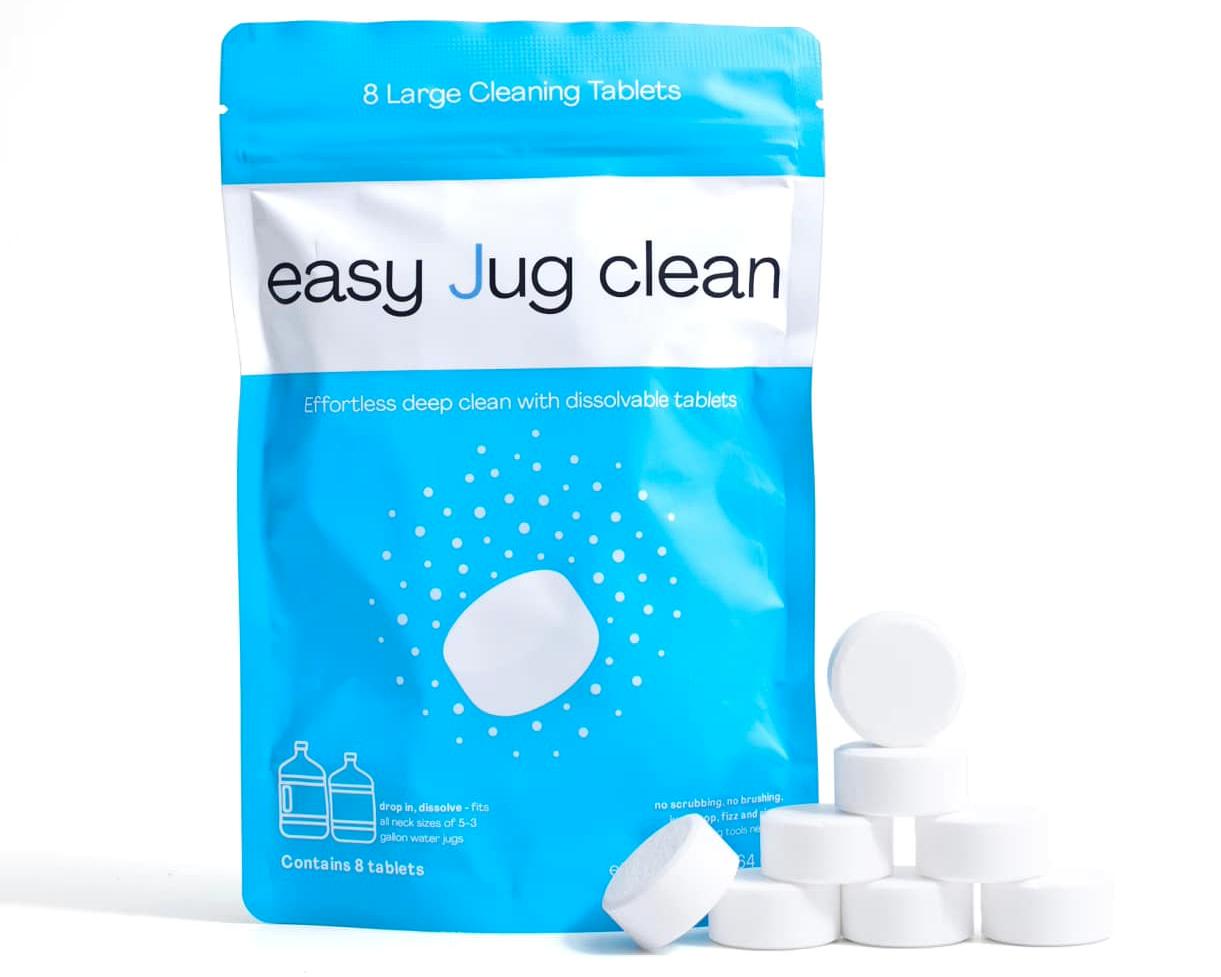
| Easy Jug Clean compatibility | ✅ Fully compatible | ✅ Fully compatible |
| Cleaning frequency needed | Weekly (same as plastic) | Weekly (same as glass) |
Where Glass Has a Genuine Edge
Glass wins on three meaningful criteria for jug hygiene: it doesn't absorb odors from cleaning products or water, it doesn't develop micro-scratches from proper cleaning (which accumulate bacteria in plastic), and it has no risk of chemical migration into water regardless of age, temperature, or storage conditions. For households where these concerns are priorities — families with health conditions, those in very hard water areas who need frequent cleaning, or anyone who has noticed plastic taste issues — glass is a legitimate upgrade.
Where Plastic Has the Practical Edge
The 11-pound empty weight of a glass 5 gallon jug is not trivial — filled, it approaches 53 pounds. For households where lifting the jug to change it is already challenging, or where drop risk is a concern (households with children, pets, or uneven flooring), the breakage hazard of glass is a genuine safety consideration. Shattered 5 gallon glass jugs produce extremely dangerous glass shards across a large area. For most households, BPA-free plastic from a reputable brand, cleaned regularly with Easy Jug Clean, is perfectly safe and far more practical.
See how Easy Jug Clean cleans a 5 gallon water jug in 20 minutes — no scrubbing required:
✅ Works on Glass and Plastic Equally — Zero Adjustments
Easy Jug Clean's food-grade formula is designed for 3–5 gallon jugs in both glass and plastic. Same protocol. Same results.
Frequently Asked Questions
Q: Does glass require different cleaning than plastic?
No. The biofilm, mineral scale, and odor challenges are the same in both glass and plastic jugs — the cleaning chemistry required is identical. Easy Jug Clean works equally well on both, and the protocol (2 tablets, 20-minute soak, rinse) is the same.
Q: Can Easy Jug Clean etch glass surfaces?
No. The formula contains no hydrofluoric acid or abrasive compounds. The mild acidity from fumaric acid is well within the range that food-contact glass is designed to handle. Glycerin in the formula actually conditions both glass and plastic surfaces after cleaning.


 Order now — get it by