How to Deep Clean a Water Cooler Jug That's Been Neglected for Months
Reading time: ~7 minutes | Deep Clean Neglected Jug Water Cooler Recovery
How to Deep Clean a Water Cooler Jug That's Been Neglected for Months
What a Months-Neglected Jug Contains
Before you start cleaning, it helps to understand what you're actually dealing with:
Mature Biofilm (The Real Problem)
Biofilm isn't just a thin layer of bacteria. After weeks or months without cleaning, it becomes a thick, organized matrix—basically a protective fortress for bacterial colonies. This biofilm:
- Is resistant to simple rinsing
- Prevents normal water from reaching the microbes inside
- Can contain dozens of bacterial species living in cooperative communities
- Makes the jug interior slimy or sticky to the touch
Mineral Scale Buildup
Hard water minerals (calcium and magnesium) accumulate in crevices and on the jug's interior surfaces. In a neglected jug, this scale is thick, layered, and concentrated at water-level lines where evaporation concentrates minerals. This scale doesn't just look bad—it provides additional surface area for biofilm to anchor.
Off-Flavor and Odor Compounds
Bacterial metabolism produces sulfur compounds, aldehydes, and other volatile organic compounds. A neglected jug smells distinctly off—musty, sulfurous, or stale. The smell is an indicator of actual bacterial activity and secondary metabolites.
Should you be concerned about the jug being unsafe to recover? Not necessarily. Most bacteria in neglected water jugs are environmental (Bacillus, Pseudomonas) or biofilm bacteria, not acute pathogens. That said, if you see visible mold or the water has taken on a brown or black color, consider replacing the jug rather than recovering it. For most neglected jugs, recovery is safe and effective.
The Deep Cleaning Protocol: Two-Treatment Recovery
The standard water cooler jug cleaning method works for regular maintenance. For a severely neglected jug, you'll need an intensified protocol: two consecutive treatments with extended soak times.
First Treatment: Breaking Through Mature Biofilm
What if the solution is still clear? This can happen if the biofilm is extremely thick or embedded. This is normal—proceed to the second treatment.
Second Treatment: Reaching Embedded Biofilm and Scale
Why Two Treatments Instead of One?
Mature biofilm is resilient. A single treatment oxidizes the outer layer and disrupts the biofilm matrix, but embedded microbial communities within the biofilm survive. The first treatment weakens the protective structure. The second treatment penetrates deeper into the damaged biofilm and kills organisms that were sheltered during the first cycle. Two treatments = completion. One treatment = partial recovery.
Signs of Successful Recovery
After your two-treatment protocol, your jug should display these characteristics:
- Clear water: No cloudiness, no visible particles, no film on the interior surface.
- No odor: The jug smells like clean plastic, not like stale water or sulfur.
- Smooth interior: The sliminess is gone. The plastic interior feels clean to the touch.
- Clear cleaning solution: When you do your first normal maintenance cleaning (in a week or so), the cleaning solution should barely discolor—indicating low biofilm levels.
You've succeeded when the jug no longer smells off and the cleaning solution doesn't show heavy discoloration. This indicates biofilm and bacterial populations are under control.
Post-Recovery Maintenance Schedule
A recovered jug needs aggressive maintenance to prevent sliding back into neglect:
- Week 1 after recovery: Do one standard single-tablet treatment (20-minute soak) as preventive maintenance. This catches any surviving biofilm before it rebuilds.
- Weeks 2–4: Return to standard water jug cleaning protocol (2 tablets, 20 minutes, every 5–7 days).
- Ongoing: Set a calendar reminder for weekly cleaning. A jug that's been neglected for months needs you to build a habit of consistent maintenance.
When to Replace Instead of Recover
Some jugs are too far gone for recovery:
- Visible black or green mold: If you see actual mold growth inside the jug (not just discoloration), replacement is safer than recovery.
- Cracks or damage: If neglect has revealed cracks in the plastic, bacteria can hide in those crevices permanently. Replace.
- Permanent odor: If the jug still smells wrong after two full treatments, the contamination may be embedded in microscopic plastic degradation. Replace.
- Cloudy water that won't clear: After recovery, the jug should hold clear water. If cloudiness persists despite cleaning, you likely have suspended organic matter or advanced decomposition. Replace.
Trust your senses. If something feels wrong about the jug—the smell doesn't improve, the water still looks off, or you feel unsafe using it—replace it. The cost of a new jug ($20–40) is worth the peace of mind and health security.
FAQ: Deep Cleaning Neglected Jugs
Can I use a brush during the deep clean?
Avoid brushes. They can damage the plastic and actually push biofilm deeper into microscopic scratches rather than loosening it. The active oxygen chemistry is more effective and gentler on the jug.
Should I use hotter water for neglected jugs?
Warm, not hot. Very hot water (above 140°F) can soften or warp plastic water jugs. Warm water (100–110°F) is sufficient and safe for the jug material.
What if the jug still smells after two treatments?
Do one more single-tablet treatment (20 minutes). If the smell still persists after a third treatment, the jug may be beyond recovery. Consider replacement.
Why 3 tablets on the first treatment?
Three tablets provide higher active oxygen concentration to break through the mature biofilm layer. After the first treatment weakens the biofilm, two tablets are sufficient for the second treatment to penetrate and finish the job.
How long does full recovery take?
The actual deep cleaning takes about 1 hour (30 minutes + rinsing + 30 minutes again + rinsing). But full recovery—when the jug is biologically stable—takes a few days of best practices for water jug cleaning to establish new habits and ensure no rapid regrowth.
Recover Your Neglected Jug Today
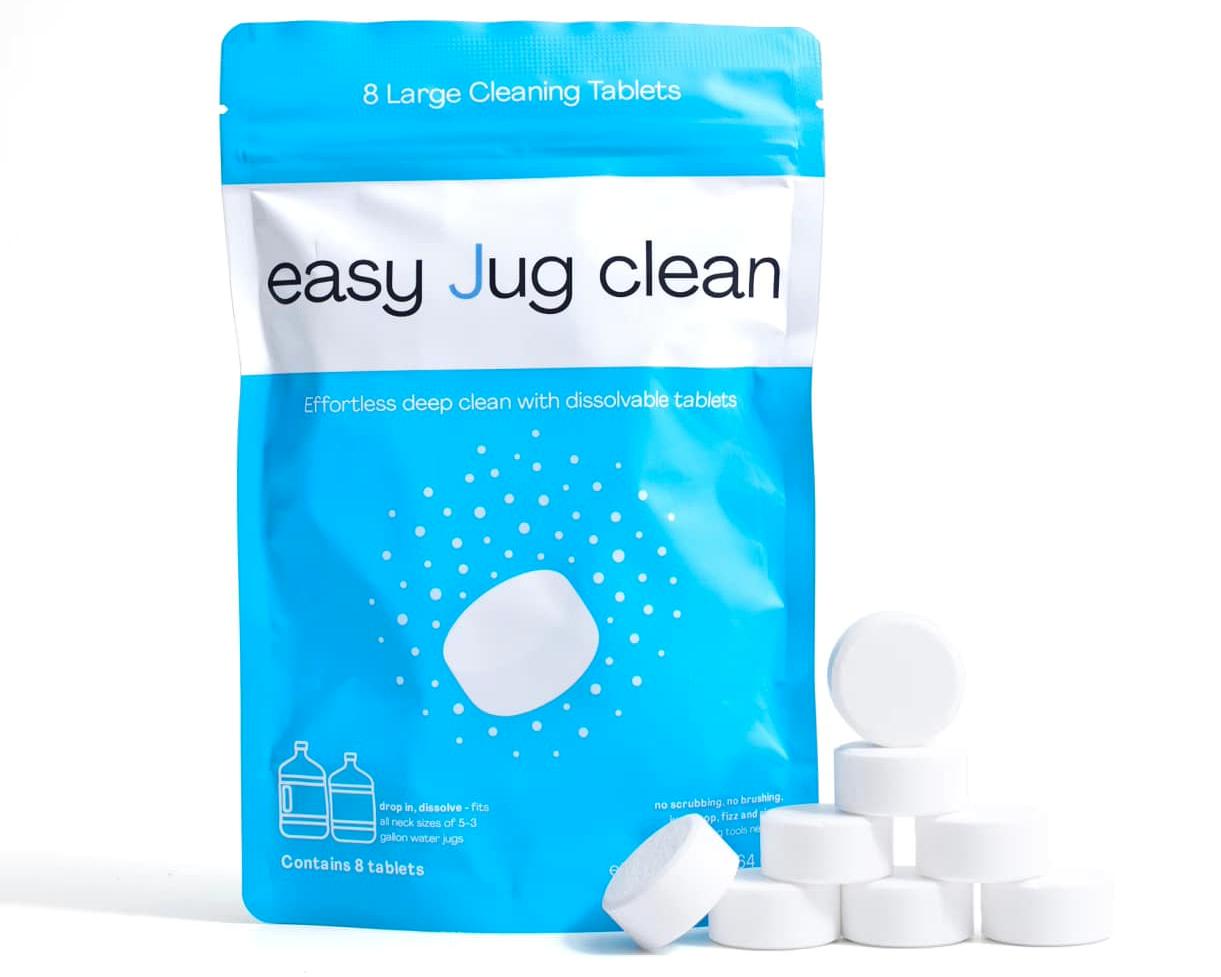
Easy Jug Clean's active oxygen chemistry breaks through mature biofilm and mineral scale. The deep protocol gets even the most neglected jugs back to safe drinking standards.
Get Easy Jug Clean – for 8 tablets
Watch Easy Jug Clean deep clean a neglected water cooler jug with no scrubbing:


 Order now — get it by