Is It Safe to Drink From a Cleaned Moldy Jug? A Decision Framework
Is It Safe to Drink From a Cleaned Moldy Jug? A Decision Framework
Reading time: ~5 minutes | Safety Assessment Post-Cleaning Decision Framework
The Three Variables That Determine the Answer
"Is it safe?" feels like a binary question, but it's really three variables combined.
- How thoroughly was the mold actually eliminated? Surface-only cleaning leaves substrates and hyphae behind. Comprehensive cleaning (active oxygen + chelation + surfactant + 30-minute soak + double treatment for first-time mold) eliminates the underlying ecosystem.
- What cleaning chemistry did you use? Some cleaning methods leave their own residue concerns even after the mold is gone — bleach with incomplete rinsing, harsh detergents in narrow-neck containers, vinegar concentrations that affect taste long-term.
- What state is the jug substrate in? A jug that's been heavily damaged by previous bleach treatments or brushing has compromised plastic that may continue to host contamination even after cleaning.
The "safe to use again" answer is yes when all three variables are favorable. It's no when any of them are problematic.
Decision Framework by Cleaning Method
If You Used Easy Jug Clean (Two Consecutive Treatments)
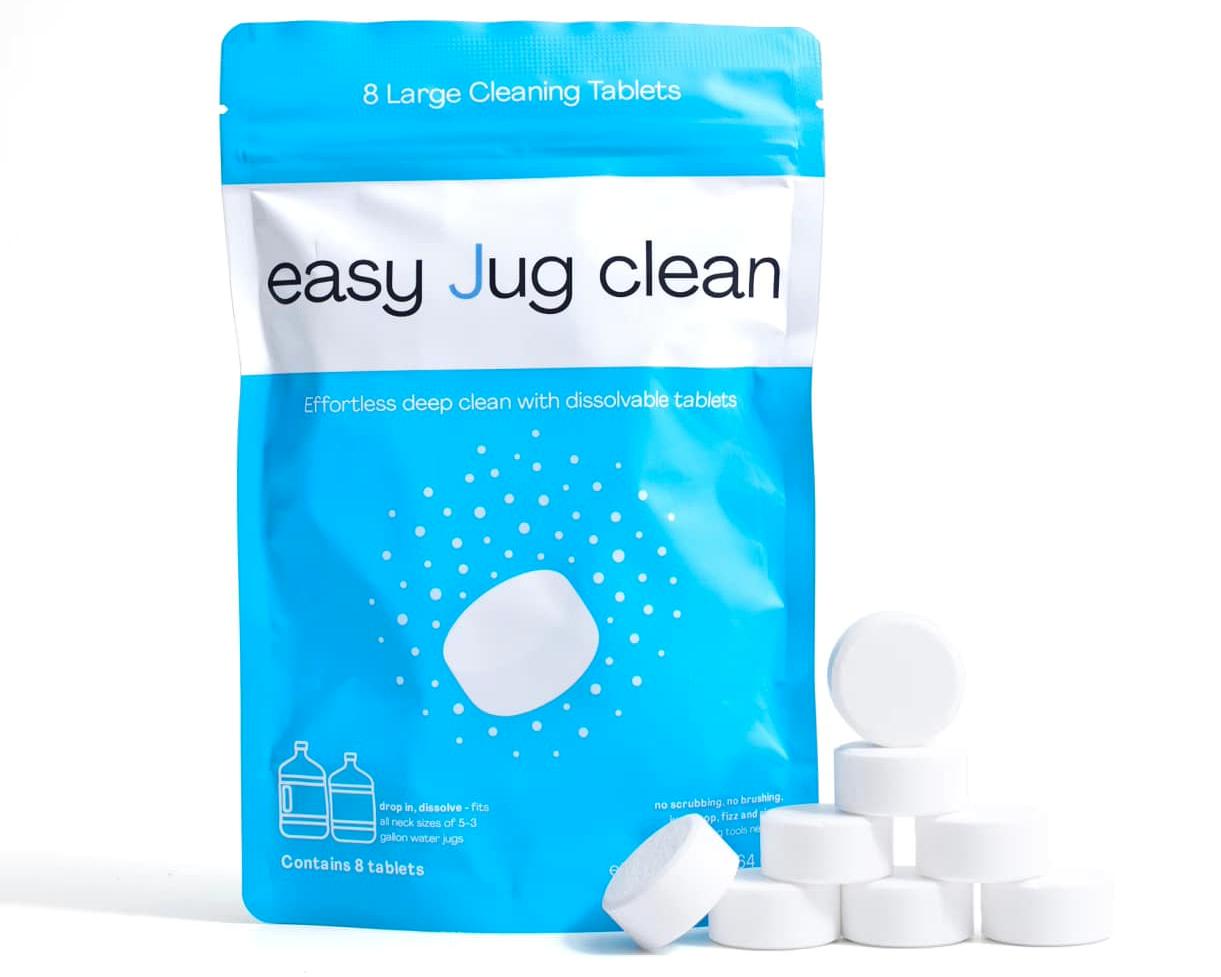
This is the cleaning protocol designed specifically for first-time mold elimination. After two consecutive 30-minute treatments with three rinse cycles each, plus a 24-hour drying period, the jug is generally safe to refill and use. The active oxygen has eliminated mold cells and hyphae; the chelating agents have removed the biofilm scaffold; the surfactants have lifted the debris; the food-grade chemistry leaves no residue concern.
Resume normal use: Yes, with weekly Easy Jug Clean treatments to prevent recurrence.
If You Used Bleach
Bleach kills visible mold effectively. The post-cleaning safety question depends on (1) whether you fully rinsed all bleach residue from the narrow-neck container and (2) whether the bleach left any plastic damage.
If well-rinsed (3+ cycles): Generally safe to use. Watch for any taste changes — bleach residue typically produces a characteristic chlorine taste in subsequent water. Plan to switch to active oxygen for future cleaning to prevent cumulative plastic damage.
If poorly rinsed: Chlorine residue concerns apply. Run an Easy Jug Clean cycle to clear residue before resuming use.
If You Used Vinegar
Vinegar may have made the visible spots fade without actually killing the mold colony. Vinegar isn't a registered fungicide, and the visible improvement may be cosmetic rather than microbiological.
Recommendation: Don't trust a vinegar-only treatment for mold elimination. Run an Easy Jug Clean cycle as a verification treatment before resuming use.
If You Used Just Hot Water and a Brush
Hot water + scrubbing dislodges some surface mold but doesn't kill underlying hyphae or remove biofilm. The jug looks cleaner but the contamination ecosystem is largely intact.
Recommendation: Don't resume use without proper cleaning. Run two consecutive Easy Jug Clean treatments before refilling.
The Visual Inspection After Cleaning
After your cleaning is complete and the jug has air-dried, do a final visual check before resuming use:
| What You See | What It Probably Means | What to Do |
|---|---|---|
| Clear, smooth interior — no visible spots or staining | Successful cleaning | Resume use; weekly maintenance |
| Faint residual coloration where mold was | Pigment in plastic; not active mold | Resume use; verify no return over 2 weeks |
| Persistent texture or "shadow" of former mold | Possible substrate damage; some hyphae may remain | Run additional Easy Jug Clean cycle; reassess |
| Visible mold-appearing spots remain | Cleaning was insufficient | Repeat cleaning; if persistent after 2 cycles, consider replacement |
| Cloudy or hazy walls | Possible mineral scale revealed by cleaning | Run additional cycle for chelation effect |
| Cracks, chips, warping | Structural damage | Replace the jug |
The Two-Week Verification Period
The most reliable confirmation that your cleaning worked is the absence of visible mold over the next two weeks of normal use. Mold that survived cleaning will typically reappear within that timeframe — usually faster than fresh airborne spores would establish a brand-new colony from zero. If two weeks pass with no return of visible spots, the elimination was successful.
When to Replace Rather Than Reuse
Some moldy jugs aren't fully recoverable. Replace if:
- Persistent dark staining remains after two consecutive proper cleanings
- The jug is more than 5 years old and has had previous mold contamination
- There are visible cracks, chips, or warping
- The interior shows obvious scratch damage that's hosting the contamination
- Any household member is in a high-risk health group and you want to remove all uncertainty
The replace-or-save decision is judgment-based, but cleaning works for most cases.
Special Considerations for High-Risk Households
If anyone in your household is immunocompromised, has severe mold allergies, is an infant, or is elderly with health complications, the threshold for confidence after cleaning is higher. For these households:
- Run two consecutive Easy Jug Clean treatments rather than one
- Extend the verification period to four weeks instead of two
- Consider replacing the jug rather than restoring it, particularly if the contamination was extensive
- Talk to a healthcare provider if anyone has experienced symptoms during the contamination period
✅ Cleaning You Can Trust the Result Of
Two consecutive Easy Jug Clean cycles for first-time mold removal, plus weekly maintenance. After 24-hour air-dry and a clean visual inspection, the jug is ready for normal use again.
FAQ: Post-Cleaning Safety
Q: How can I be 100% sure all the mold is gone?
You can't, without lab testing. But you can be confident enough for normal household use after a proper cleaning protocol followed by a two-week verification period with no recurrence. Lab testing is appropriate only for unusual circumstances or high-risk health situations.
Q: Can I just boil water from the cleaned jug as extra insurance?
Boiling kills mold spores in water but doesn't address contamination on the container's interior surface. If your concern is residual contamination in the jug, the answer is more cleaning, not boiling.
Q: My family member is sensitive — should we just buy a new jug?
Reasonable choice. The cost of a new 5-gallon jug is small compared to the peace of mind for sensitive household members. When to replace vs save covers this judgment in more depth.
The Bottom Line
A properly cleaned moldy jug can be safe to use again, and most cases respond well to two consecutive Easy Jug Clean treatments. The decision framework: clean thoroughly with appropriate chemistry, inspect visually, watch for two weeks, and trust the result if no recurrence appears. The pillar guide walks through the full cleaning protocol.


 Order now — get it by