Chlorine Residue in Water Jugs: Is It Harmful and How to Avoid It
ChlorineResidue SafetyBleach Risks · Reading time: ~7 minutes
The Three Forms of Chlorine Residue — Why They Matter Differently
Free chlorine remaining in the rinsed jug as dissolved hypochlorous acid or hypochlorite ion. At trace levels (under 4 ppm — the EPA maximum contaminant level for drinking water treatment), dissolved free chlorine is considered safe for consumption. The concern arises from over-application: using more than the recommended concentration, or incomplete rinsing that leaves measurably higher dissolved chlorine in the water you subsequently store. A "slight bleach smell" in your water is often this form at above-acceptable concentrations.
When hypochlorite reacts with organic material — which is present in any jug that has contained water, biofilm, or mineral deposits — it produces disinfection byproducts (DBPs) including trihalomethanes (THMs) and haloacetic acids (HAAs). The most common THMs include chloroform, bromodichloromethane, and dibromochloromethane. The EPA regulates these in drinking water precisely because of their carcinogenic potential at sustained exposure. In a jug with organic load (even residual biofilm or dissolved organics from previous use), bleach-based sanitization generates these compounds within the jug's interior — and some remain absorbed into the plastic, releasing slowly into subsequent water fills.
Chlorine species can form covalent bonds with certain plastic additives and surface functional groups, creating organochlorine compounds that bind to the container walls. These are not removed by rinsing — they remain on the surface indefinitely and slowly leach back into water stored in the jug over time. Research on chlorinated plastics shows that surface-bound organochlorines can release at low but continuous rates for weeks after the initial bleach treatment. In a weekly-bleach-cleaned jug, this amounts to a chronic low-level exposure pathway that accumulates with each treatment.
The Rinsing Problem: Why Complete Chlorine Removal Is Practically Impossible
The CDC's rinsing guidance for water container sanitization assumes a container you can physically inspect and wipe dry — or at minimum, one where you can confirm complete flushing. A 5 gallon narrow-neck jug allows none of these. You cannot see the lower walls. You cannot physically dry them. You can only pour water in and pour it out, hoping gravity achieves complete dilution of the bleach solution. In practice, surface tension effects mean residual solution pools at the curved bottom corners and in surface micro-fractures — exactly where rinsing is least effective. Thorough rinsing reduces but cannot eliminate all three forms of chlorine residue described above.
Watch the right cleaning approach versus what a brush actually does to your jug:
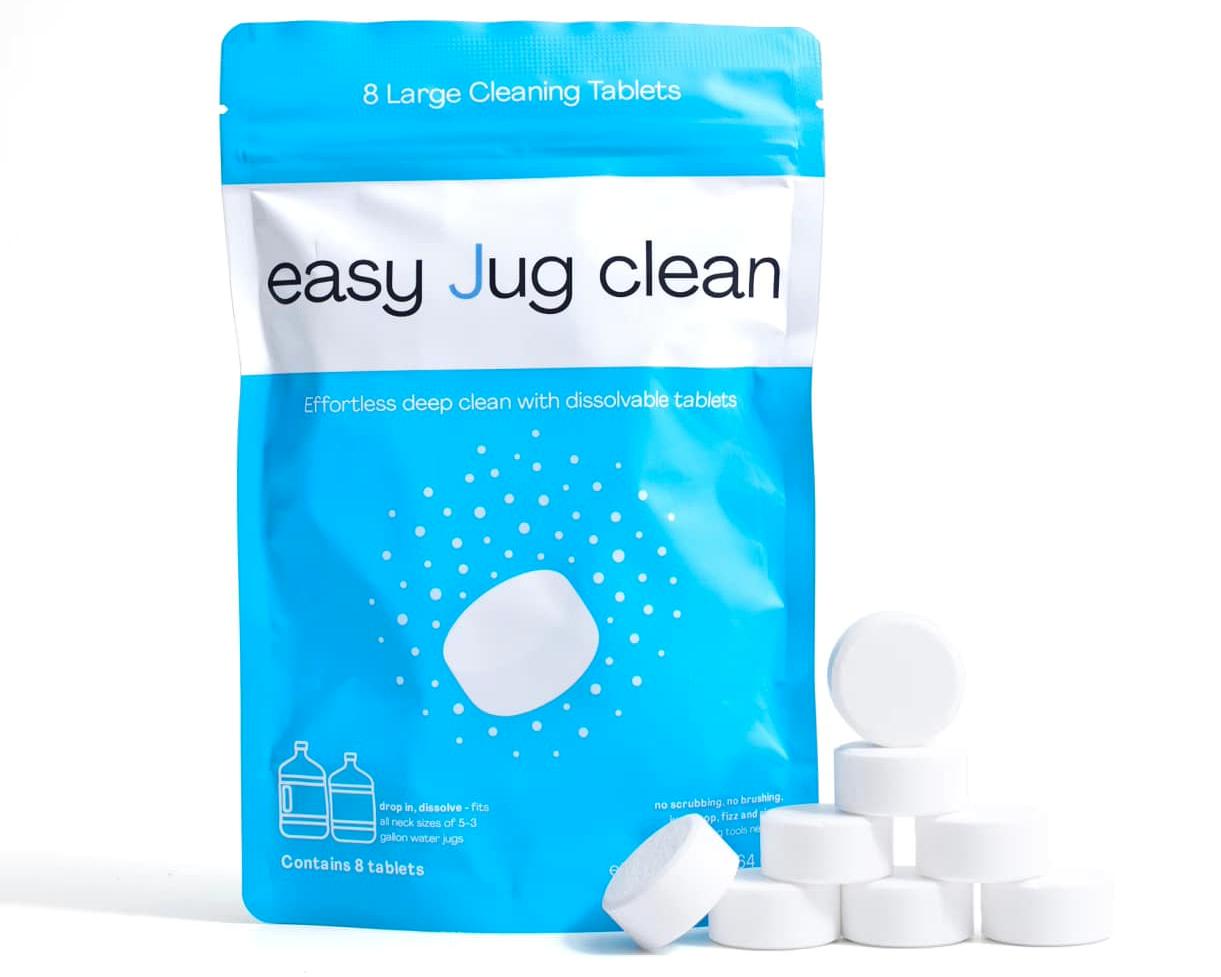
✅ Zero Chlorine. Zero Trihalomethanes. Zero Compromise.
Q: If municipal water already contains chlorine, does it matter whether I add more from cleaning?
Yes, for two reasons. First, municipal chlorine is tightly regulated and maintained within safety thresholds; cleaning-derived chlorine adds to this baseline unpredictably. Second, and more significantly, THMs are generated when chlorine reacts with organic material — and the interior of a used water jug has significantly more organic material (biofilm residue, dissolved organics) than treated tap water. More organic material plus more chlorine produces more THMs than municipal water alone would generate.


 Order now — get it by