The damage a bottle brush does to your water jug is invisible after the first cleaning session. It remains largely invisible after the tenth. But it's cumulative, it's real, and its consequences β in terms of bacterial adhesion, scale accumulation, and microplastic release β compound with every subsequent cleaning. By the time the damage becomes visible as surface haze or reduced clarity, the underlying degradation has been progressing for months.
The Four-Stage Progression from New Jug to Compromised Surface
New Jug
Surface roughness in nanometer range. Surface energy is uniform, smooth. Bacterial adhesion energy is at minimum. Scale nucleation energy is high β minerals require more activation to precipitate on smooth surfaces. This baseline is what consistent tablet maintenance preserves indefinitely.
After 5β10 brush cycles
Micro-scratches detectable under magnification. Surface roughness has increased to low micron range. Bacterial adhesion rate begins measurable increase β up to 30% higher attachment rate on scratched vs. new surfaces in some studies. Scale nucleation energy drops β mineral deposits begin forming faster. Not visible to naked eye.
After 20β40 brush cycles
Surface haze visible in raking light. Walls that were glossy now appear dull. Micro-scratch depth has reached into polymer sub-layers in some areas. Bacterial adhesion rate 50β100% higher than new jug. Scale accumulates visibly faster than earlier in the jug's life. The jug needs more cleaning effort per session to achieve the same result as before.
After 50+ brush cycles (6+ months weekly)
Permanent damage visible β uniform haze, potential fine scratch marks visible in bright light. Surface now has micro-channel network providing sheltered zones for bacteria. Scale embeds in deepened scratches. Microplastic release rate measurably higher than new jug. Cleaning becomes progressively less effective per unit of effort. This damage is irreversible.
The Three Consequences That Matter for Your Health
1. Accelerated Biofilm Establishment
Bacteria attach to surfaces through a process governed by surface energy β specifically, the Derjaguin-Landau-Verwey-Overbeek (DLVO) theory of colloidal interactions. Rougher surfaces have lower effective energy barriers to bacterial adhesion. On a scratch-damaged jug surface, the same bacteria introduced on Monday establish irreversible EPS matrix attachment by Thursday rather than Saturday. The same cleaning interval provides meaningfully less contamination-free days on a damaged jug than on an intact one.
2. Increased Microplastic Release
Scratches are breaks in polymer chain continuity. At scratch edges, polymer chains have been fractured and protrude into the water environment with broken ends. These chain-end fragments release into the water at higher rates than intact surface polymer. Studies on repeated mechanical cleaning of food-grade plastics show monotonically increasing microplastic particle counts in contact water with each additional mechanical cleaning cycle.
3. Progressively Diminishing Returns on Cleaning
As surface roughness increases, the same cleaning chemistry has to address more surface area (each scratch valley is additional area) while biofilm in the deeper scratches experiences lower active chemistry concentration (the scratch geometry reduces diffusion). Each cleaning session achieves a lower percentage reduction in contamination than the same session would achieve on an intact surface β the jug gets progressively harder to clean with every cleaning.
β οΈ The fundamental paradox: Bottle brush cleaning progressively makes the jug harder to clean, faster to contaminate, and more microplastic-releasing with every session. The tool being used to maintain hygiene is the primary driver of the jug's long-term hygiene degradation. This paradox resolves only by switching to a cleaning method that achieves the cleaning goal without damaging the surface β which is precisely what tablet-based active oxygen chemistry does.
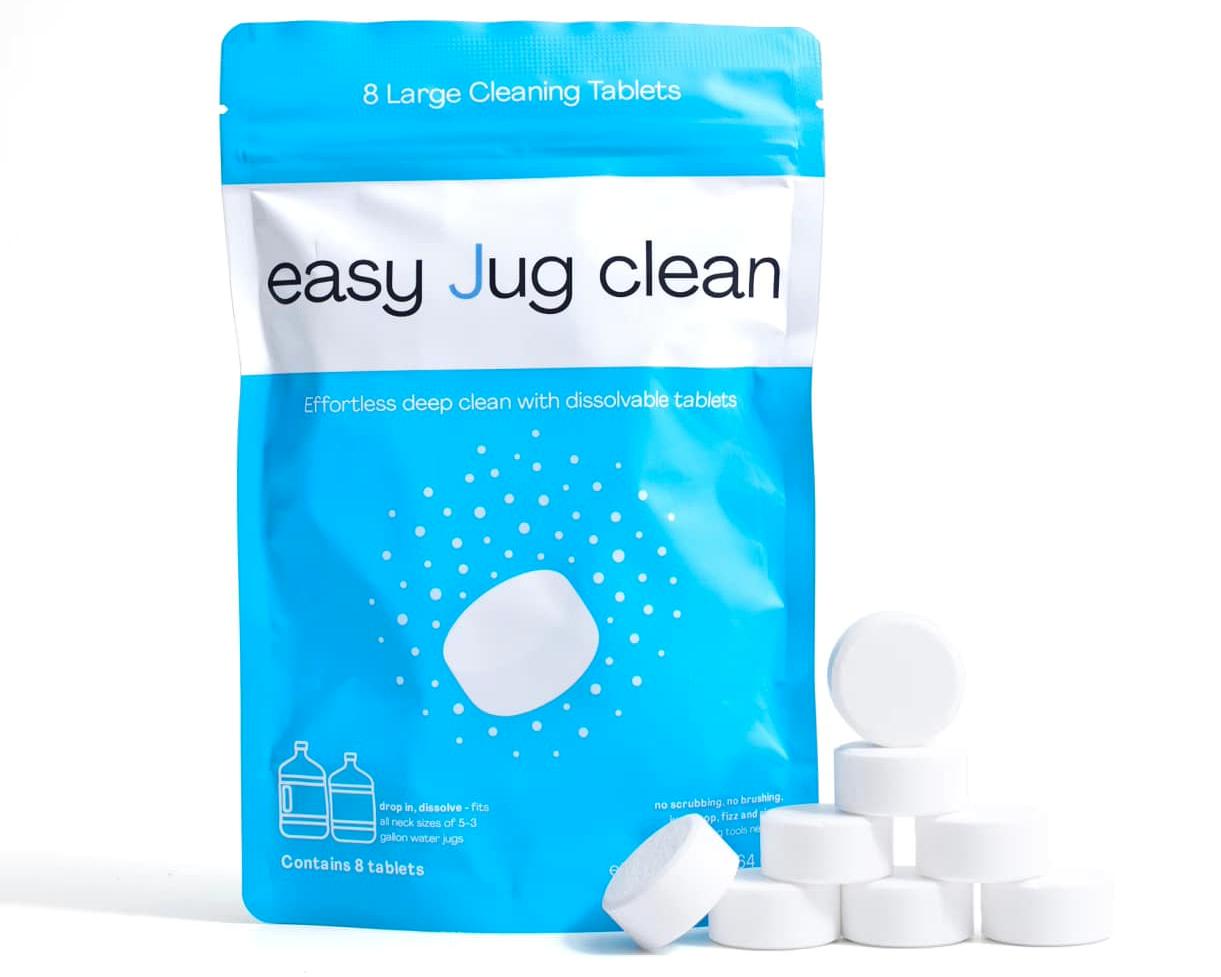
β The alternative path: A jug maintained with weekly Easy Jug Clean treatments from day one will have the same surface properties at year two as it had at month one β smooth, low-adhesion energy, minimal microplastic release. The glycerin surface conditioner in each tablet actively maintains surface energy rather than degrading it. The investment in the correct cleaning method pays compound interest in jug longevity and consistent hygiene.
Β
See why the tablet method beats manual cleaning on every single measure that matters:
Β
β Stop the Damage Today. The Jug You Protect This Week Is the One You'll Thank in Two Years.