Soap Residue in Your Water Jug: Why It's Hard to Rinse Out and Why It Matters
Soap ResidueSurfactant FilmWater Taste · Reading time: ~6 minutes
Why Soap Doesn't Rinse Cleanly from a 5 Gallon Jug
In open containers like plates and bowls, this adsorption is overcome by running water over the surface with mechanical assistance — the combination of flow velocity and physical pressure from a hand or cloth removes the surfactant film. In a 5 gallon narrow-neck jug, neither running-water velocity across all surfaces nor physical wiping is achievable. Rinsing consists of pouring water in, sloshing, and pouring out. The surfaces that the rinsing water contacts adequately — the bottom and lower walls — retain less surfactant residue. The surfaces it contacts poorly — the upper walls, shoulder, and any corners — retain more.
What Soap Residue Does in Your Water
The surfactant film remaining on the jug's interior walls dissolves slowly into the water stored in the jug. The dissolution rate is concentration-gradient driven — as the dissolved surfactant in the water increases, the rate of additional dissolution from the surface decreases. The equilibrium is reached with a measurable dissolved surfactant concentration in the water — enough to produce a taste threshold in sensitive individuals, and enough to produce effects in people with sensitivities.
- Gastrointestinal irritation: Anionic surfactants in drinking water above threshold concentrations can cause nausea, diarrhea, and stomach cramping — particularly in children and people with sensitive digestive systems. Cats and some other pets are more sensitive still (see our pet safety article).
- Mucous membrane contact: SLS is a documented mucous membrane irritant. Repeated low-level consumption in drinking water means repeated mucous membrane exposure — a different exposure route than the incidental skin contact during dishwashing.
- Disruption of beneficial gut bacteria: Surfactants are designed to disrupt lipid membranes — the same membrane structure that bacterial cells, including beneficial gut microbiome bacteria, possess. Regular low-level surfactant ingestion through contaminated drinking water may affect gut microbiome composition over time.
How to Test Whether Your Jug Has Soap Residue
Fill the jug with room-temperature water and let it sit for 2 hours. Pour a glass and hold it to the light — if you see a slight iridescence or film on the surface of the water, surfactant residue is present. An even simpler test: does the water taste flat, slightly soapy, or oddly smooth? That textural smoothness is the sensation of low-level surfactant on oral mucosa. It shouldn't be there.
A definitive test: shake the filled jug vigorously for 10 seconds. If foam forms and persists for more than a few seconds, the surfactant concentration in the water is high enough to produce a soap bubble structure — meaning the concentration is well above trace levels.
Watch how Easy Jug Clean eliminates water jug odors permanently — not just masks them:
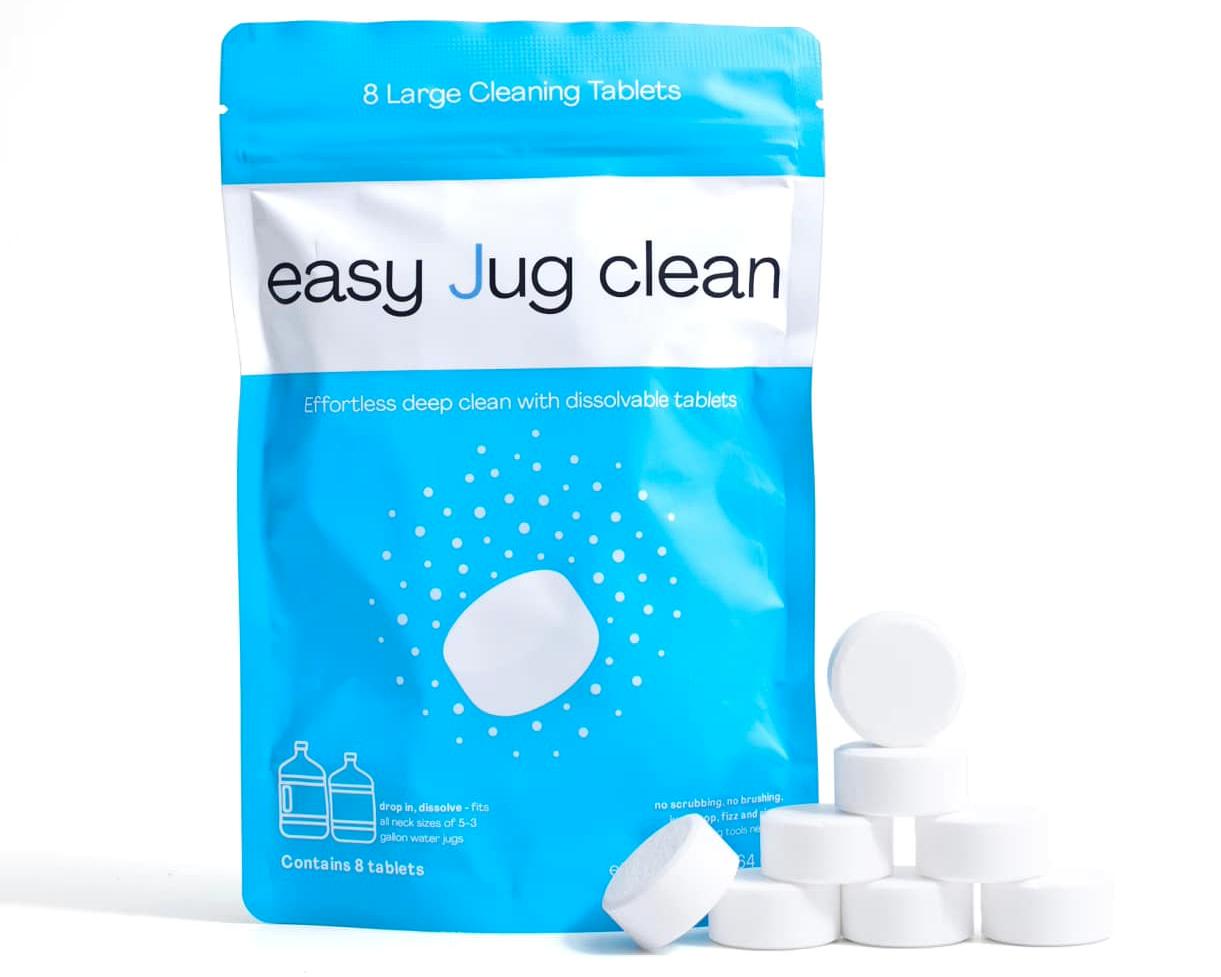
✅ Rinses Clean. Tastes Neutral. Every Fill.
Q: If I rinse the jug 5–6 times after soap cleaning, does that remove all the residue?
Multiple rinse cycles significantly reduce (but don't eliminate) surfactant residue from anionic surfactants on plastic. The diminishing returns of each additional rinse cycle mean you'd need an impractical number — some estimates suggest 15–20 fill-and-pour cycles to approach near-zero residue from SLS on HDPE. The gravity-rinsing limitation of a narrow-neck container makes this even less effective than in open containers. The more practical solution is to use a surfactant that doesn't adsorb to the plastic in the first place.


 Order now — get it by