Why Dish Soap Is the Wrong Tool for Cleaning a Water Jug
Reading time: ~5 minutes | Dish Soap Wrong Method Surfactant Residue
Three Reasons Dish Soap Fails in a Water Jug
Wrong Chemistry for What's Actually In Your Jug
Dish soap's active chemistry is based on synthetic surfactants — compounds that form micelles around fat and oil molecules, allowing water to rinse them away. The primary contaminants in a reused water jug are biofilm (a bacterial colony in a protective polymer matrix) and mineral scale (calcium and magnesium carbonate deposits). Neither is fat or oil. Surfactants don't penetrate biofilm EPS matrices and have no chemical mechanism for dissolving mineral scale. Dish soap is the right chemistry for dishes — it's the wrong chemistry for what lives in your jug.
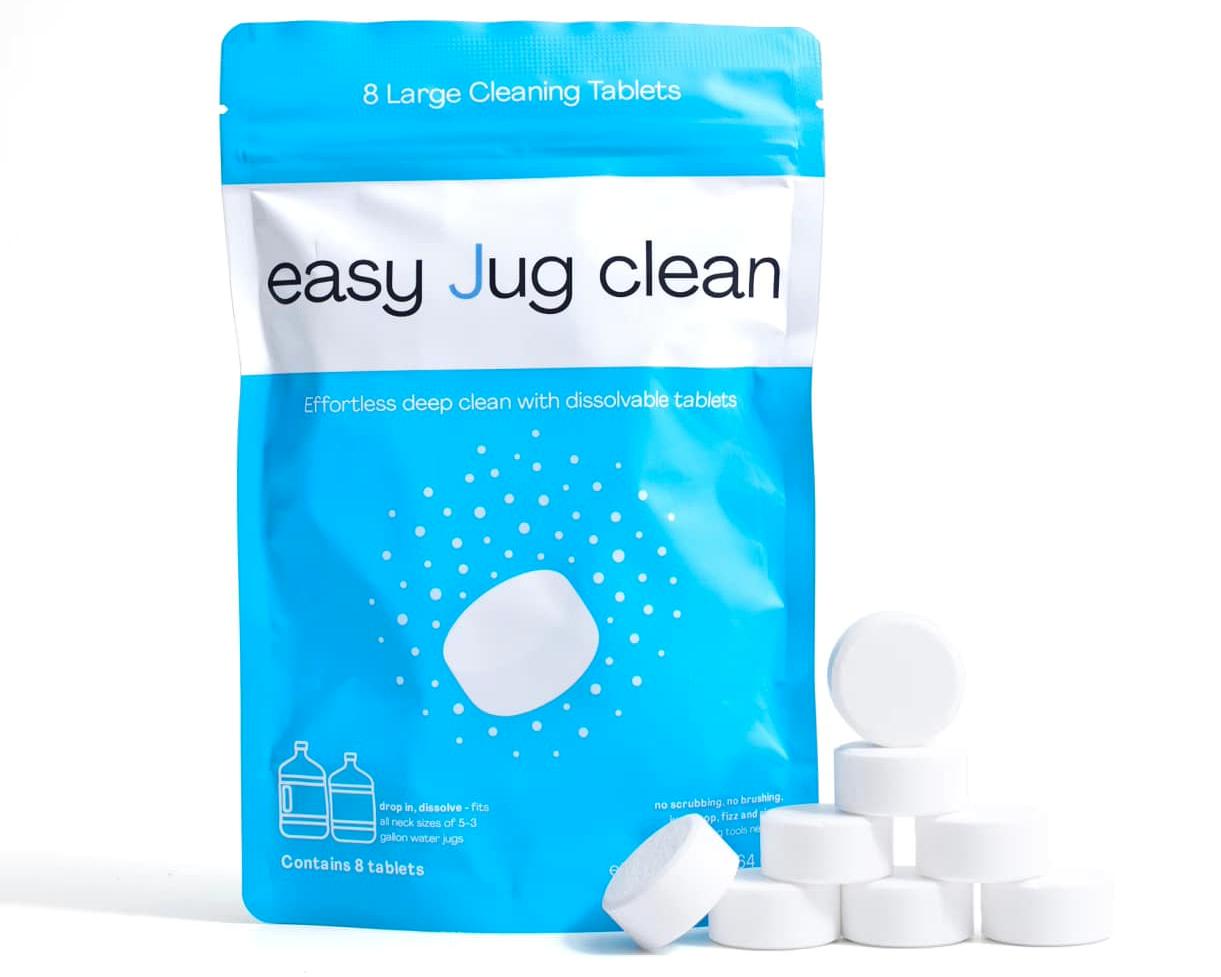
Dish soap is designed for solid food residue on open surfaces — it was never formulated for biofilm inside a deep, narrow container. Here's the right method for a 5 gallon water jug.
Wrong Container for How Soap Works
The Residue Problem Is Worse Than You Think
Synthetic surfactants — the active ingredients in most dish soaps — have an affinity for plastic surfaces. They adsorb to the surface through weak van der Waals forces and resist rinsing in ways that they don't on open, flat dishes where running water and physical wiping can remove them. In a narrow-neck jug, the rinsing mechanism is gravity-driven — water poured in, sloshed around, poured out. This is far less effective at removing surfactant films than running water over a flat surface. The soap residue that remains in the jug dissolves into your next fill of drinking water, introducing synthetic surfactants that have gastrointestinal irritation potential at repeated low-level exposure. The soapy taste many users normalize is a direct indicator of this residue.
See why the tablet method beats manual cleaning on every single measure that matters:


 Order now — get it by