Sodium Percarbonate: The Food-Grade Sanitizing Ingredient You've Never Heard Of
Sodium PercarbonateActive OxygenFood-Grade Chemistry · Reading time: ~8 minutes
What Sodium Percarbonate Actually Is — The Chemistry
Sodium percarbonate is an adduct — a compound formed by the combination of two simpler compounds that remain associated by hydrogen bonding rather than covalent bonding. Specifically, it's sodium carbonate (Na₂CO₃, also known as washing soda or soda ash) holding hydrogen peroxide (H₂O₂) in its crystal lattice. The formula 2Na₂CO₃ · 3H₂O₂ tells the story: two units of sodium carbonate are bonded with three units of hydrogen peroxide in a dry crystalline structure.
This structure is the source of its practical advantages. In dry form, the hydrogen peroxide component is stabilized by the carbonate lattice — it cannot react without water to dissolve the crystal structure. When water is added, the lattice dissolves and releases both components simultaneously. The hydrogen peroxide begins its sanitizing work through free radical generation, while the sodium carbonate buffers the solution to a mildly alkaline pH that is optimal for the peroxide's efficacy and safe for food-grade plastics.
The Activation Sequence in Your Water Jug
Professional Applications: Where Sodium Percarbonate Is Already Trusted
Sodium percarbonate's food-grade status is not a claim made specifically for Easy Jug Clean — it's an established fact reflected in its professional applications across multiple food and beverage industries:
🍺 Brewery Sanitization
Used in professional brewery line cleaning as a no-rinse-required sanitizer for tanks, lines, and vessels that will contact food-grade beverage products. The food-safe residue profile eliminates the flavor impact concerns that chlorine-based sanitizers create in brewing applications.
🌾 Certified Organic Food Processing
Permitted in certified organic food processing facilities for equipment and surface sanitization where no chlorine compounds are allowed. Certified organic processors rely on percarbonate precisely because of its food-safe breakdown chemistry.
🦷 Dental Products
Used in denture cleaning tablets and teeth whitening formulations — applications requiring direct extended contact with oral mucosa. The same food-safe, non-irritating chemistry that makes it appropriate for mouth contact makes it appropriate for drinking water containers.
🥤 Food Contact Surface Sanitization
EPA-recognized for food contact surface use in food service applications. Used in commercial kitchen sanitization protocols where the sanitizing solution may come into contact with food preparation surfaces without requiring rinse removal.
🌱 Organic Agriculture
Permitted for equipment sanitization in USDA Certified Organic production. The no-chlorine, biodegradable profile satisfies organic certification requirements that prohibit most conventional sanitizing chemicals.
🐱 Pet Bowl Sanitization
Widely recommended in veterinary guidance for sanitizing pet drinking bowls and water fountains — applying the same food-grade safety logic: a container that holds water for daily consumption should be cleaned with chemistry that is safe if trace amounts remain.
Safety Profile: What the Regulatory Record Shows
| Regulatory Framework | Status | Significance |
|---|---|---|
| FDA GRAS (Generally Recognized as Safe) | ✅ GRAS | Recognized as safe for food-contact applications; no safety concerns identified at use concentrations |
| EPA Food Contact Use | ✅ Approved | Approved for sanitizing food-contact surfaces in food service and food processing environments |
| EU Food Contact Materials | ✅ Approved | Listed as permitted substance for food contact surface cleaning applications in EU regulations |
| USDA Certified Organic | ✅ Permitted | Listed on National Organic Program approved materials lists for equipment sanitization |
| EWG (Environmental Working Group) | ✅ Score: 1 (Lowest Hazard) | Lowest possible hazard score; no health or environmental concerns identified |
| Classified as carcinogen | ✅ Not classified | No carcinogenic activity identified; not classified by IARC, EPA, or NTP |
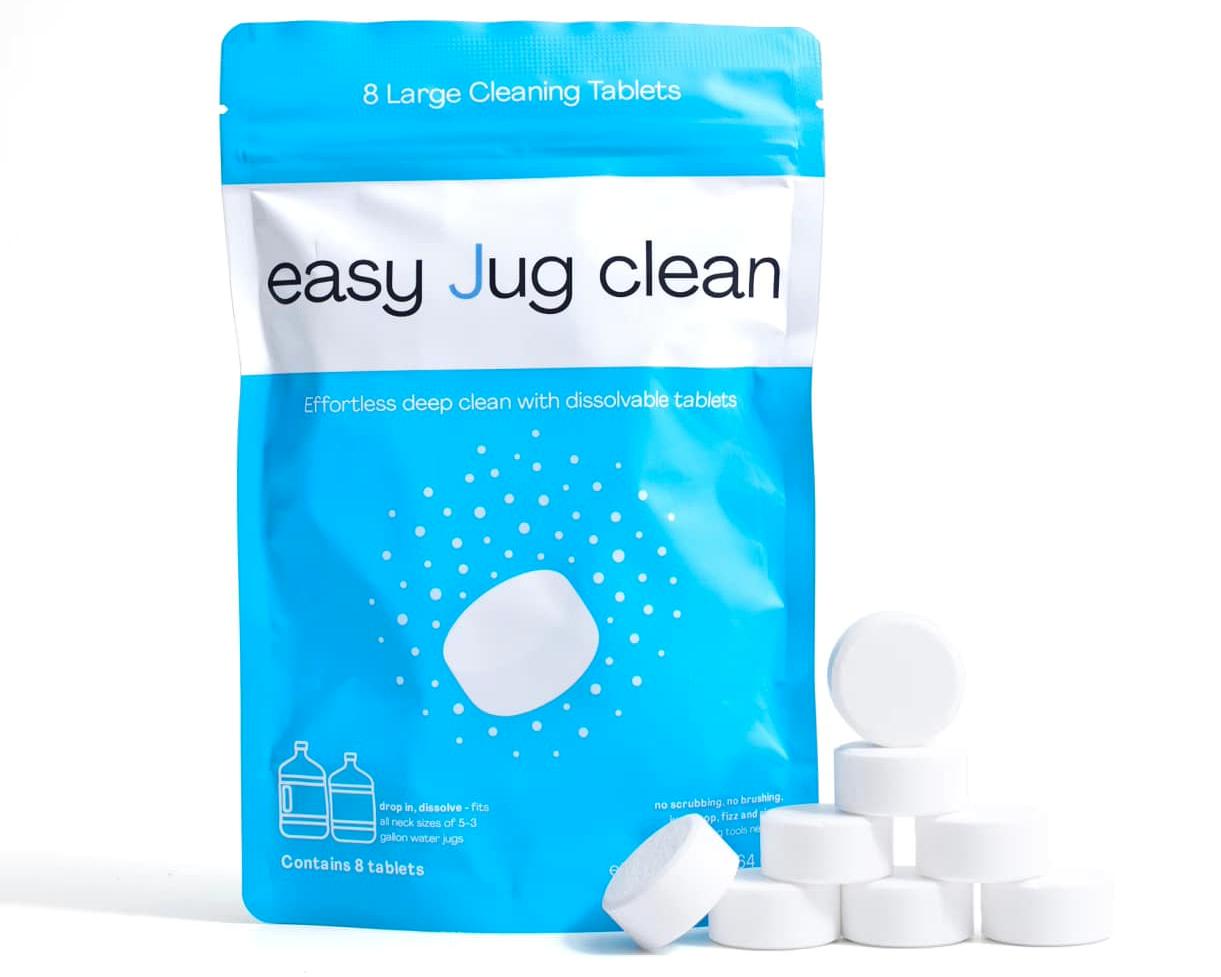
Watch Easy Jug Clean's active oxygen sanitize a 5 gallon water jug without scrubbing:
✅ Professional-Grade Food-Safe Chemistry — In Your Kitchen
Q: Is sodium percarbonate the same as oxygen bleach or OxiClean?
Sodium percarbonate is the active ingredient in products marketed as "oxygen bleach" — including OxiClean and similar brands. However, those products are formulated for laundry and fabric applications, not drinking water containers. They may contain additional ingredients (optical brighteners, fragrance, laundry-specific surfactants) that are not appropriate for food-contact use. Easy Jug Clean uses sodium percarbonate in a formulation built specifically around food-grade safety for drinking water container applications — the same active ingredient, entirely different formulation context.
Q: Does sodium percarbonate leave any taste in the water?
After rinsing, the breakdown products are sodium carbonate, water, and oxygen. Sodium carbonate at trace concentrations (after a 2–3 rinse protocol) is undetectable by taste — it is present at concentrations thousands of times below the taste threshold. Users consistently report that water from Easy-Jug-Clean-treated jugs tastes cleaner and more neutral than water from jugs cleaned with vinegar, bleach, or dish soap.


 Order now — get it by