How Oxygen-Powered Cleaning Works Inside Your Water Jug
Reading time: ~7 minutes | Active Oxygen Sodium Percarbonate Cleaning Science
What Is Sodium Percarbonate?
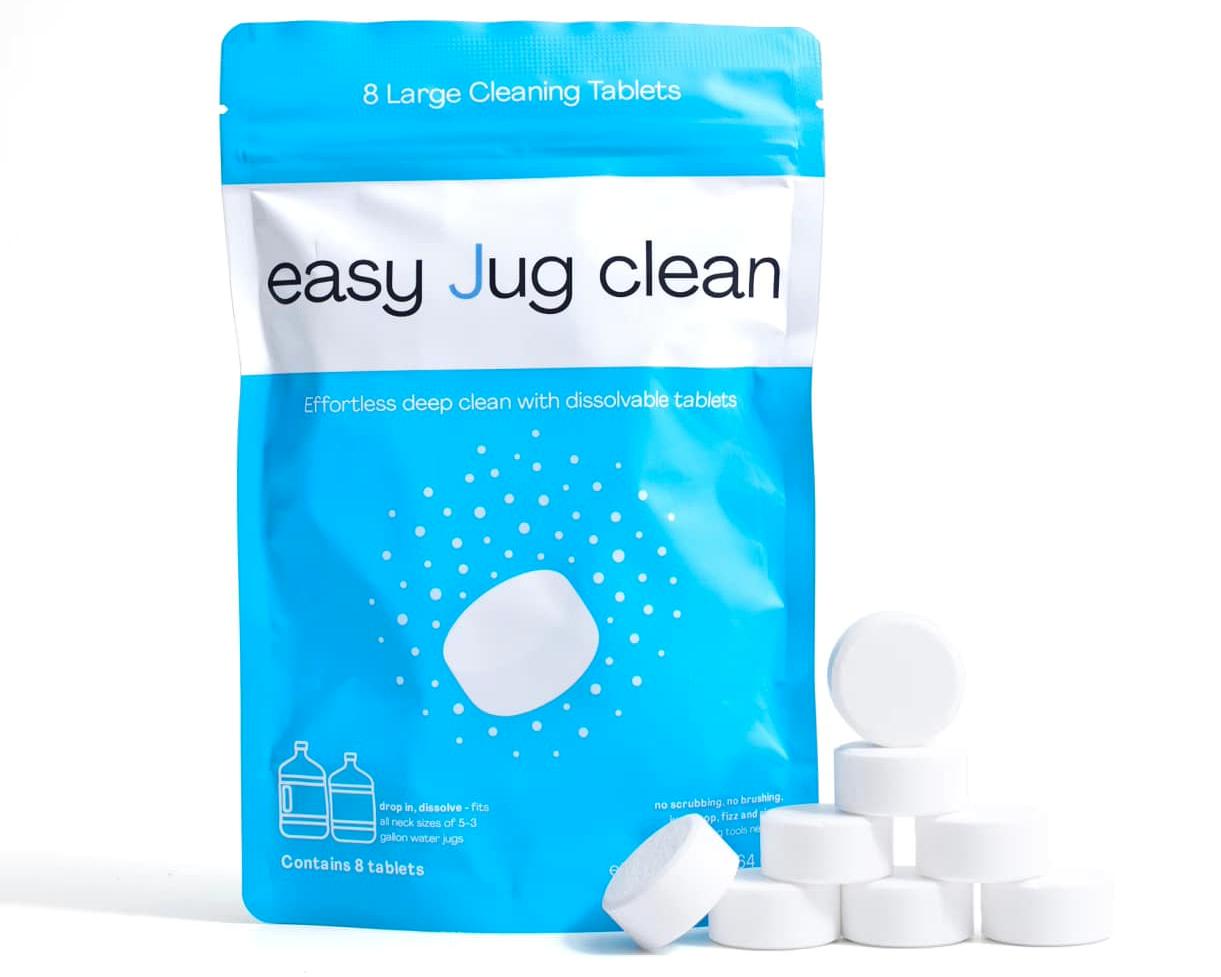
Sodium percarbonate (Na₂CO₃·1.5H₂O₂) is the active sanitizing ingredient in Easy Jug Clean. It's a solid compound formed from sodium carbonate (washing soda) and hydrogen peroxide — two components that are stable together in solid form but separate and react when dissolved in water.
What Active Oxygen Does to Contamination — Three Simultaneous Actions
Action 1: Destroying Biofilm at the Molecular Level
The EPS (extracellular polymeric substance) matrix that protects biofilm colonies is composed largely of polysaccharides — long-chain sugar polymers. Reactive oxygen species attack these polymer chains through oxidative cleavage — breaking the chemical bonds that hold them together. As the EPS matrix degrades, the structural integrity of the biofilm colony collapses, exposing the bacteria within to the full concentration of active oxygen in the solution. The bacteria's cell membranes — also susceptible to oxidation — are then disrupted, killing the colony. This is a complete, molecule-level destruction of the biofilm, not a surface-level disruption.
Action 2: Oxidizing Odor-Causing Compounds
The volatile organic compounds (VOCs) that cause musty, stale, and off-odors in water jugs are organic molecules — primarily aldehydes, short-chain fatty acids, and sulfur compounds produced as bacterial metabolic byproducts. Active oxygen oxidizes these molecules, converting them into simpler, odorless, or less odor-active compounds. This is why water from a jug cleaned with Easy Jug Clean doesn't just smell less bad — it smells genuinely neutral. The odor-causing molecules have been chemically converted, not masked.
Action 3: Synergizing with Chelating Agents on Mineral Scale
While the chelating agents (sodium citrate and sodium gluconate) dissolve mineral scale through ion-binding chemistry, the active oxygen simultaneously oxidizes any organic material that may be bound within or beneath the scale layer. This combined action — chemical dissolution of the mineral matrix plus oxidation of trapped organic contamination — is more complete than either mechanism working alone. Scale that has had biofilm growing beneath it is addressed on both levels simultaneously.
The 20-Minute Active Oxygen Timeline Inside Your Jug
Why Active Oxygen Is Used by the Food and Beverage Industry
Active Oxygen vs. Chlorine: Why the Difference Matters for Your Jug
| Property | Active Oxygen (Sodium Percarbonate) | Chlorine (Bleach) |
|---|---|---|
| Sanitizing mechanism | Oxidation via reactive oxygen radicals | Oxidation via hypochlorous acid |
| Biofilm matrix penetration | ✅ Effective | ⚠️ Partial at household concentrations |
| Breakdown products | ✅ Water + oxygen + sodium carbonate | ⚠️ Chlorinated byproducts possible |
| Plastic degradation | ✅ None — glycerin conditioning protects surface | ❌ Degrades polycarbonate and HDPE over time |
| Residue taste risk | ✅ None — fully food-safe | ❌ Chlorine taste possible if not fully rinsed |
| Fume hazard | ✅ None | ❌ Hypochlorous acid vapor — respiratory irritant |
| Food-industry use | ✅ Standard food-contact sanitizer | ⚠️ Used with strict dilution and rinsing protocols |
See how Easy Jug Clean cleans a 5 gallon water jug in 20 minutes — no scrubbing required:
🔬 Food-Industry Sanitizing Chemistry, Packaged for Your Kitchen
Easy Jug Clean brings the same active oxygen technology used in breweries and food processing plants to your 5 gallon water jug — in a drop-in tablet that takes 20 minutes and costs under $1 per clean.
Frequently Asked Questions
Q: Is active oxygen the same as ozone?
Related but different. Ozone (O₃) is a powerful oxidizing gas used in industrial water treatment. Active oxygen from sodium percarbonate refers to the reactive oxygen radicals (primarily hydroxyl radicals and hydrogen peroxide intermediates) released during the decomposition of H₂O₂ in solution. Both are oxidizing agents, but the sodium percarbonate approach is safer, more practical, and more appropriate for home use.
Q: How does warm water affect the active oxygen release?
Warm water (40–50°C) significantly accelerates the decomposition of hydrogen peroxide into active oxygen radicals, increasing the rate and intensity of the cleaning chemistry throughout the soak period. Cold water still works but may require the full 30-minute treatment window to achieve equivalent results. Water above 60°C can cause too-rapid decomposition — consuming the active oxygen before it has time to distribute and penetrate the jug's interior surfaces.


 Order now — get it by