The True Cost of Cleaning Your Water Jug the Hard Way
By the Easy Jug Clean Research Team
Home › Articles › The True Cost of Cleaning Your Water Jug the Hard Way
Cost AnalysisTime ValueBrush vs Tablet · Reading time: ~7 minutes
When people reach for a bottle brush and dish soap instead of purpose-designed cleaning tablets, the calculation usually starts and ends at price: the brush cost a few dollars and the soap is already under the sink. The time, material, and plastic-damage cost of manual cleaning adds up in ways most people don't calculate. See the full 5 gallon cleaning guide for the approach that costs less in every way. When all inputs are tallied, the "cheaper" approach reliably costs more.
Full Annual Cost: Brush + Soap Method vs Easy Jug Clean
The following cost breakdown assumes one 5 gallon water jug cleaned weekly, 52 times per year. All costs are conservative estimates using typical retail prices.
🪥 Brush + Soap Method — Annual Cost Breakdown
Bottle brush replacements
Recommended replacement every 1–2 months to manage bacterial accumulation. At 6 brushes/year × $5–$8 each: $30–$48/year. At the minimum recommended 2 months: $30/year minimum.
Dish soap used
Approximately 1–2 teaspoons per cleaning session × 52 sessions. Marginal cost from a standard bottle: $3–$6/year. Not the primary cost driver but non-zero.
Time at $15/hr (US minimum wage)
Actual scrubbing time per session: 8–12 minutes (setup, scrubbing, rinsing, drying brush, storing). × 52 sessions = 416–624 minutes/year = 7–10 hours. $105–$150/year in time value.
Accelerated jug replacement
Micro-scratching from brush use measurably shortens jug surface integrity. A brush-maintained jug typically needs replacement in 2–3 years vs. 4–5+ years for tablet-maintained. At $25–$35 replacement cost, the accelerated replacement adds $8–$12/year in amortized jug cost.
Incomplete result cost
Brushes don't sanitize (no bactericidal chemistry), miss ~35–40% of surface area, and introduce cross-contamination from their own bacterial load. The "cleaning" cost is paid but the cleaning result isn't fully achieved. This is a cost with no dollar value but a real health and safety consequence.
Annual total (cash)
$41–$66/year (cash only, not counting time)
Full cost (cash + time)
$146–$216/year at minimum wage time valuation
✅ Easy Jug Clean — Annual Cost Breakdown
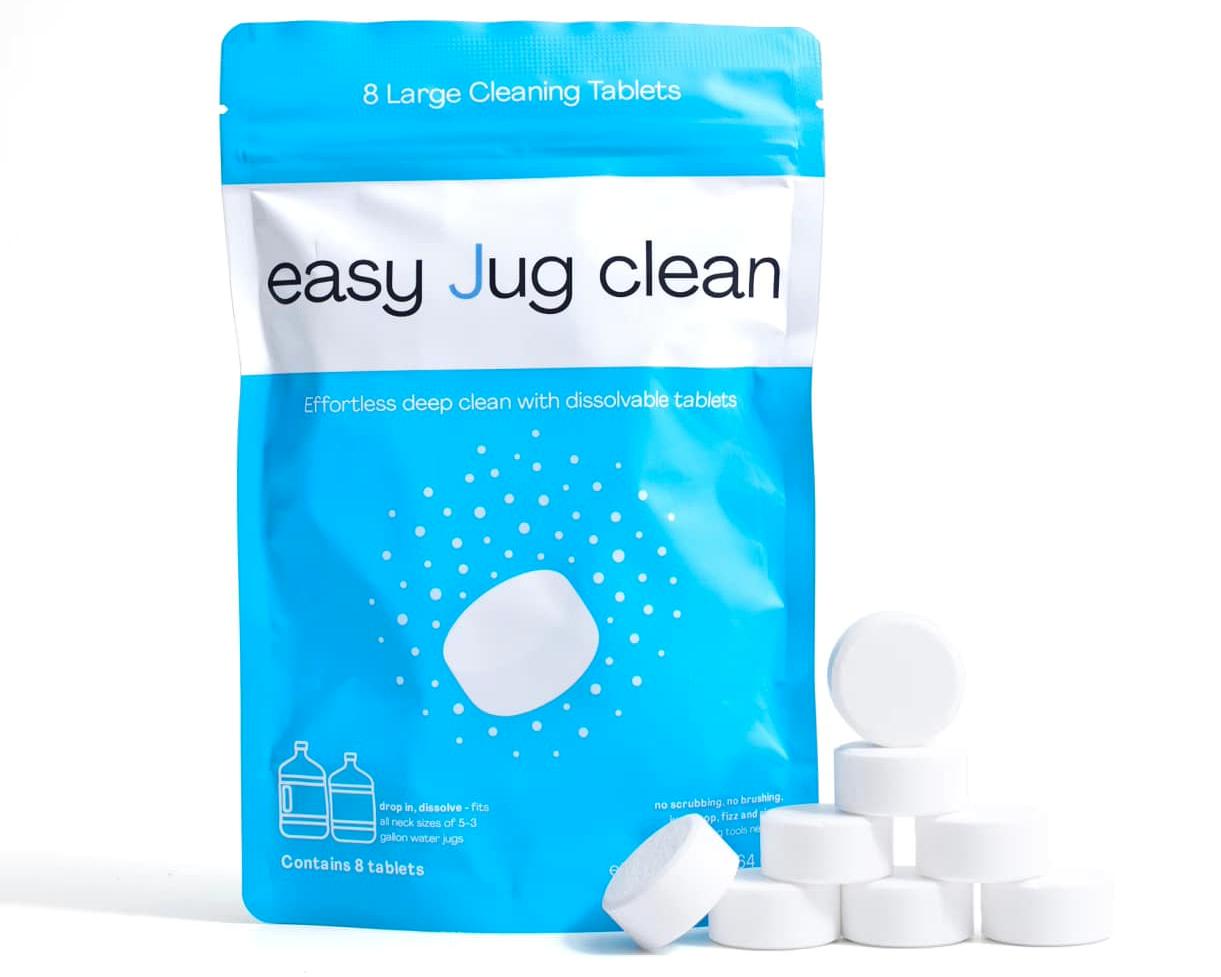
Tablet cost
per pack × 12 months = $59.88/year. Or with multi-pack subscription savings: approximately $45–$50/year.
Time cost
Active effort per session: under 5 minutes (drop tablets, fill halfway, rinse later). The 20-minute soak is unattended. × 52 sessions = ~4 hours/year of actual attention. $60/year at minimum wage.
Jug replacement
Glycerin conditioning protects the surface; no scratch-deepening. Jug lifespan extended by 2+ years vs brush method. Saves $5–$8/year vs brush method amortized.
Result quality
Complete sanitization + descaling + surface protection. All interior surfaces treated. No cross-contamination from cleaning tool. Full result achieved every session.
Annual total (cash)
$50–$60/year
Full cost (cash + time)
$110–$120/year at minimum wage time valuation
💡 The conclusion the numbers force: When time is included at even minimum wage, Easy Jug Clean costs less per year than the brush method. When incomplete results are factored in — the 35–40% of jug surface that brushes miss every session, the bacterial cross-contamination added by the brush, the plastic damage that shortens jug life — the "cheap" brush method isn't even delivering comparable value for its higher total cost.
The Hidden Cost Nobody Talks About: Effort Friction and Skipped Cleanings
There's a behavioral cost that doesn't appear in any financial spreadsheet but may be the most significant cost of the hard method: the effort required by brush cleaning is high enough that people regularly skip or delay it. A 10-minute active scrubbing task with setup and cleanup feels like a real chore. A 5-minute passive task (drop tablets, go do something else) barely registers as an interruption.
Studies on household cleaning compliance consistently find that high-effort cleaning tasks are performed less frequently than intended. If a brush-cleaning routine designed for weekly execution is actually executed every 10–14 days because the effort creates resistance, the actual contamination control achieved is significantly worse than the plan — and the already-compromised effectiveness of the brush method gets compounded by reduced frequency.
✅ The complete value equation: Easy Jug Clean is marginally more expensive in cash terms than a brush. It is significantly less expensive when time is counted. It produces better results (complete coverage, genuine sanitization, no cross-contamination). It protects the jug longer. And its low effort cost means the weekly schedule is actually maintained rather than slipping to biweekly in practice. Every element of the real cost comparison points in the same direction.
Watch how Easy Jug Clean eliminates water jug odors permanently — not just masks them:
✅ Less Time. Less Money When You Count All of It. Better Results.
It was really easy to clean, just drop it in and let it fizz and do its cleaning magic! The jug smelled and looked soooo clean after using this, I couldn’t believe it.



 Order now — get it by