Water Cooler Jug Storage: How to Keep It Clean Between Uses
Reading time: ~6 minutes | Jug Storage Between Uses Contamination Prevention
Water Cooler Jug Storage: How to Keep It Clean Between Uses
The Overlooked Vulnerability: Storage
Most people focus on the cleaning step and forget about what happens after. They clean the jug, reinstall it, and assume it stays clean. But storage conditions — moisture, temperature, light, and air exposure — determine whether your clean jug remains a clean jug or becomes a bacterial growth chamber.
If you're going to invest time in proper cleaning with active sanitisation, you need to protect that investment with proper storage. Otherwise, you're resetting the contamination timeline on a schedule that works against you.
Why Moisture is the Enemy
Bacteria need moisture to thrive. A completely dry jug's interior won't support bacterial growth — at least, not rapid growth. Bacteria will go dormant, waiting for moisture to return.
But a jug with residual moisture inside is a bacterial breeding ground. Here's why:
Bacterial doubling time in moist conditions: Under ideal conditions (warm, moist, with some organic matter present), bacteria double in population every 20–30 minutes. A jug with even traces of moisture can go from near-zero bacteria to millions in 12–24 hours.
Biofilm formation accelerates in moisture. Bacteria that sense a moist environment begin forming biofilm almost immediately — within hours. This is their strategy for survival and group protection. A moist jug becomes a biofilm incubator.
Cap sealing and trapped moisture. If you cap a jug before it's completely dry, you create a sealed, moist environment — perfect for bacterial exponential growth. Water molecules from humidity condense inside a capped jug. The interior becomes a microclimate where biofilm establishes incredibly quickly.
The Complete Storage Protocol
Step 1: Dry Completely Before Capping
Step 2: Cap Tightly
Step 3: Choose the Right Storage Location
Temperature: Store in a cool, stable environment. Ideally 50–70°F (10–21°C). Avoid direct sunlight or heat sources. Temperature fluctuations accelerate bacterial growth; warm storage (80°F+) is ideal for bacteria.
Darkness: UV light and visible light degrade polycarbonate plastic and can trigger bacterial growth in some species (certain photosynthetic bacteria thrive in light). Store jugs in a cabinet, closet, or shaded area.
Away from chemicals: Don't store jugs near cleaning supplies, pesticides, or other volatile chemicals. Even sealed jugs can absorb fumes, which leach into the water when the jug is used.
Off the floor: Always store jugs on a shelf or elevated surface, never on the floor. Floor storage exposes jugs to dust, debris, and contaminants from foot traffic. It also makes moisture more likely to settle inside.
Protected from dust. Cover stored jugs with a clean towel or store them in a plastic bag if the storage area is dusty. This prevents dust from settling on the cap or exterior, which can then be transferred inside when the jug is handled.
Step 4: Storage Duration and Revalidation
The Difference Proper Storage Makes
Here's a practical comparison:
Scenario A: Improper Storage
- Jug is cleaned on Monday
- Still slightly moist, but capped and placed in a warm cabinet
- By Wednesday, biofilm is establishing inside
- By Friday (4 days later), the jug smells slightly off
- By the following Monday (1 week later), noticeable smell and visible biofilm
Scenario B: Proper Storage
- Jug is cleaned on Monday and dried completely (60 minutes)
- Capped tightly and stored in a cool, dark location
- By Wednesday, no bacterial growth (jug remains dry)
- By Friday, interior remains clean (no moisture, no biofilm initiation)
- By the following Monday (1 week later), jug is still clean with no odour
Same cleaning method. Different storage conditions. One requires re-cleaning or replacement by week one; the other can wait another week or two before re-sanitisation is needed.
Integration with Your Cleaning Schedule
If you have a weekly or bi-weekly cleaning station for office water coolers, proper storage between uses extends the jug's lifespan and ensures consistent water quality. A jug stored properly can be pulled from rotation, cleaned, and put back into service — indefinitely. A jug stored improperly suffers accelerated degradation and requires replacement more frequently.
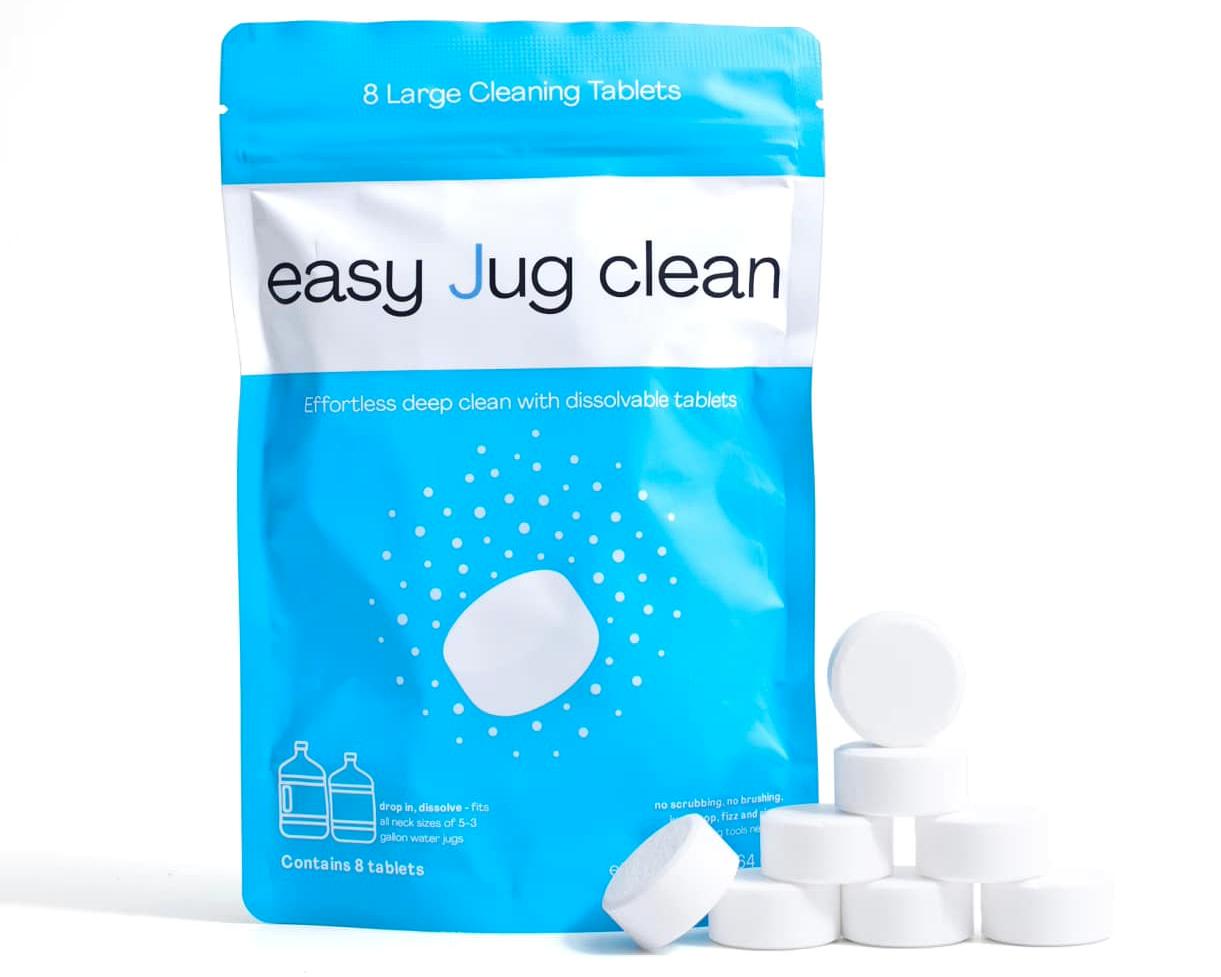
The economics: A plastic jug costs $10–20 to replace. Easy Jug Clean costs less than $1 per use. Proper storage adds zero cost but preserves the jug and maintains water quality. It's the cheapest form of preventive maintenance available.
Special Case: Backup Jugs in Rotation
If you run an office cooler or maintain multiple jugs in rotation, proper storage becomes even more critical. Here's why:
- Backup jug 1: Cleaned Monday, stored properly, reused Friday — stays clean
- Backup jug 2: Cleaned Monday, stored improperly, reused Friday — may already be re-contaminating
- Backup jug 3: Cleaned Monday, stored on the floor in a warm room, reused Friday — likely needs re-cleaning
By week 3, improper storage can mean backup jugs are dirtier than the primary jug in use. This defeats the purpose of having clean backup jugs.
Storage discipline pays off exponentially in a multi-jug system. All jugs stay in the same clean state between uses, and your cleaning schedule stays predictable.
The Complete System: Cleaning + Storage = Control
Proper cleaning removes contamination. Proper storage prevents re-contamination. Together, they create a system where your water quality is reliably clean, smell-free, and safe.
Without proper storage, cleaning is a one-time fix that degrades over days. With proper storage, cleaning is an investment that lasts weeks.
The Storage Checklist
- Jug completely dry before capping? ✓
- Cap sealed tightly, no spinning or gaps? ✓
- Storage location cool (50–70°F) and dark? ✓
- Away from chemicals and heat sources? ✓
- Elevated off the floor? ✓
- Protected from dust? ✓
- Expected storage duration under 4 weeks? ✓
Check all boxes, and your jug will remain clean until you're ready to use it.
Clean, Sanitised, and Properly Stored
Use Easy Jug Clean for sanitisation, then store properly. Your jug stays clean for weeks. Just for 8 tablets — the complete water safety system.
Shop Easy Jug Clean
See how Easy Jug Clean keeps a water cooler jug clean between uses:


 Order now — get it by