What Causes That Smell in Your 5 Gallon Water Jug? A Chemical Explanation
Water Jug OdorChemical CompoundsBacterial Metabolites · Reading time: ~7 minutes
The Compound-by-Compound Odor Map
🟤 Geosmin C₁₂H₂₂O
Smell profile: Earthy, musty, "wet soil," "after rain" — the classic water jug bad smell that users often describe as their jug smelling "used" or "old." This is among the most potent odor compounds known.
Geosmin is a sesquiterpene metabolite produced by certain bacterial species (Streptomyces, Myxobacteria, some Cyanobacteria) as a normal product of their metabolism. Its presence in a water jug indicates active bacterial colonization — the smell itself is evidence of a living bacterial community metabolizing inside the container. Geosmin is not toxic but its presence indicates contamination that may include more harmful co-species.
🟢 2-Methylisoborneol (2-MIB) C₁₁H₂₀O
Smell profile: Musty, camphorous, slightly medicinal. Often described as "stale water" or "water that's been sitting too long." Frequently accompanies geosmin in colonized water containers.
2-MIB is produced by actinobacteria — particularly Streptomyces species that are common in soil and water environments and colonize moist container surfaces readily. Like geosmin, it serves as a direct odor indicator of bacterial metabolic activity. The two compounds often occur together because they are produced by the same or co-existing bacterial communities.
🔵 Hydrogen Sulfide H₂S
Smell profile: Rotten egg, sulfurous. When this smell is present in a water jug, it indicates sulfate-reducing bacteria active in the container — a more specific contamination than general biofilm species.
Sulfate-reducing bacteria metabolize sulfate ions (present in most tap water) and release hydrogen sulfide as a byproduct under anaerobic conditions. The presence of a sulfur smell suggests a biofilm mature enough to create anaerobic microenvironments within its matrix — an advanced contamination state requiring aggressive treatment.
⚪ Styrene and Acetaldehyde C₈H₈ / C₂H₄O
Smell profile: Sweet-plastic smell, "new plastic" or "bottle off-taste." Not necessarily from bacteria — may be from plastic off-gassing, particularly in new jugs or jugs stored in warm conditions.
Styrene is a residual monomer in some polystyrene components; acetaldehyde is a byproduct of PET and polycarbonate degradation. These are not bacterial metabolites but material-source odors. Higher in new jugs, in heat-exposed jugs, and in bleach-degraded jugs where polymer chain breakdown increases volatile compound release rates.
🟡 Chlorophenols C₆H₅ClO
Smell profile: Medicinal, antiseptic, swimming pool-like — but more penetrating and persistent than simple chlorine smell. Particularly concerning because the odor threshold is very low.
Chlorophenols form when chlorine from bleach cleaning reacts with phenolic compounds in the plastic or in organic material remaining in the jug. These compounds persist in the plastic surface and continue releasing at low concentrations for extended periods after bleach treatment. Their presence indicates chlorine-based cleaning that has left reactive residues.
How Active Oxygen Eliminates These Compounds at the Molecular Level
Reactive oxygen species from sodium percarbonate attack all five compound classes described above through the same mechanism: oxidative fragmentation of the molecular structure. Geosmin and 2-MIB — cyclic terpenoid structures — are cleaved by oxidation of their ring systems, producing smaller, odor-inactive oxidation products. Hydrogen sulfide is oxidized to sulfate (SO₄²⁻) — odorless and water-soluble. Styrene and acetaldehyde are partially oxidized and the remaining volatile fractions are flushed during rinsing. Chlorophenols are oxidized to chloride and smaller organic fragments.
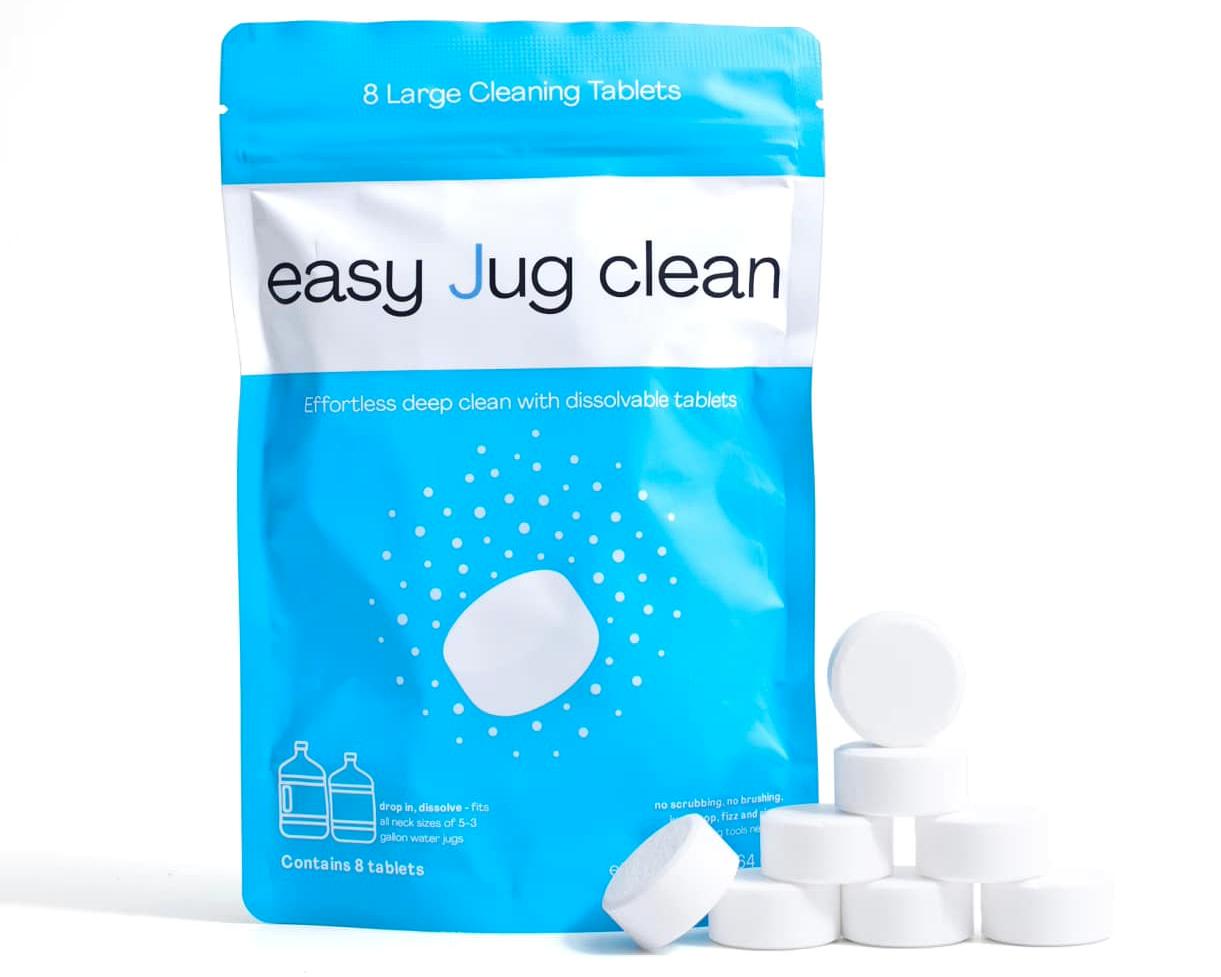
Watch how Easy Jug Clean eliminates water jug odors permanently — not just masks them:


 Order now — get it by