What That Smell in Your Water Jug Really Means (And How to Get Rid of It)
Reading time: ~6 minutes | Jug Odor Smell Diagnosis 5 Gallon Jug
Four Jug Odors — Diagnosed and Addressed
Smell 1: Musty or Earthy — "Like Wet Dirt"
Source: Bacterial metabolic byproducts, particularly geosmin (produced by certain bacterial and fungal species) and 2-methylisoborneol (2-MIB) from actinobacteria. These compounds produce the characteristic musty or earthy smell associated with water that has been sitting in contact with bacterial colonies. This smell is the olfactory evidence of active bacterial metabolism — not just surface contamination but living, metabolizing bacteria in the jug.
Health implication: Moderate. Geosmin and 2-MIB are not directly toxic at water-contact concentrations, but their presence indicates a bacterial colony that may include less benign species. A musty smell warrants immediate treatment.
Smell 2: Plastic or Petrochemical — "Like New Plastic"
Source: Off-gassing of volatile compounds from the plastic material itself — residual monomers, plasticizers, or polymer processing additives releasing into the water. Most pronounced in new jugs or jugs that have been stored in warm conditions (which accelerates polymer chain mobility and off-gassing rate). Can also indicate thermal damage or bleach-induced polymer degradation in older jugs.
Health implication: Variable. New jug off-gassing typically diminishes after a few use cycles and is generally at trace, non-harmful levels with modern food-grade plastics. Persistent plastic smell in an older jug may indicate polymer degradation — consider replacement if the smell doesn't diminish after 2–3 cleanings.
Smell 3: Chemical or Chlorine — "Like a Swimming Pool"
Source: Residual chlorine from prior bleach cleaning that has bound to the plastic surface and is releasing slowly into the water. Also possible from chlorinated municipal water where the jug acts as a concentration point — chlorine compounds accumulate on the plastic surface over multiple fills and release as the concentration gradient shifts.
Health implication: Low at trace levels but concerning if persistent — chlorine compounds that have chemically bound to plastic indicate a different residue profile than simply dissolved chlorine in water. Persistent bleach smell is a signal to switch cleaning methods.
Smell 4: Sour or Fermented — "Like Old Water"
Source: Volatile fatty acids from bacterial fermentation processes — particularly from bacteria in the Clostridium family or yeast contamination. This smell is more specific than generic mustiness and typically indicates a longer-standing contamination with specific fermentative species. Often accompanied by slight cloudiness or particles in the water.
Health implication: Moderate to significant. Fermentative bacterial species can include pathogenic varieties. A sour or fermented smell from a water jug warrants aggressive treatment and cessation of use until resolved.
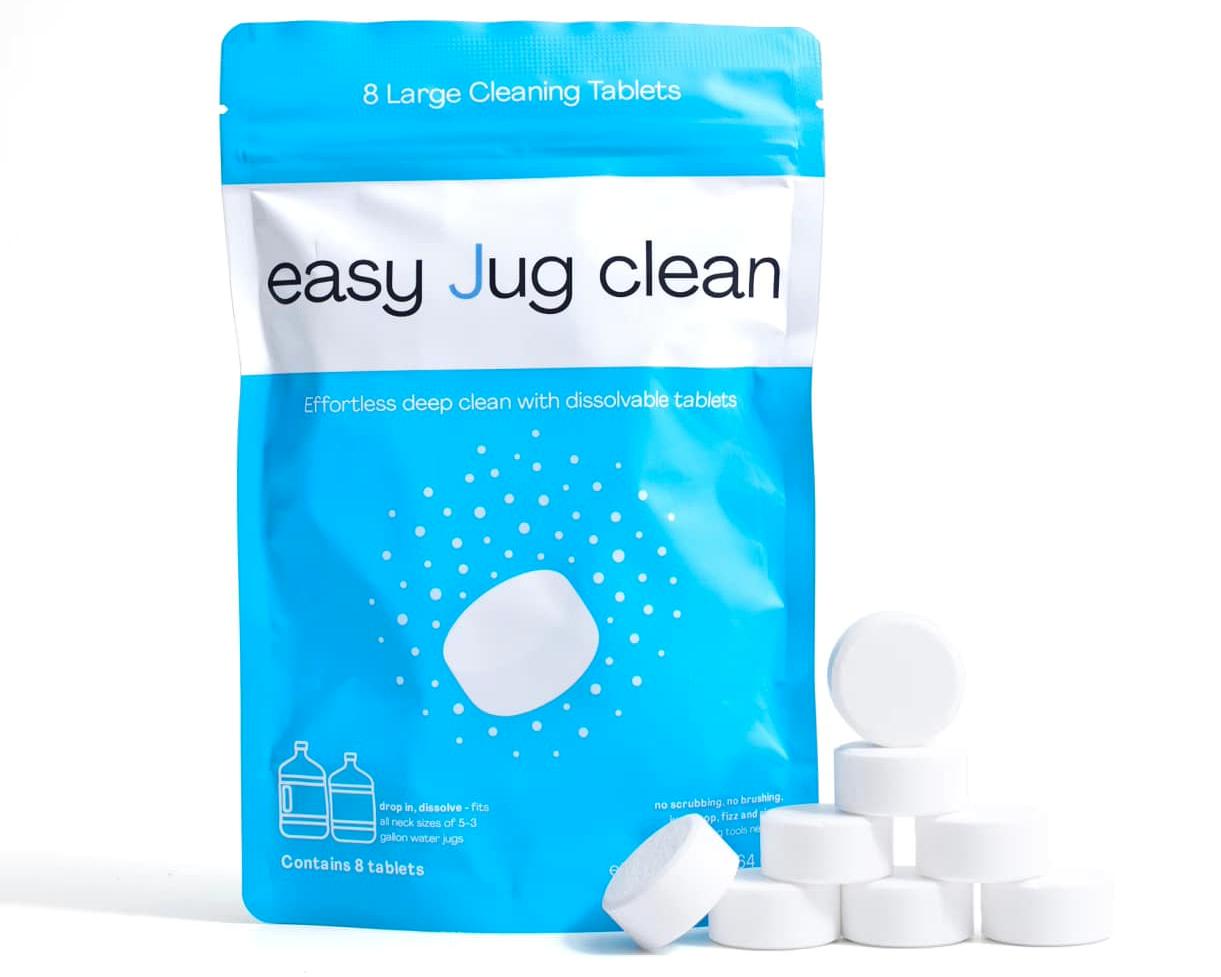
Watch how Easy Jug Clean eliminates water jug odors permanently — not just masks them:


 Order now — get it by