What Causes White Residue Inside a 5 Gallon Water Jug?
Reading time: ~5 minutes | White Residue Mineral Scale 5 Gallon Jug
The Four Types of White Residue — Identified
Type 1: Hard Water Calcium Carbonate Scale — Most Common
Appearance: White or off-white chalky patches, most concentrated at the waterline. May feel rough or slightly powdery. Uniform distribution around the waterline ring with lighter deposits on walls below.
What it is: Calcium carbonate (CaCO₃) precipitated from hard water during evaporation cycles. Chemically bonded to the plastic surface. Completely insoluble in water alone — will not rinse away without chelating chemistry.
Health concern: Low direct health risk from the mineral itself. Significant indirect risk because rough scale surfaces accelerate biofilm attachment.
Type 2: Soap Scum / Surfactant Film
Appearance: Whitish milky film distributed across wall surfaces, not concentrated at waterline. May appear more iridescent or soapy than true scale. Walls feel slick rather than rough.
What it is: Surfactant residue from dish soap or cleaning products that has dried on the plastic surface and created a visible film through light scattering.
Health concern: Moderate — surfactant residue dissolves into drinking water, potentially causing gastrointestinal irritation at repeated exposure.
Type 3: Flaking Scale Particles in Water
Appearance: White or gray particles floating in the water, settling at the bottom after the jug sits. Jug walls may look cloudy when you look through them.
What it is: Existing scale deposits that have thickened to the point where they begin to flake from the surface, releasing mineral particles into the water. Indicates the scale problem has been building for a significant period.
Health concern: Low toxicity from the mineral particles themselves, but their presence in your water indicates a jug that needs immediate and aggressive descaling treatment.
Type 4: Dried Water Spots (Non-Hard-Water Areas)
Appearance: Small, distinct white circles or spots — not a continuous film. Each spot has a defined edge. Appear where water droplets dried after rinsing.
What it is: Very light mineral deposits from even soft water — the dissolved solids that remain when a water droplet evaporates. Much lighter than hard water scale. Often more cosmetic than functional.
Health concern: Minimal. These spots indicate low mineral content that is unlikely to cause meaningful scale issues.
See why the tablet method beats manual cleaning on every single measure that matters:
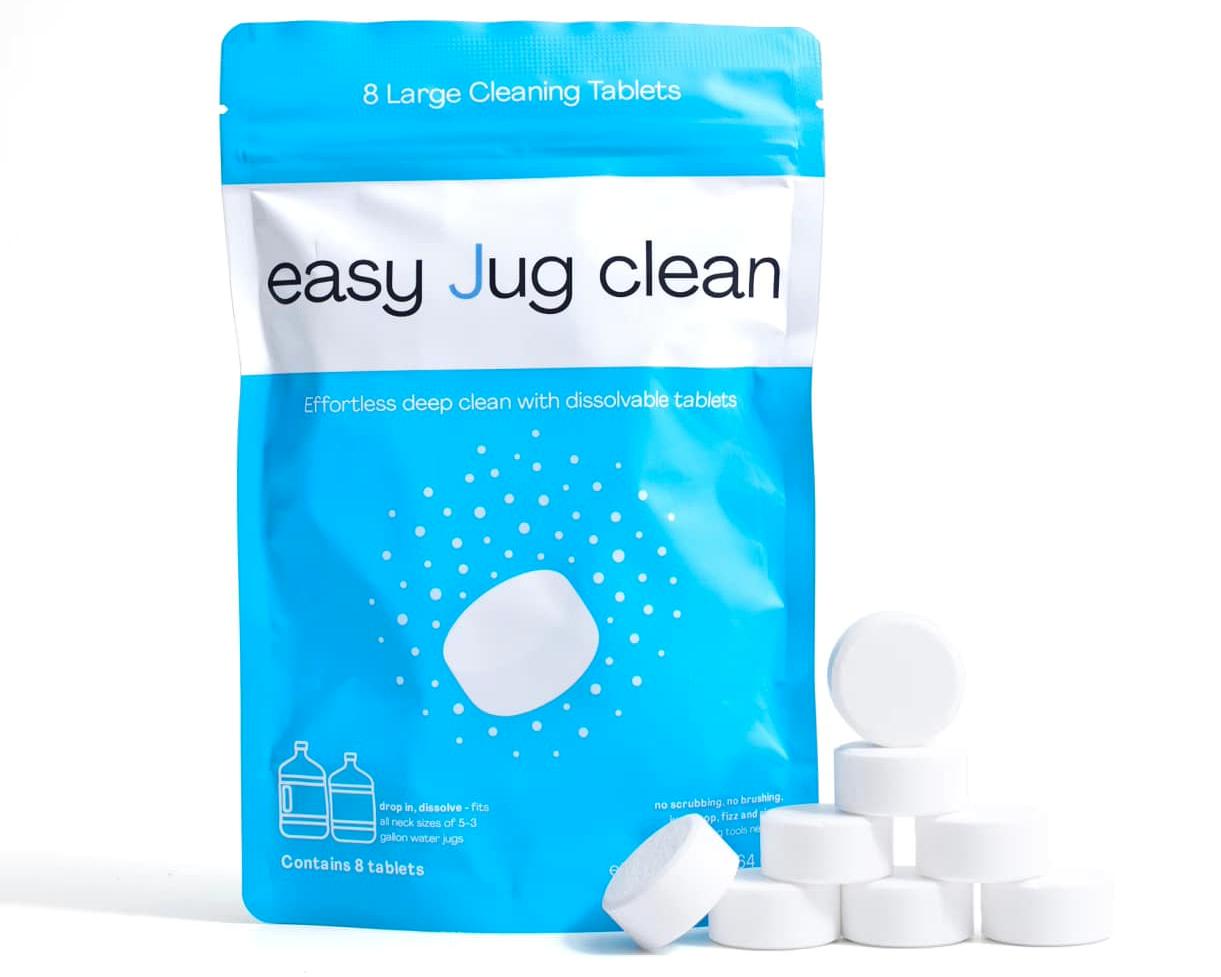
✅ Whatever Type of White Residue — Easy Jug Clean Handles It
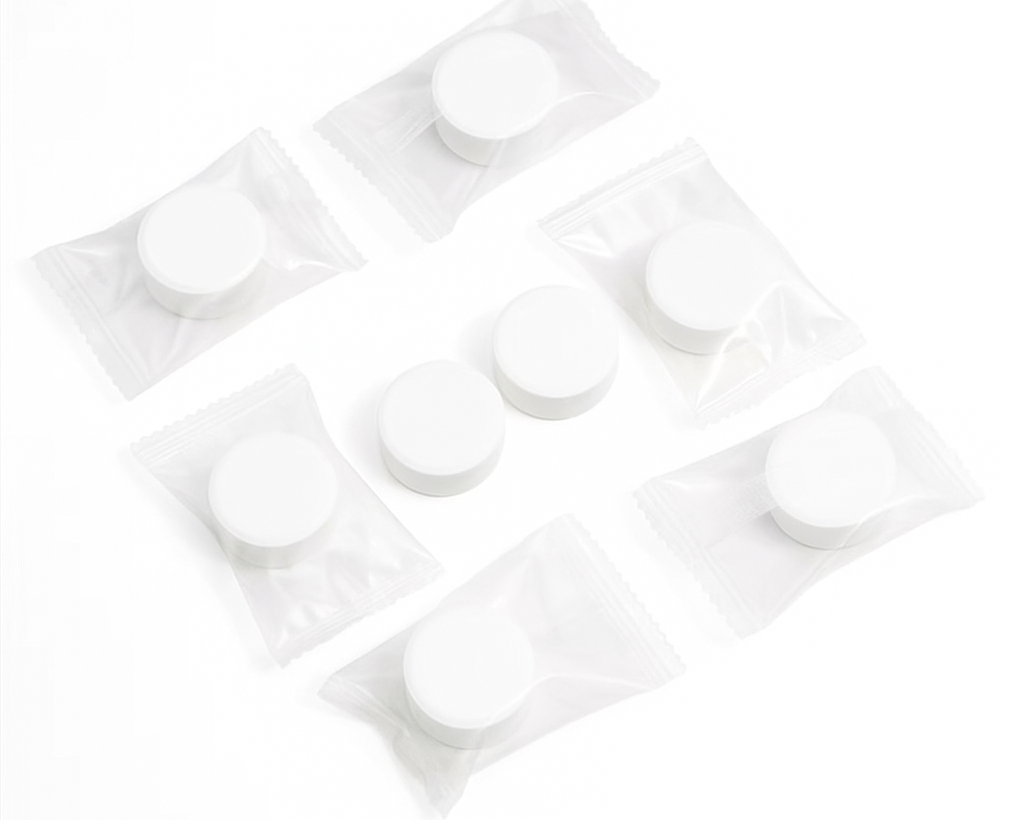
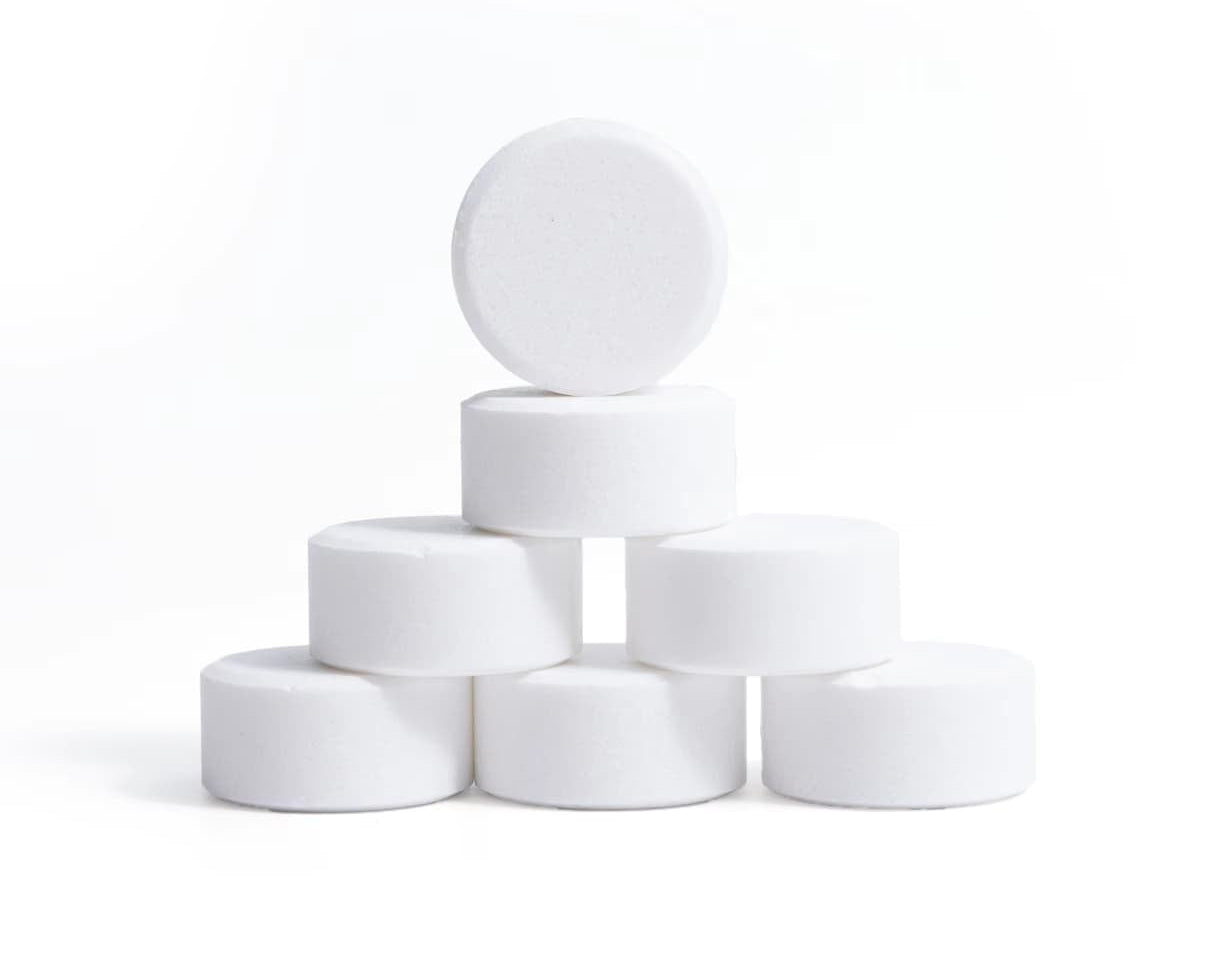
Chelation for mineral scale. Active oxygen for biological contamination. Plant surfactant for film residue. One tablet treatment covers all four types.


 Order now — get it by