Why Is My 5 Gallon Water Jug Cloudy? Causes and Fixes
Reading time: ~6 minutes | Cloudy Jug Hard Water 5 Gallon Jug
The 5 Causes of Cloudy Jug Walls — Diagnosed
Cause 1: Hard Water Mineral Scale — Most Common
Fix: Chelation treatmentWhat it looks like: Uniform foggy haze across the walls, most concentrated near the waterline where water evaporates. May also appear as white chalky patches or rings. The walls feel slightly rough or grainy to the touch rather than smooth.
Why it happens: Calcium and magnesium carbonates in hard water precipitate onto the plastic surface when water evaporates or sits in contact with the jug. Over multiple refill cycles, the deposits layer and compound into visible cloudiness.
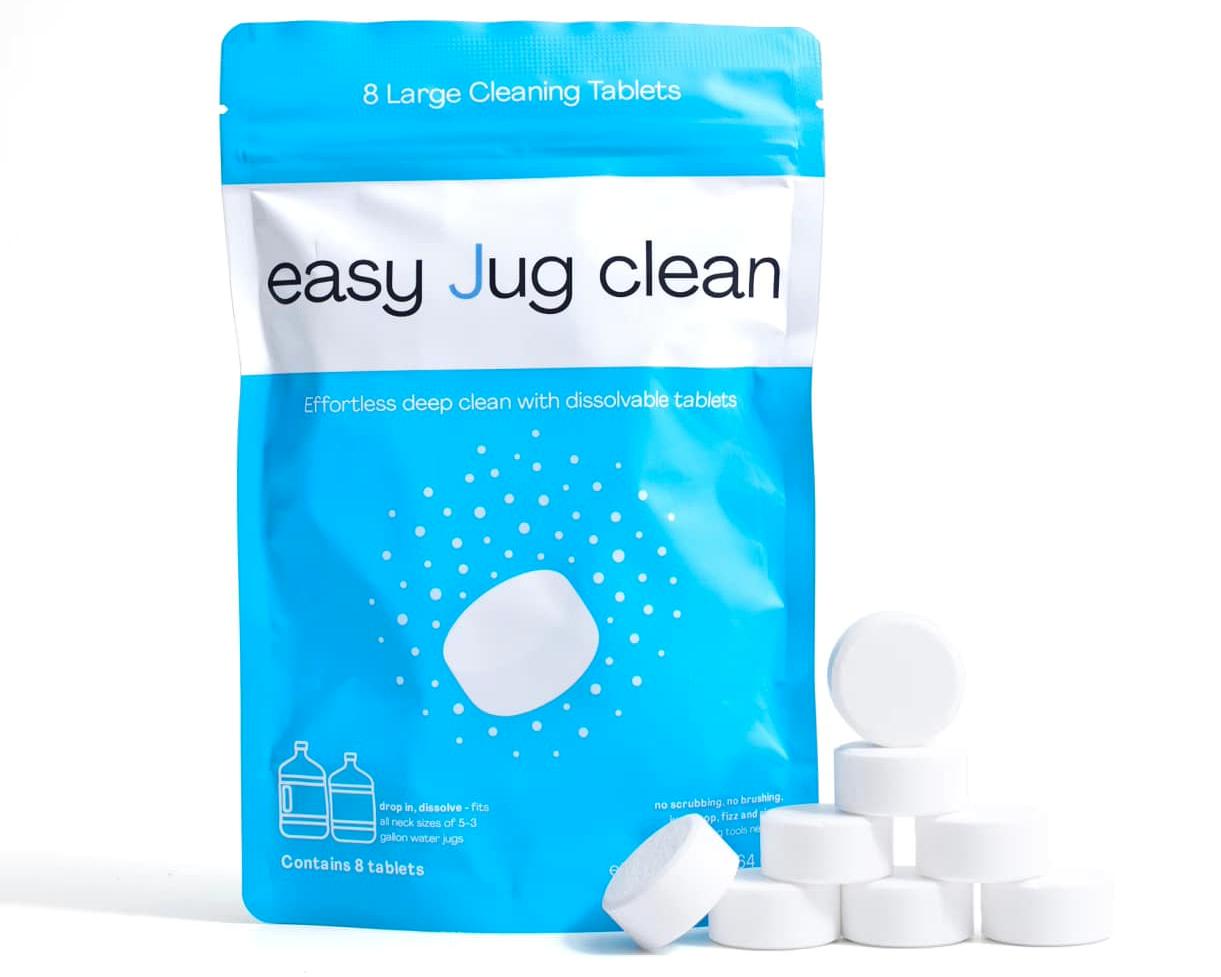
The fix: Easy Jug Clean's chelating agents (sodium citrate + sodium gluconate) bind the calcium and magnesium ions and dissolve them from the surface. One to two tablet treatments typically clears moderate scale; heavy buildup may require two consecutive treatments on back-to-back days. Full descaling guide here.
Cause 2: Biofilm + Scale Combination
Fix: Full tablet treatmentWhat it looks like: Cloudiness accompanied by a slippery or slimy feel on the interior walls. May have a slightly yellowish or grayish tinge rather than pure white.
Why it happens: Biofilm and mineral scale co-exist and compound each other — scale provides rough surfaces for biofilm to anchor, and biofilm provides nucleation sites for additional scale. The combination produces cloudiness that is both physical (mineral deposits) and biological (organic material in the biofilm matrix).
The fix: Easy Jug Clean simultaneously addresses both — active oxygen destroys biofilm while chelating agents dissolve scale. This combination treatment is why the tablet outperforms any single-mechanism approach for this type of cloudiness.
Cause 3: Soap or Cleaning Chemical Residue
Fix: Rinse + tablet treatmentWhat it looks like: Milky or soapy haze that appeared after cleaning. May be more pronounced in certain lighting angles. The walls feel slick in a soapy rather than biofilm way.
Why it happens: Surfactants from dish soap or residue from other cleaning agents create a thin film on plastic that causes light scattering — appearing as cloudiness. Soap residue is notoriously difficult to rinse completely from narrow-neck containers.
The fix: Perform an Easy Jug Clean tablet treatment — the plant-based surfactants and active oxygen clear synthetic surfactant residue. Follow with three thorough rinse cycles.
Cause 4: Permanent Plastic Haze (Scratching or Aging)
Fix: Prevention only — consider replacementWhat it looks like: Cloudiness that does not clear after multiple Easy Jug Clean treatments. Uniformly distributed rather than concentrated at waterlines. Often accompanies fine surface scratches visible in raking light.
Why it happens: Repeated abrasive cleaning (bottle brushes), harsh chemical exposure (bleach), UV degradation, or simple age cause micro-fractures in the plastic surface that permanently scatter light. This is structural damage to the plastic, not a surface deposit.
The fix: Irreversible. Prevent future damage by switching to Easy Jug Clean (no abrasion, no bleach, protective glycerin conditioning). If the haze is extensive and accompanied by crazing or cracking, consider replacing the jug.
Cause 5: UV Discoloration
Fix: Storage change + tablet treatmentWhat it looks like: Yellowish or amber tinge to the plastic, concentrated on sides that have received the most light exposure. More common in clear polycarbonate jugs stored in sunny locations.
Why it happens: UV radiation from sunlight initiates photodegradation of the polymer chains, producing chromophoric (color-generating) chemical groups. The result is visible yellowing or browning of the plastic.
The fix: Move the jug to a UV-protected storage location immediately. The discoloration itself cannot be reversed, but further degradation can be prevented. Easy Jug Clean's glycerin conditioning helps maintain the surface's protective properties against further UV damage.
Quick Diagnosis Table
| Cloudiness Type | Texture | Location | Cause | Responds to Easy Jug Clean? |
|---|---|---|---|---|
| White/chalky haze | Rough or grainy | Waterline + lower walls | Mineral scale | ✅ Yes — 1–2 treatments |
| Grayish/yellowish haze + slippery | Slippery | Full interior | Biofilm + scale | ✅ Yes — full treatment |
| Milky film post-cleaning | Slick/soapy | Full interior | Soap residue | ✅ Yes — clears residue |
| Haze won't clear after treatment | Normal or scratched | Uniform | Plastic damage | ❌ Permanent — prevention only |
| Yellow/amber tinge | Normal | Sun-exposed sides | UV degradation | ❌ Partial — prevents further |
Watch Easy Jug Clean dissolve scale and odor buildup in a single 20-minute treatment:
✅ Clear Up Cloudiness With Easy Jug Clean
For the three most common causes of cloudy jug walls — scale, biofilm, and cleaning residue — Easy Jug Clean provides the complete fix in 20 minutes. Chelation, active oxygen, and plant-based surfactants working together.


 Order now — get it by