When to Replace Your 5 Gallon Water Jug: The Signs That Tell You It's Time
Jug ReplacementEnd of Life5 Gallon Jug · Reading time: ~8 minutes
Replacement Signal 1: Crazing or Fine Surface Cracks
What to look for: A network of fine surface cracks, most visible when you flex the jug gently or hold it to raking light. The cracks often run parallel to the stress lines of the plastic and may appear as a frosted or crinkled-looking surface texture in affected areas.
What it means: Crazing is the physical evidence of polymer embrittlement — the plastic has undergone enough oxidative degradation (typically from bleach use or UV exposure) that it can no longer flex without cracking at the surface. Crazed surfaces provide deep, inaccessible bacterial harboring sites that no chemistry can reach. They also dramatically increase chemical migration rates as the damaged polymer matrix becomes more permeable. A crazed jug cannot be cleaned to safe standard and should not be used for drinking water.
Why it happens: Most commonly caused by repeated bleach cleaning combined with physical stress, or extended UV light exposure (jugs stored in sunny windows or outdoors).
Replacement Signal 2: Significant Yellowing or Discolouration
What to look for: A jug that was originally clear, white, or blue now shows yellow, amber, or brownish tinting — most obvious when held against a white background or compared to a new jug of the same type. May appear as overall tinting or as concentrated yellowing in specific areas (typically upper walls and shoulder).
What it means: Yellowing in polycarbonate jugs is the visible evidence of aromatic group oxidation by bleach — the creation of chromophoric groups in the polymer that absorb blue light. This indicates significant polymer chain modification beyond surface-level degradation. Studies have found that yellowed polycarbonate shows elevated BPA migration rates even in BPA-free replacement materials, as the structural analogs used in BPA-free formulations become more mobile when polymer integrity is compromised. In HDPE jugs, yellowing typically indicates UV degradation or thermal stress.
Why it happens: Most commonly caused by repeated bleach exposure over 1–2+ years, or extended direct UV light exposure.
Replacement Signal 3: Persistent Chemical Smell After Multiple Treatments
What to look for: A chemical, plastic, or chlorine smell that persists in the jug interior even after 3–5 consecutive Easy Jug Clean treatments, confirmed with the empty-jug sniff test (hold the neck to your nose after complete drying).
What it means: A persistent smell that doesn't resolve with multiple active oxygen treatments indicates surface-bound chemical compounds that have deeply integrated into the plastic matrix — typically organochlorine compounds from bleach use, or volatile compounds from UV-oxidised polymer chains. These compounds are not fully removable by any cleaning chemistry; they will continue to off-gas into stored water indefinitely. If the smell transfers to the water (do a taste test on a fresh fill), immediate replacement is warranted.
The test: After 4 Easy Jug Clean treatments over 4 days, completely dry the jug, leave capped overnight, then open and smell directly. If a chemical odor is still present, the contamination is structural and the jug should be replaced.
Replacement Signal 4: Water That Consistently Cleans Dirty After 48 Hours
What to look for: A jug that develops sliminess, odor, or visible cloudiness within 48–72 hours of a thorough Easy Jug Clean treatment — where previously the same treatment held the jug clean for 5–7 days.
What it means: This pattern indicates that the jug's interior surface has been so significantly degraded (through scratch damage, scale encapsulation history, or polymer degradation) that bacterial recolonization happens much faster than on a healthy surface. When the cleaning interval required to prevent detectable contamination drops below 3 days, the jug's surface condition has deteriorated past the point where any cleaning protocol can maintain acceptable hygiene at a practical maintenance frequency.
Before replacing: First verify the dispenser isn't recontaminating the jug (see our recontamination article). If the pattern persists even when a clean jug is placed on a freshly cleaned dispenser, the jug surface is the issue and replacement is appropriate.
Replacement Signal 5: Heavy Permanent Scale Deposit That Doesn't Respond to Treatment
What to look for: Significant mineral cloudiness or white deposits that don't substantially improve after 3–5 consecutive Easy Jug Clean treatments (one per day, allowing soak of 30+ minutes each).
What it means: In most cases, even heavy scale responds to 3–5 chelating treatments. Persistent scale that doesn't respond typically indicates either heavily crystallised multi-year deposits that have bonded chemically with the plastic surface rather than sitting on it, or scale that has formed over previous scale with organic material interlayered — creating a composite deposit with different chemistry than pure calcium carbonate. This type of deposit genuinely cannot be removed by practical home treatment and represents a permanent surface modification that increases bacterial adhesion.
The test: Five consecutive daily treatments with fresh 2-tablet Easy Jug Clean solution, each soaking 30 minutes. If visible improvement is occurring session by session, continue. If no change is seen after the 5th treatment, the deposit is not responding to chelation and replacement is appropriate.
Replacement Signal 6: Age Beyond Useful Life (Without Documented Maintenance History)
What to look for: A jug whose age you don't know precisely, or that has been in household use for longer than the expected lifespan for its material and maintenance history.
What it means: Even without obvious visual signs of degradation, older jugs have undergone more cumulative exposure to water, varying temperatures, and cleaning chemistry. Polymer chain length decreases progressively over time regardless of how carefully the jug is maintained — a process called thermal oxidative degradation that occurs even at room temperature. After the expected service life, chemical migration rates increase even from visually intact jugs.
Expected service life by material and maintenance:
Expected Lifespan by Jug Type and Maintenance Method
| Jug Material | Cleaning Method | Expected Safe Service Life | Replacement Trigger |
|---|---|---|---|
| HDPE (standard blue/white) | Easy Jug Clean weekly | 5–7 years | Visual signals or age |
| HDPE | Brush + dish soap | 3–4 years | Earlier visual signals likely |
| HDPE | Bleach weekly | 2–3 years | Yellowing or crazing likely before age limit |
| Tritan copolyester (clear) | Easy Jug Clean weekly | 5–8 years | Visual signals or age |
| Polycarbonate (older jugs) | Any bleach use | 1–2 years from bleach introduction | Yellowing typically appears before structural issues |
| Glass | Easy Jug Clean weekly | 10+ years (until physical breakage) | Chips, cracks, or damage to sealing surfaces only |
What to Do With a Jug That's Ready for Replacement
Don't simply discard a jug that has reached end-of-useful-life for drinking water. Consider these alternatives: food-grade HDPE jugs in good structural condition (no crazing, no significant yellowing) can be repurposed for storing non-drinking water for garden use, emergency water for flushing, or cleaning water. Rinse thoroughly before repurposing. For collection and recycling, HDPE (#2 plastic) is widely recyclable at curbside in most US municipalities. Check the resin identification code (the number inside the recycling symbol on the jug base) before choosing a recycling pathway.
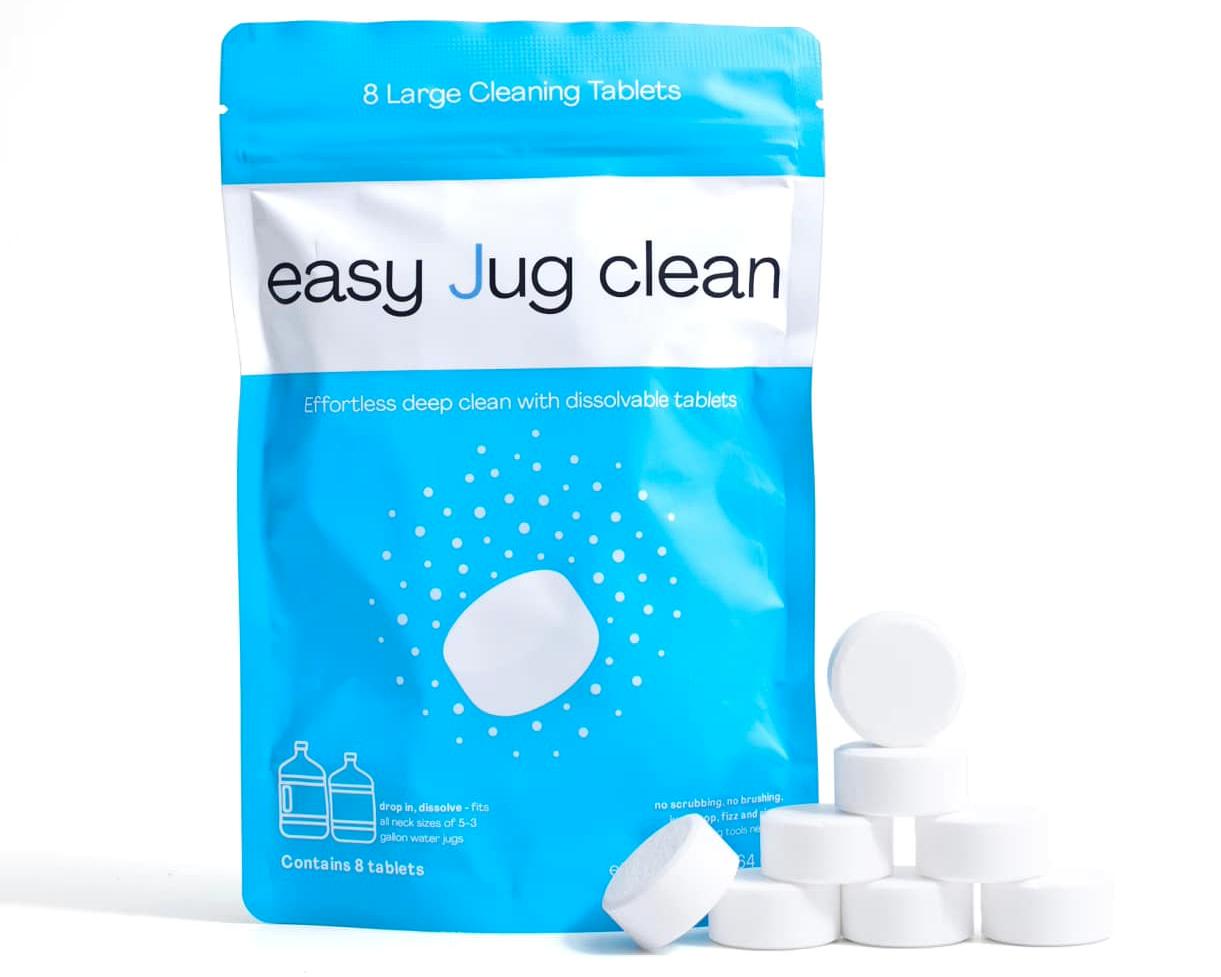
See how Easy Jug Clean cleans a 5 gallon water jug in 20 minutes — no scrubbing required:
✅ Start Every New Jug Right — From Week One
A jug maintained with Easy Jug Clean from its first use lasts longer, cleans more easily, and protects your family's water better throughout its entire service life.
Q: Can I tell a jug's age from visual inspection alone?
Not reliably in most cases. Jug age and jug condition are related but separate variables — a 3-year-old bleach-cleaned jug may show more signs of degradation than a 6-year-old tablet-maintained jug. Visual inspection of current condition (crazing, yellowing, scratch haze, persistent scale) is more reliable as a replacement indicator than attempting to estimate age, unless you have documented purchase records.
Q: Are there any health risks from continuing to use a jug past its useful life?
The primary risks are: increased chemical migration from degraded polymer (most significant in crazed or yellowed polycarbonate), reduced cleaning effectiveness on rough/damaged surfaces leading to persistent bacterial contamination, and microplastic release from mechanically and chemically degraded surfaces at higher rates than new jugs. None of these are acutely dangerous in a single-exposure sense, but they represent chronic low-level exposures that accumulate over the period of continued use. Replacement at appropriate intervals eliminates all three risk categories.


 Order now — get it by