How Bleach Affects the Plastic in Your 5 Gallon Water Jug
Reading time: ~6 minutes | Bleach Plastic Degradation Microplastics
The Four Stages of Bleach-Induced Plastic Degradation
Surface oxidation (treatments 1–5)
Hypochlorous acid from dissolved bleach attacks surface polymer chains through oxidation, breaking C-C and C-H bonds. Changes are invisible but measurable with surface energy testing. The surface is now microscopically rougher than before treatment began — fractionally, but increasingly with each subsequent exposure.
Color change and surface haze (treatments 5–20)
Continued oxidative attack on aromatic groups in polycarbonate produces chromophoric groups (color-causing molecular structures) — visible as yellowing or browning. HDPE develops a dull haze from surface micro-fracturing. Both changes indicate structural polymer damage that cannot be reversed by cleaning or conditioning.
Crazing and surface cracking (treatments 20–50)
Embrittlement from repeated oxidative chain scission produces fine surface cracks — crazing. These cracks run parallel to stress directions in the plastic and are visible as a network of fine lines in raking light. Crazes create deep refuges for bacteria that are effectively unreachable by any cleaning chemistry. The jug is becoming progressively harder to clean as bleach treatment continues.
Increased chemical migration (ongoing throughout all stages)
As polymer chain integrity decreases, the plastic matrix becomes more permeable to the migration of residual monomers, oligomers, and additives into the water in contact with the surface. This is not a hypothetical — it's the same migration mechanism that made BPA a health concern. Degraded plastic migrates more chemical compounds than intact plastic, regardless of the original material's BPA-free status.
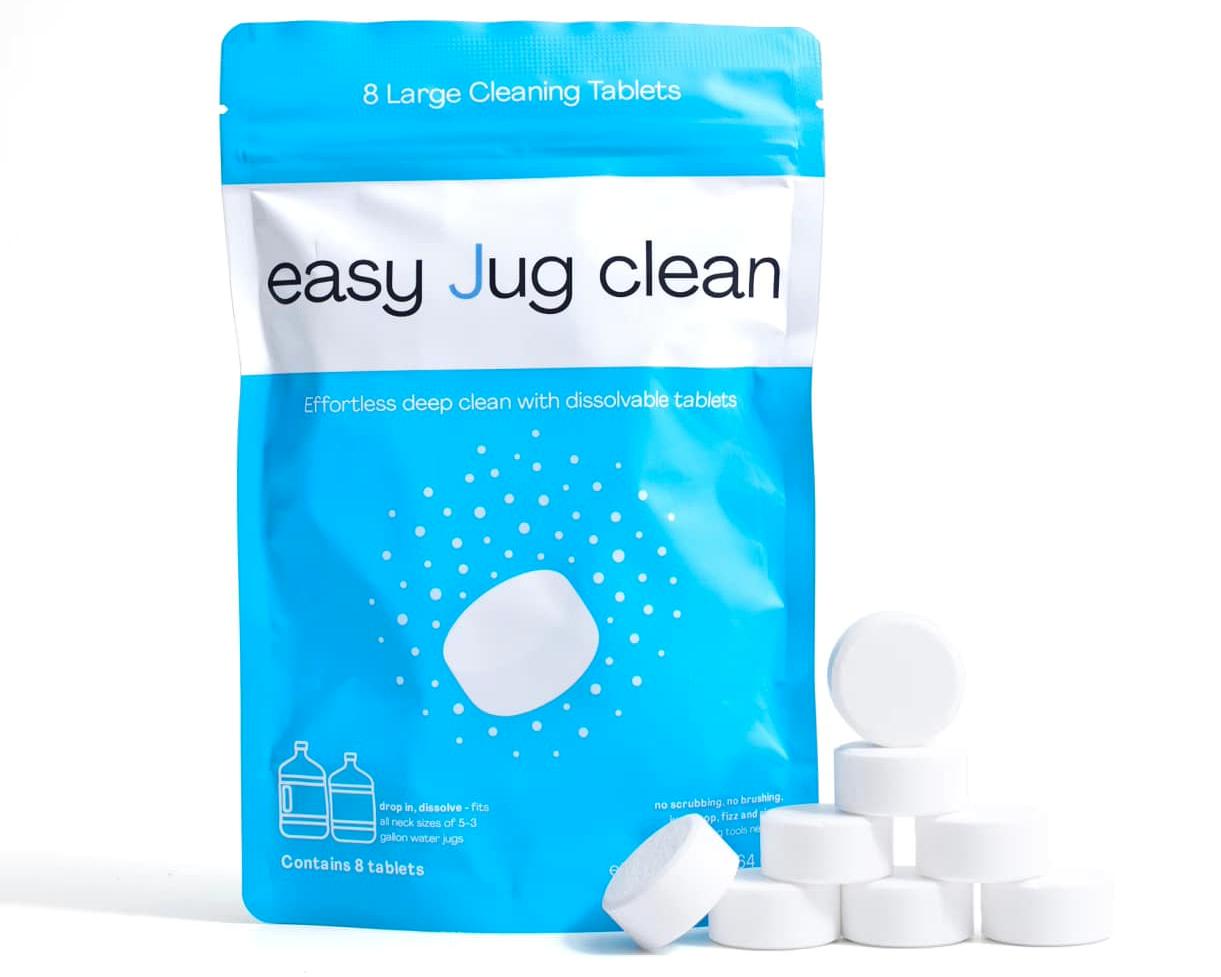
Watch Easy Jug Clean's active oxygen sanitize a 5 gallon water jug without scrubbing:


 Order now — get it by