How Cleaning Chemicals Accelerate Microplastic Release from Water Jugs
MicroplasticsChemical SafetyPlastic Degradation · Reading time: ~8 minutes
How Plastic Actually Breaks Down: The Chain Scission Mechanism
Food-grade plastics used in 5 gallon water jugs — primarily HDPE (high-density polyethylene) and Tritan copolyester — are polymers: long chains of repeating molecular units. The structural integrity, chemical resistance, and surface smoothness of the plastic are all properties of those long, intact chains. When those chains are broken — a process called chain scission — the fragments become progressively shorter, and the plastic progressively weaker, more porous, and more prone to releasing particles.
Chain scission occurs through two primary pathways in the water jug context. Mechanical abrasion from brushes physically fragments surface polymer chains at the micro-scale, creating loose fragments that enter the water. Chemical oxidation from strong oxidizing agents — particularly sodium hypochlorite (bleach) — breaks carbon-carbon and carbon-hydrogen bonds in the polymer backbone, fragmenting chains without any physical contact required.
The Four Mechanisms Linking Cleaning Chemistry to Microplastic Release
Mechanism 1: Oxidative Chain Scission (Bleach)
Hypochlorous acid (from dissolved bleach) attacks the polymer backbone through oxidation. Each treatment breaks some chain segments at their weakest points — typically at methylene groups adjacent to oxygen-containing functional groups. Over multiple treatments, surface chain length distributions shift toward shorter fragments. Shorter-chain surface polymers have lower physical integrity and release as microplastic particles into contact water at dramatically higher rates than intact long-chain polymer surfaces.
Mechanism 2: Mechanical Fragmentation (Brushes)
Bristle contact with the plastic surface creates micro-abrasion at the polymer level. Each scrubbing cycle shears surface polymer chains at contact points, creating a population of sub-micron fragments in the size range classified as microplastics (below 5mm) or nanoplastics (below 1 micrometer). A scratched jug surface has higher surface area, more chain-end exposure, and higher microplastic release rates than a smooth surface — and each cleaning with a brush makes this progressively worse.
Mechanism 3: Thermal Stress Combined With Chemicals
Using hot water (above 140°F / 60°C) with chemical cleaners compounds the degradation. Elevated temperatures increase polymer chain mobility — making the chains more susceptible to both chemical attack and mechanical fragmentation. Hot water alone causes minimal degradation; hot water with oxidizing chemistry creates synergistic degradation rates meaningfully higher than either alone.
Mechanism 4: Hydrolysis (Acid/Alkali Cycling)
Polycarbonate (used in older jugs) is susceptible to hydrolysis — degradation by water under acidic or alkaline conditions. Repeated vinegar treatments (acid) or strong soda ash applications (base) catalyze ester bond hydrolysis in polycarbonate, releasing bisphenol-A (BPA) and oligomers as degradation products. Even BPA-free polycarbonate alternatives can release BPA structural analogs through this mechanism.
Comparative Microplastic Risk by Cleaning Method
| Cleaning Method | Primary Degradation Mechanism | Microplastic Release Risk | Cumulative Risk Over 1 Year |
|---|---|---|---|
| Bottle brush (weekly) | Mechanical fragmentation | HIGH | Significant — visible surface damage |
| Household bleach (weekly) | Oxidative chain scission | HIGH | High — accelerating with each treatment |
| Brush + bleach combined | Both mechanisms — synergistic | VERY HIGH | Severe — jug replacement likely needed within 1–2 years |
| White vinegar (weekly) | Hydrolysis (polycarbonate); minimal on HDPE | LOW-MODERATE | Low on HDPE; significant on polycarbonate |
| Dish soap + brush | Mechanical (from brush) | MODERATE | Moderate — brush damage dominates |
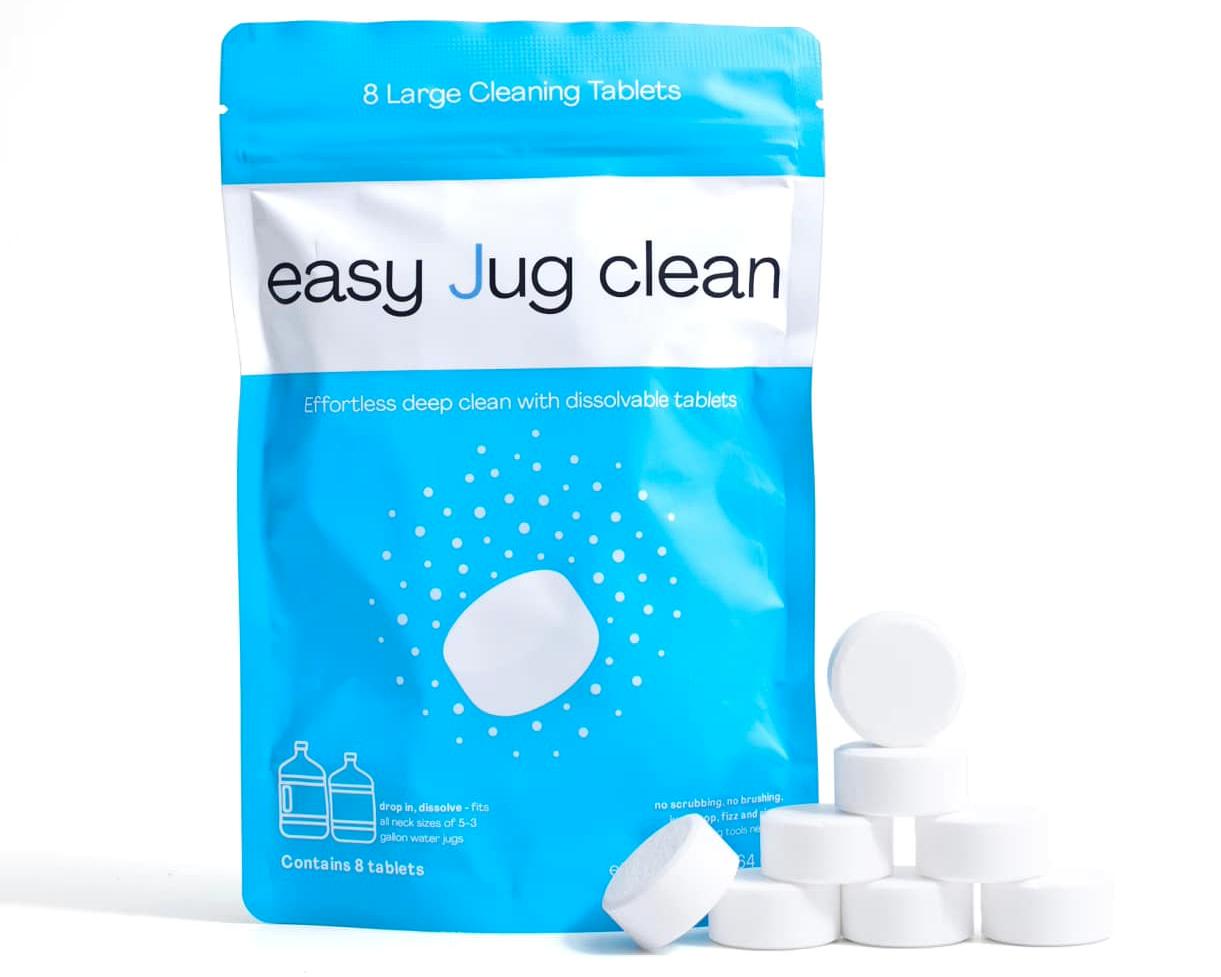
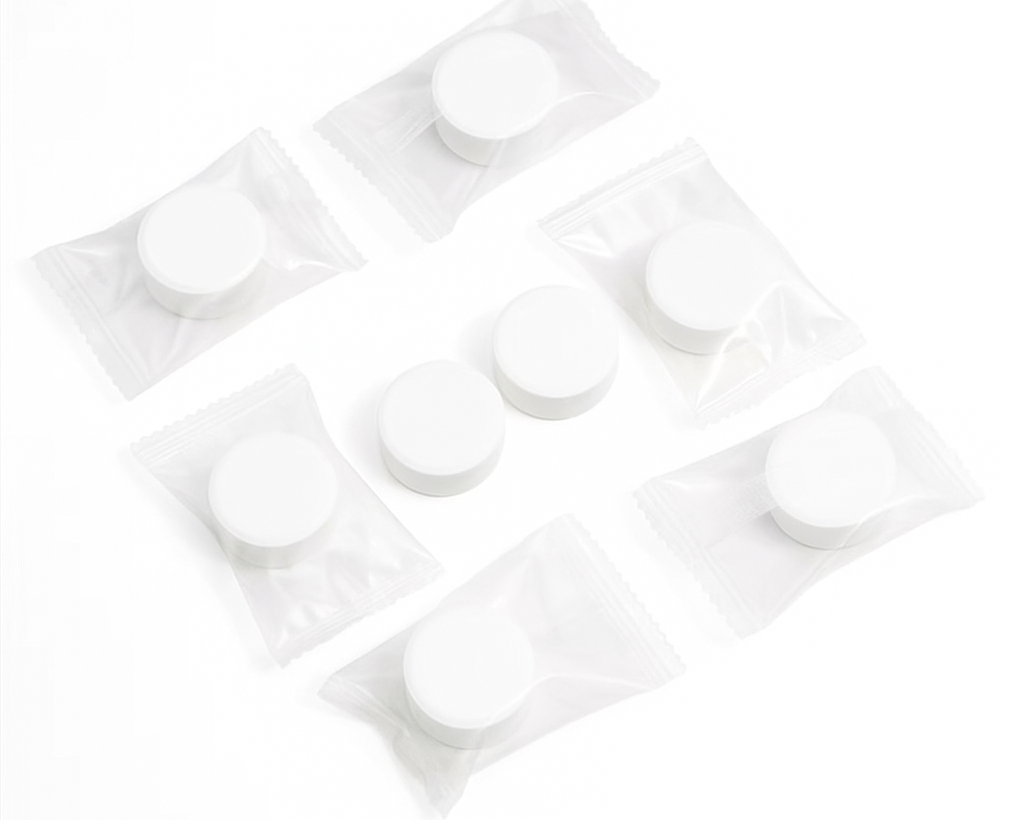
| Easy Jug Clean tablets | None — glycerin conditioning protects surface | VERY LOW | Negligible — surface protected not degraded |
The Glycerin Factor: Surface Conditioning as Microplastic Prevention
Among Easy Jug Clean's nine ingredients, glycerin (glycerol) serves a function that no other commercial water jug cleaner includes: surface conditioning. Glycerin is a humectant that forms a protective molecular layer on plastic surfaces, filling micro-fractures and reducing the exposed chain-end density that drives microplastic particle release. In the context of microplastic prevention, it acts as a repair agent for previous surface damage and as a protective barrier against future degradation.
What This Means for Long-Term Jug Safety
The conventional framing of water jug safety focuses almost entirely on microbial contamination — biofilm, bacteria, pathogens. This is appropriate; those are genuine health risks. But the cleaning methods used to address those risks introduce a parallel concern: the progressive chemical and physical degradation of the container that holds your drinking water, and the resulting increase in microplastic particles you consume with every glass.
A jug maintained for two years with weekly bleach and brush cleaning has measurably different surface chemistry and surface integrity than a jug maintained with non-degrading chemistry. The former is releasing more microplastic particles, more chemical migration products from degraded polymer chains, and accumulating bacteria more rapidly (due to increased surface roughness from degradation). The latter maintains its original surface properties, with the protective glycerin conditioning improving surface integrity over time.
See how Easy Jug Clean cleans a 5 gallon water jug in 20 minutes — no scrubbing required:
✅ Sanitize Without Degrading. Protect the Jug That Protects Your Water.
Easy Jug Clean's food-grade formula removes contamination without the chain scission, oxidative damage, or mechanical fragmentation that releases microplastics into your drinking water.
Q: Is the microplastic risk from a well-maintained jug still significant?
Research on microplastics in bottled and jug water generally finds the greatest release rates from mechanically or chemically stressed containers. A jug maintained with a non-degrading cleaning protocol, stored in cool conditions away from UV exposure, and inspected annually for surface damage has significantly lower microplastic release rates than degraded containers — though zero-release is not achievable with any plastic container. For households with particular concern about microplastics, glass jugs eliminate polymer-source microplastics entirely, while maintaining the same Easy Jug Clean protocol for sanitization.
Q: Does drinking water from a bleach-cleaned jug guarantee microplastic consumption?
Not guarantee — but meaningfully increase the probability over a clean-protocol jug. The degradation process is cumulative and incremental. A single bleach treatment causes minimal detectable change; 50 treatments over a year produces measurably compromised surface integrity with higher particle release rates. The risk accumulates with the treatment count, which is why the cleaning method you use consistently matters far more than any single treatment.


 Order now — get it by