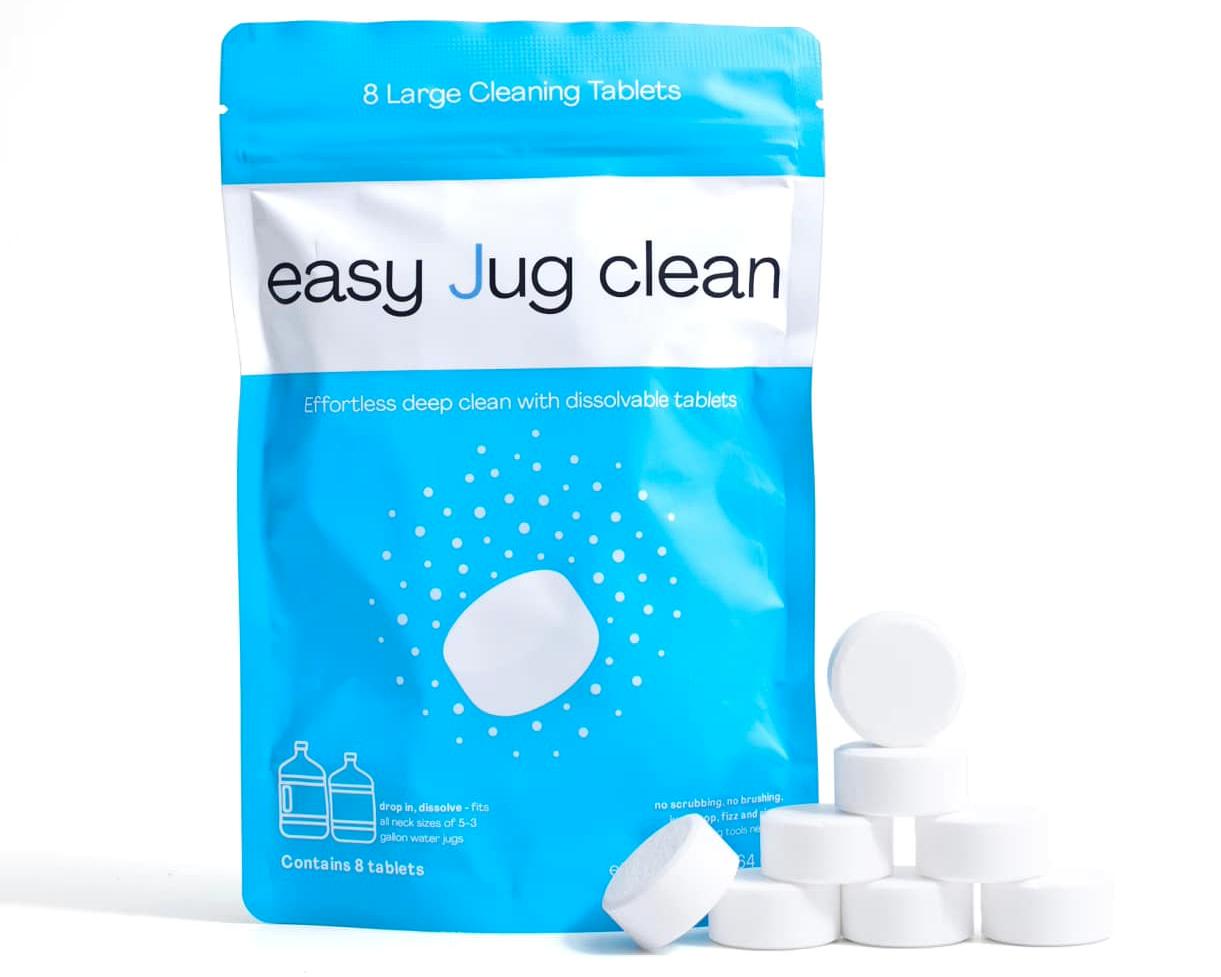
Why Tablet Form Is Superior to Liquid Cleaners for 5 Gallon Water Jugs
Tablet vs LiquidProduct FormatIngredient Stability · Reading time: ~7 minutes
The Active Oxygen Stability Problem in Liquid Form
Liquid manufacturers address this with chemical stabilizers — compounds that slow the degradation by scavenging trace metal ions that catalyze peroxide decomposition. But stabilizers are an imperfect solution: they add complexity to the formulation, their own safety and residue profiles need evaluation, and they extend but don't eliminate the degradation timeline.
Tablet Form: The Chemistry Stays Dormant Until You Need It
In a solid tablet, sodium percarbonate cannot release active oxygen because it cannot react without water. The chemistry is dormant — locked in dry crystalline form — until the moment the tablet contacts warm water in your jug. At that point, 100% of the available active oxygen chemistry activates simultaneously, delivering the full designed concentration to the solution rather than whatever fraction survived the product's liquid shelf life.
This isn't a minor convenience advantage. It's the difference between a product that reliably delivers the designed sanitizing chemistry and one that delivers an indeterminate fraction of it depending on manufacturing date, storage temperature, and time on shelf.
Eight Dimensions Where Tablets Outperform Liquid Cleaners
Degrades continuously in solution; loses potency over weeks to months DISADVANTAGE
Dormant in solid form; 100% potency retained until water contact ADVANTAGE
Requires user to measure correct dose; over/under-application common DISADVANTAGE
Pre-calibrated — 2 tablets = correct concentration every time ADVANTAGE
Typically 12–18 months; degrades faster at higher temperatures DISADVANTAGE
2+ years in sealed packaging; temperature-stable in dry form ADVANTAGE
Heavy (mostly water); spill risk; plastic bottle waste DISADVANTAGE
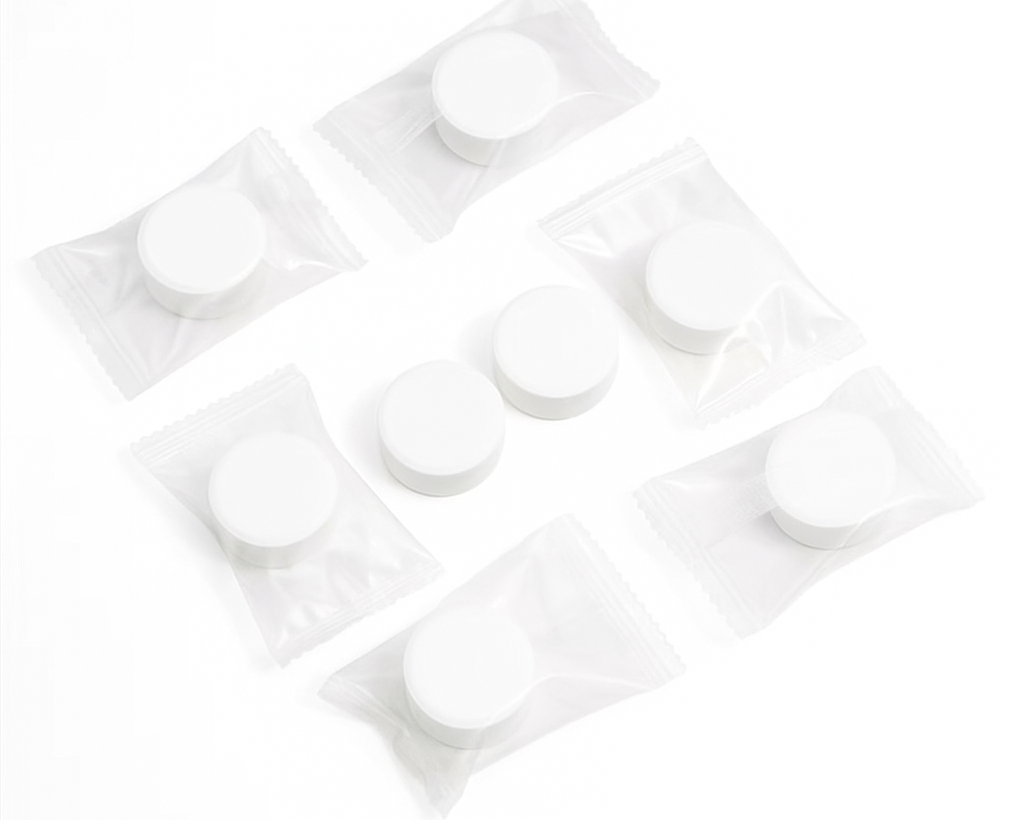
Compact, lightweight; no spill risk; minimal packaging waste ADVANTAGE
Stabilizers and carrier compounds from liquid formulation may remain DISADVANTAGE
Food-grade breakdown products only; no stabilizer residue ADVANTAGE
Measuring liquids into a 5-gallon jug introduces variability and mess DISADVANTAGE
Drop 2 tablets — no measuring, no mess, no possibility of error ADVANTAGE
Must include stabilizers, preservatives, carrier solvents for liquid state DISADVANTAGE
All 9 ingredients serve functional cleaning roles — no stabilizer overhead ADVANTAGE
Product degrades whether used or not; may be ineffective by next use DISADVANTAGE
Tablets remain fully potent until water contact regardless of storage duration ADVANTAGE
The Liquid Stabilizer Issue: An Underappreciated Residue Concern
Liquid oxidizing cleaners require chemical stabilizers to maintain a usable shelf life. The most common are phosphoric acid esters, tin compounds, and sequestering agents. These stabilizers are present in the liquid product and end up in your jug during the cleaning treatment. While most are present at low concentrations and are considered safe, they represent an additional ingredient class — one not present in tablet formulations — that enters the water contact zone of your drinking water container.
For users who have chosen Easy Jug Clean specifically because of its food-grade ingredient profile, the presence of stabilizer compounds in a liquid alternative is a meaningful formulation difference even if the individual stabilizers are not acutely harmful. The goal of complete ingredient transparency and food-grade residue profiles is harder to maintain in a liquid format.
Watch the right cleaning approach versus what a brush actually does to your jug:
✅ Full-Potency Chemistry. Every Tablet. Every Time.
Unlike liquid cleaners that degrade in storage, Easy Jug Clean tablets deliver 100% of their active chemistry at the moment of use — not whatever fraction survived transport and shelf time.
Q: How should Easy Jug Clean tablets be stored to maintain potency?
Store in the original sealed packaging in a cool, dry location away from moisture sources. Do not store in bathrooms, near dishwashers, or anywhere with high ambient humidity, as even atmospheric moisture can begin activating the effervescent reaction and degrading the active oxygen over time. A dry kitchen cabinet or pantry shelf is ideal. Once opened, reseal the pack after each use.
Q: If I have a liquid jug cleaner, can I tell if it's still effective?
Liquid hydrogen peroxide or percarbonate products can be tested by adding a small amount to water — strong bubbling indicates remaining active oxygen. Weak or no bubbling suggests significant degradation has occurred. For a product you're relying on to sanitize your drinking water container, however, this informal test is not a reliable substitute for using a known-potency format.


 Order now — get it by