Bleach Ratios for Cleaning Water Containers: The Risks of Getting It Wrong
Reading time: ~6 minutes | Bleach Dilution Water Container Safety Chlorine Risk
The Bleach Concentration Window for Water Container Sanitization
The CDC's recommendation for sanitizing empty water storage containers uses a specific dilution: approximately 1 teaspoon of unscented household bleach (5–8% sodium hypochlorite) per quart of water, with a 30-minute contact time and thorough rinsing. This produces a solution of approximately 200–300 ppm free chlorine — the minimum effective range for sanitization on a food-contact surface.
| Bleach Concentration | Free Chlorine (ppm) | Sanitization Result | Residue Risk |
|---|---|---|---|
| 1/4 tsp per gallon (very dilute) | ~25–50 ppm | ❌ Insufficient — not sanitizing | Low |
| 1 tsp per quart (CDC recommendation) | ~200–300 ppm | ✅ Effective sanitization | Moderate — requires thorough rinsing |
| 1 tbsp per quart (3× recommended) | ~600–900 ppm | ✅ Effective sanitization | 🔴 HIGH — very difficult to rinse from 5 gal jug |
| Undiluted bleach | 50,000–80,000 ppm | ✅ Effective sanitization | 🔴 EXTREMELY HIGH — dangerous residue |
The 5 Gallon Jug Makes the Rinsing Problem Worse
The CDC's container sanitization protocol was designed for containers you can access fully — where you can see and physically confirm complete rinsing. A 5 gallon jug with a 48mm neck cannot be visually confirmed as fully rinsed. The same geometry that prevents brush cleaning from working effectively prevents confirmation of complete chemical removal. You cannot see the lower walls. You cannot reach them to wipe them. You can only pour water in and hope gravity removes the chlorine solution uniformly — which it doesn't, because the curved walls hold solution in ways a simple empty-and-refill can't clear.
The Only Truly Safe Answer: Eliminate the Residue Problem at the Source
The margin for error with bleach ratios is uncomfortably slim. Eliminating the bleach ratio risk entirely starts with switching to a purpose-built method.
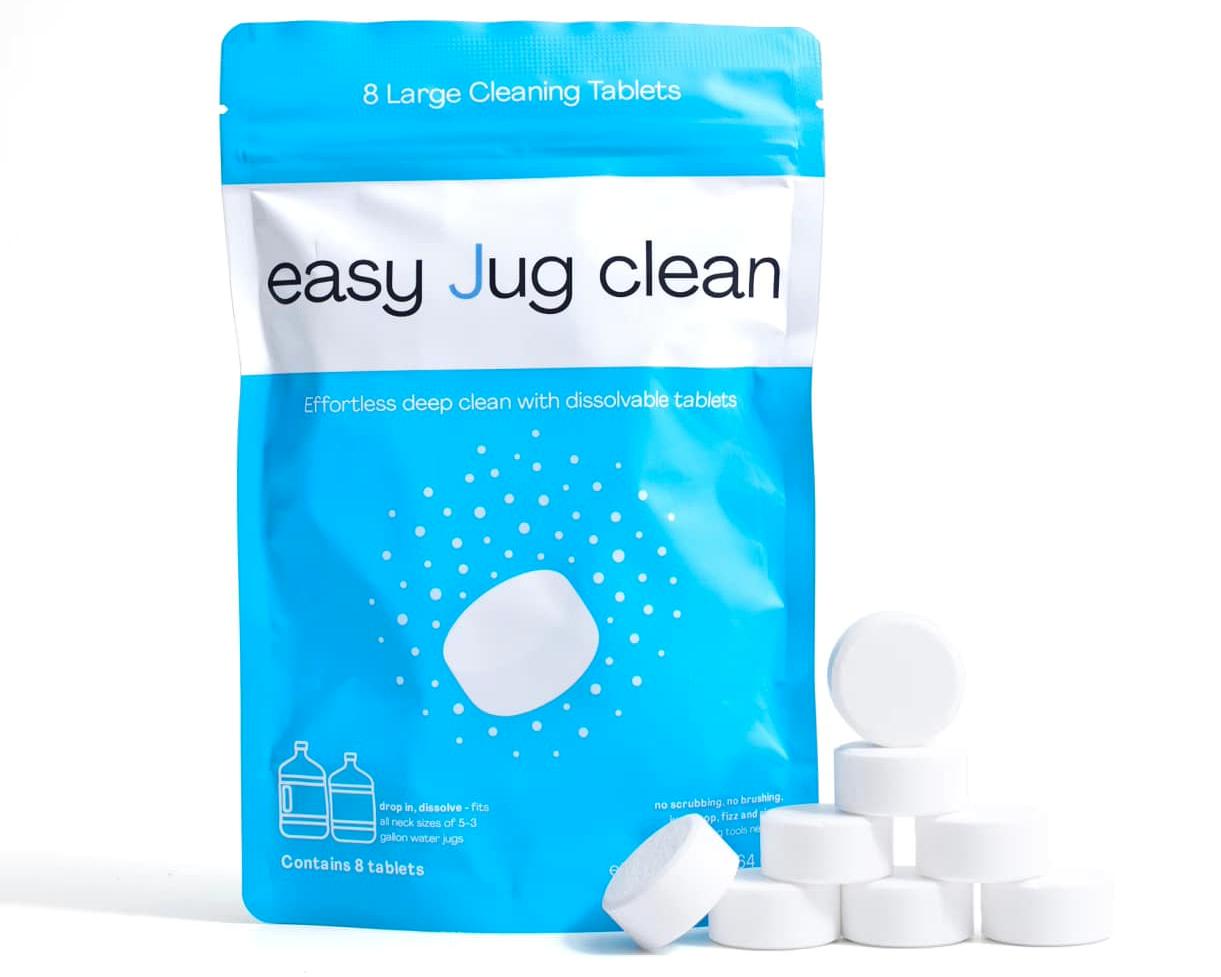
Watch Easy Jug Clean's active oxygen sanitize a 5 gallon water jug without scrubbing:
✅ No Measuring. No Residue Risk. No Chlorine.
Easy Jug Clean is pre-calibrated — two tablets, correct chemistry every time, food-grade residue after rinsing.


 Order now — get it by