First-Time Deep Clean for Established Mold Colonies in a Water Jug
First-Time Deep Clean for Established Mold Colonies in a Water Jug
Reading time: ~6 minutes | Deep Clean Protocol Established Mold First-Time Treatment
What "Established" Means in Practice
An established mold colony in a water jug typically has these features:
- Visible spots of multiple millimeters in diameter
- Defined colour (black, green, blue-green, or other characteristic pigment)
- Some texture — not just flat staining
- Multiple spots in different locations, suggesting the colony has been producing spores
- Possibly an off smell or taste in the dispensed water
- The jug is at least several weeks into its current use cycle, possibly months
If your situation matches most of these, the contamination is mature, and you're dealing with a hyphal network and biofilm scaffold under the visible spots — not just surface mold. The deep-clean protocol is calibrated for this.
Why the Deep-Clean Protocol Differs from Maintenance
Standard weekly Easy Jug Clean treatment uses 2 tablets, 20-minute soak, and 2 rinse cycles. That works for routine maintenance because the contamination it's preventing is at the early biofilm stage. For mature mold contamination, three modifications matter:
| Variable | Maintenance Cleaning | First-Time Deep Clean |
|---|---|---|
| Tablets per cycle | 2 | 2 |
| Soak time | 20 minutes | 30 minutes |
| Rinse cycles after soak | 2 | 3 |
| Number of consecutive treatments | 1 | 2 (on successive days) |
| Drying time before next use | 12+ hours | 24 hours minimum |
| Verification period before normal use | None | 2-week observation |
Each modification addresses a specific characteristic of mature contamination. The longer soak ensures active oxygen reaches deep hyphae. The extra rinse cycle clears more dislodged biofilm material. The second consecutive treatment finishes any contamination the first cycle exposed but didn't fully eliminate. The longer drying ensures any surviving spores can't re-establish in residual moisture. The verification period confirms the cleaning worked.
The Full Deep-Clean Protocol
Day 1: First Treatment Cycle
- Stop using the jug for drinking water immediately. Discard remaining water — don't use for cooking, coffee, or pets. The deep clean assumes you're treating actively contaminated water as a hazard until the cleaning is complete.
- Do not pre-scrub or rinse aggressively. Disturbing established mold releases spores into the rinse water and onto adjacent surfaces. Pre-rinse only with a gentle pour of cool water, just enough to remove loose sediment.
- Fill the jug halfway with warm water (40–50°C / 104–122°F). Warm water accelerates the active oxygen release and helps loosen biofilm.
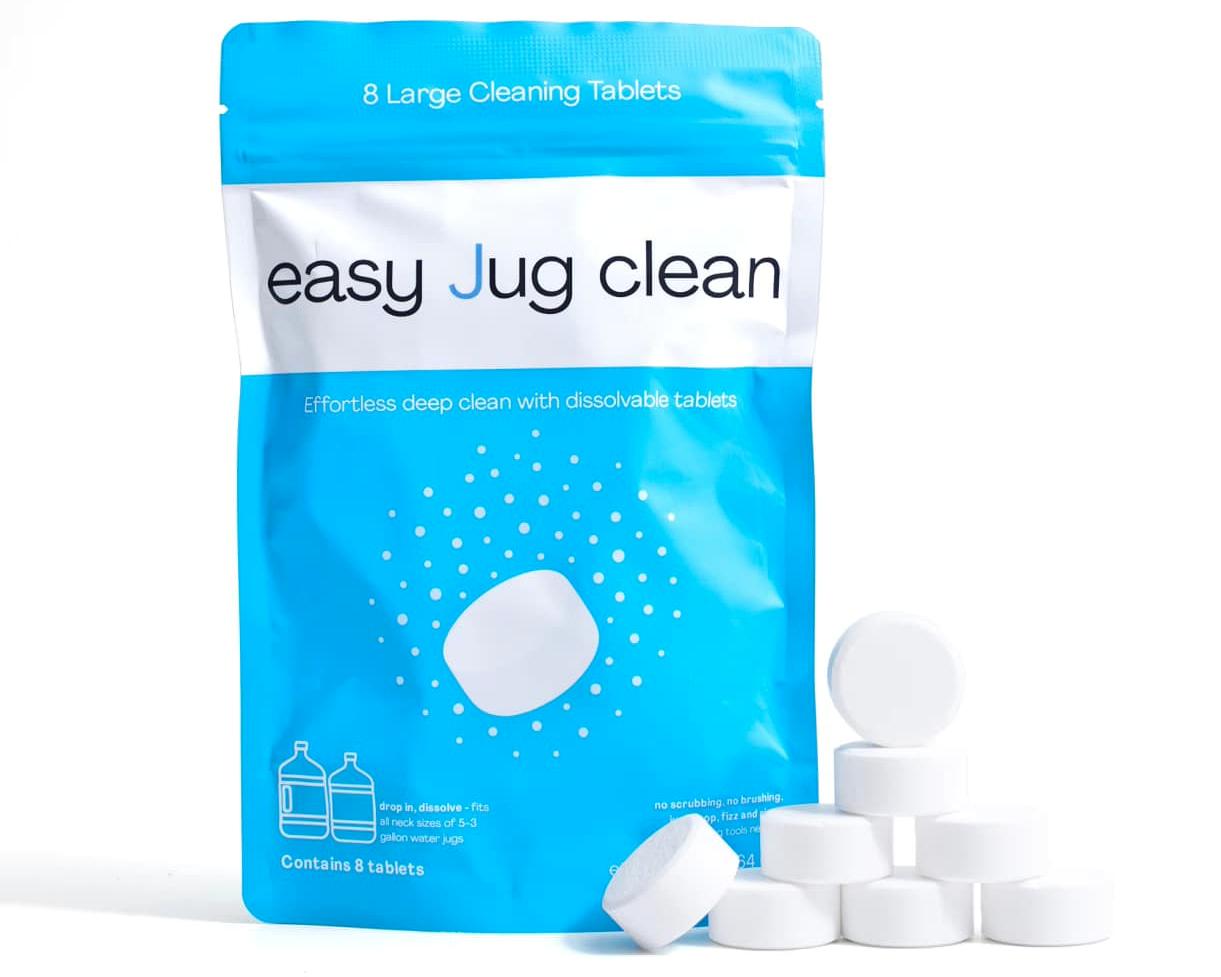
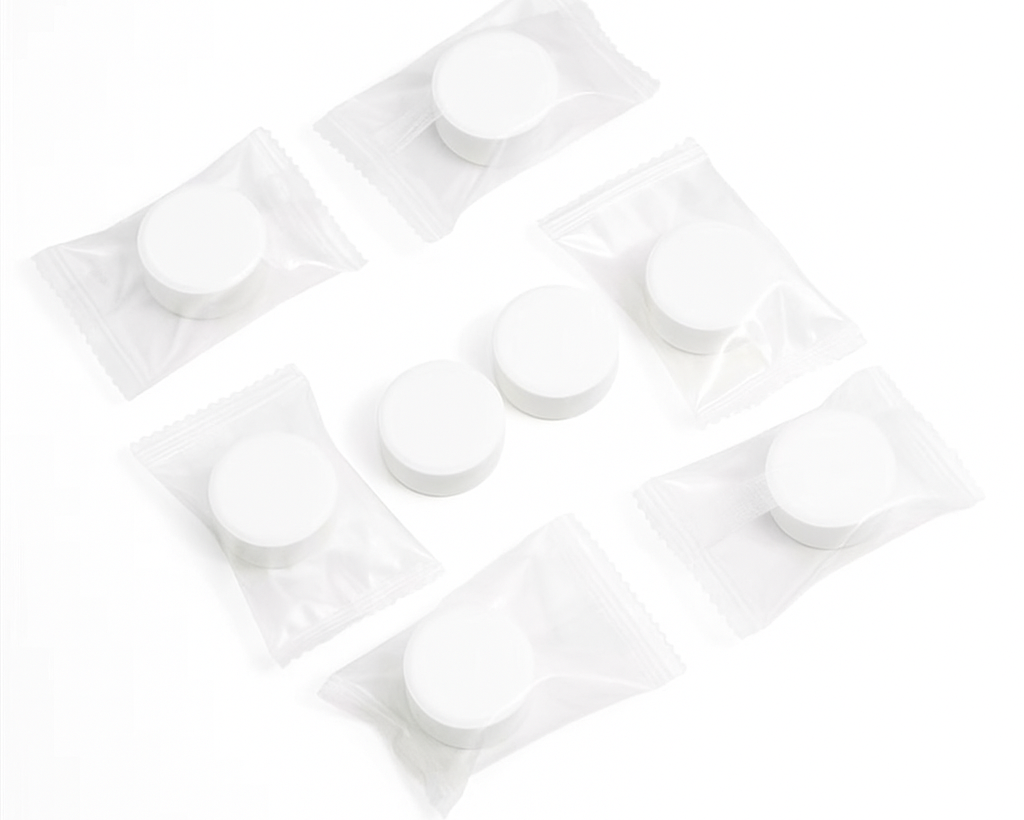
- Drop in 2 Easy Jug Clean tablets. The fizzing reaction begins immediately, distributing chemistry throughout the interior.
- Soak for 30 minutes undisturbed. Set a timer. Don't shake, don't pour out, don't peek frequently — let the chemistry work through its full diffusion cycle.
- At the 15-minute mark, gently swirl the jug to extend solution coverage to the upper walls and shoulder.
- After 30 minutes, inspect the cleaning solution. It will likely be discolored — yellow, brown, or tinged with the colour of the original mold. This is lifted contamination.
- Empty and rinse 3 times with cool water, with vigorous swirling between rinses.
- Air-dry inverted at a 30-degree angle overnight (8+ hours minimum).
Day 2: Second Treatment Cycle
- Inspect the jug interior with a flashlight before the second treatment. Note any remaining visible spots, residual staining, or areas that look different from before.
- Repeat the full Day 1 protocol: warm water fill, 2 tablets, 30-minute soak with mid-cycle swirl, 3 rinse cycles.
- Air-dry inverted at a 30-degree angle for at least 24 hours before refilling. The longer drying period after the second treatment ensures any residual moisture is fully evaporated.
Day 3+: Verification Period
- Refill with fresh water and resume normal use.
- Inspect the jug interior weekly for the next two weeks. Look for any returning spots, residual discoloration that develops further, or unusual smell/taste in dispensed water.
- If no signs of mold return after 2 weeks, the deep clean was successful. Switch to weekly maintenance Easy Jug Clean treatments.
- If signs return within 2 weeks, repeat the deep clean (two more consecutive cycles). If signs return again after the second deep clean, consider whether the jug substrate is too compromised for restoration — replacement may be appropriate. The replace-or-save decision covers this.
What the Two Cycles Together Accomplish
Single cleaning cycles work for routine maintenance because the contamination is shallow and recent. For mature contamination, the two-cycle approach is what reliably eliminates the underlying ecosystem. Skipping the second cycle is the single most common reason first-time mold cleanings fail and recurrence happens.
The Things People Skip That Cause Failures
Skipping the Second Cycle
The most common mistake. The first cycle visibly improves the jug, the user feels the cleaning worked, and they don't run the second cycle. The recurrence pattern starts within 2–4 weeks because the underlying biofilm and deep hyphae weren't fully eliminated.
Pre-Scrubbing Before the Active Treatment
Disturbing the mold colony before active oxygen treatment releases spores into the surrounding environment — onto adjacent surfaces, into the rinse water, and onto the jug's exterior. The new spore distribution can re-seed the cleaned jug or contaminate other surfaces. Let the cleaning chemistry do the disruption.
Not Allowing Full Drying
Refilling a still-damp jug after the second treatment provides residual moisture for any surviving spores to germinate in. The 24-hour drying interval after the second treatment is calibrated to ensure the interior is genuinely dry, not just dry-looking.
Skipping the Verification Period
Resuming use without observing for 2 weeks is fine if the cleaning worked, but if it didn't, you've missed the early warning signs of recurrence. The 2-week verification period catches incomplete cleanings before they advance to mature contamination again.
✅ The Deep-Clean Protocol Built for First-Time Mold
One pack of Easy Jug Clean (8 tablets, ) covers two consecutive deep-clean cycles plus the first six weeks of maintenance afterward. The deep clean handles the established colony; weekly maintenance prevents the next one.
FAQ: First-Time Deep Cleaning
Q: Can I do both treatments on the same day to save time?
It's better to space them by at least 8 hours, ideally overnight. The active oxygen needs time to fully decompose and clear from the jug between cycles, and the brief drying interval helps loosen biofilm structures that the second cycle then handles more effectively.
Q: My jug had really bad mold — should I do three cycles?
For severe contamination, a third cycle on Day 3 is reasonable. Most cases respond to two cycles, but extra treatment doesn't harm anything (other than using more tablets). If you're uncertain, two cycles plus the verification period usually answers the question.
Q: Should I clean the dispenser at the same time?
Yes. A clean jug placed on a contaminated dispenser gets re-contaminated quickly. Run a complete dispenser sanitizing routine alongside the deep-clean cycles for the jug.
Q: After the deep clean, when should the first weekly maintenance treatment be?
One week after refilling. The verification period and the maintenance cycle can run in parallel — observe for visible mold while still doing the routine weekly cleaning. Visible mold during the verification period means the deep clean was insufficient; absence means transition to standard maintenance schedule.
The Bottom Line
The first-time deep clean for established mold is a specific, calibrated protocol — not just "more cleaning." Two consecutive treatments with extended soak times, careful drying, and a verification period address the mature contamination that single cycles can leave incomplete. Done correctly, it eliminates established mold and resets the jug to a maintainable state where weekly cleaning prevents recurrence indefinitely. The pillar guide covers the full picture; this article is the deep-clean specifics.


 Order now — get it by