Stainless Steel vs. Polycarbonate: How Material Changes Large Water Bottle Cleaning
Reading time: ~5 minutes | Materials Stainless Steel Polycarbonate
What These Materials Are and Why They Were Chosen
Stainless steel — typically 18/8 (Type 304) food-grade — is non-porous, chemically inert under normal conditions, scratch-resistant from typical kitchen abrasion, and tolerates extreme temperatures. It's chosen for sports bottles because it survives daily abuse, dishwasher cycles, hot beverages, and aggressive cleaning agents without degrading.
Polycarbonate (BPA-or-BPA-free) is a transparent thermoplastic that handles repeated impacts without shattering — important for 5-gallon jugs that get dropped during delivery and refill. It's lightweight relative to glass, optically clear, and inexpensive to mold at scale. The trade-off: polycarbonate is softer than stainless steel, vulnerable to scratching, sensitive to high heat, and reactive to certain chemical agents (notably chlorine bleach over repeated exposure).
What Each Material Tolerates
| Cleaning Agent / Action | Stainless Steel | Polycarbonate |
|---|---|---|
| Boiling water | ✅ Safe | ⚠️ Above 60°C causes damage |
| Dishwasher hot cycle | ✅ Safe | ⚠️ Heat may distort over time |
| Bleach (sodium hypochlorite) | ✅ Tolerates intermittent | ❌ Degrades plastic over use |
| Bottle brush, hard bristles | ✅ Doesn't scratch | ❌ Causes micro-scratches |
| Vinegar (acetic acid) | ✅ Safe | ✅ Safe |
| Hydrogen peroxide | ✅ Safe | ✅ Safe |
| Active oxygen (sodium percarbonate) | ✅ Safe | ✅ Safe |
| Strong abrasives / scouring pads | ⚠️ Will scratch finish | ❌ Causes serious damage |
| Acetone, MEK, harsh solvents | ✅ Tolerates | ❌ Dissolves the plastic |
The Three Material Risks That Matter for Large Water Bottles
1. Bleach Degradation Is Cumulative
2. Brush Scratching Is Permanent
A bottle brush slides across stainless steel without leaving any meaningful mark. The same brush dragged across polycarbonate creates microscopic scratches in the surface — invisible to the naked eye but real at the bacterial scale. These scratches become permanent biofilm reservoirs that no amount of cleaning can remove. Each future cleaning becomes less effective because bacteria are protected in the scratch valleys.
3. Heat Tolerance Differs by ~40°C
Stainless steel handles boiling water (100°C) without effect. Polycarbonate begins softening around 60°C and shows progressive damage above 80°C — affecting clarity, structural integrity, and accelerating microplastic release into stored water. Hot water cleaning is safe for steel and damaging to polycarbonate over repeated exposure.
The PET Variant
Some large water bottles use PET (polyethylene terephthalate) instead of polycarbonate — lighter, more flexible, slightly less impact-resistant. PET is more chemically tolerant than polycarbonate but slightly more vulnerable to scratching. The cleaning approach is essentially identical: avoid bleach, avoid brushes, avoid high heat, use food-grade chemistry instead.
What Cleaning Chemistry Works for Both
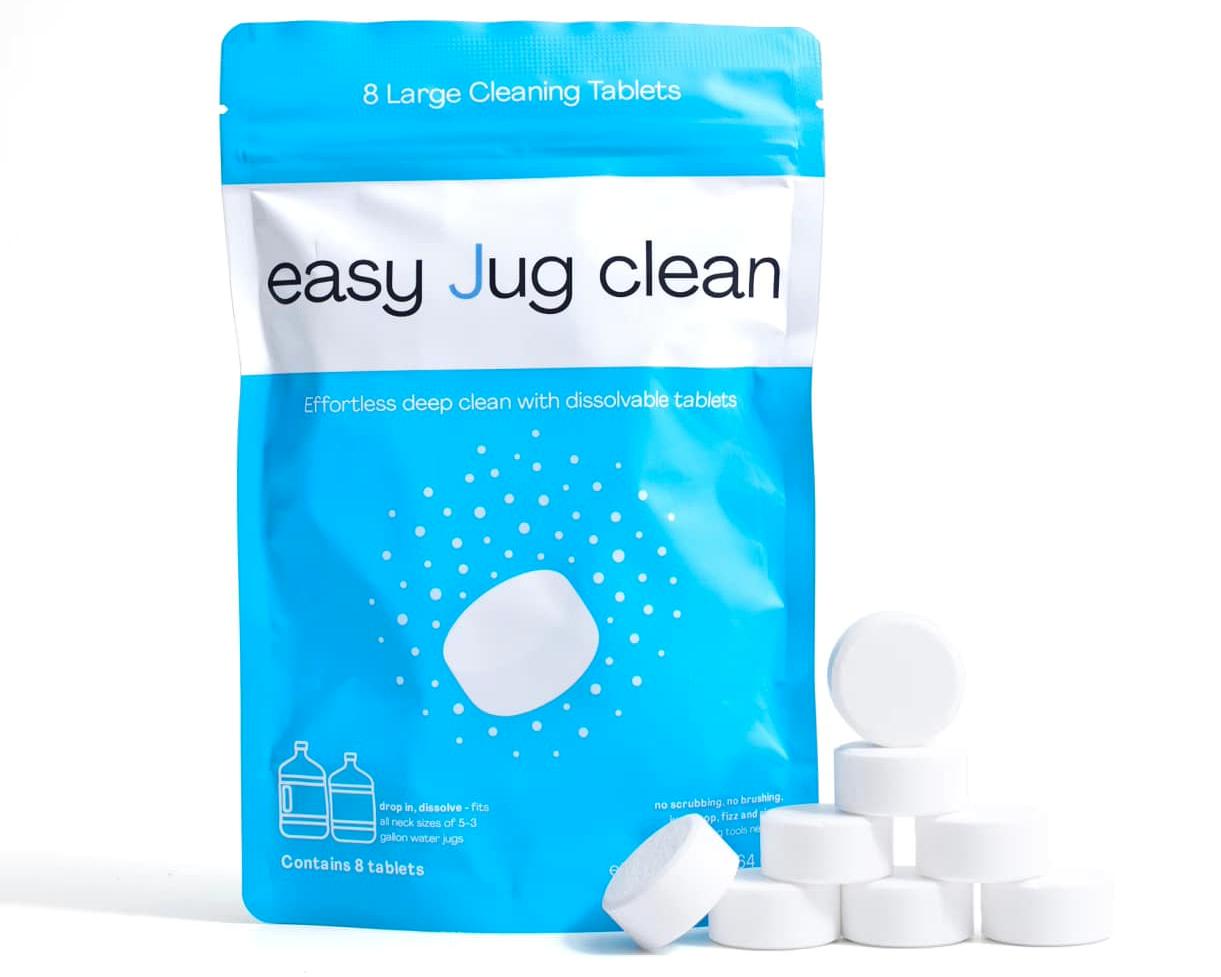
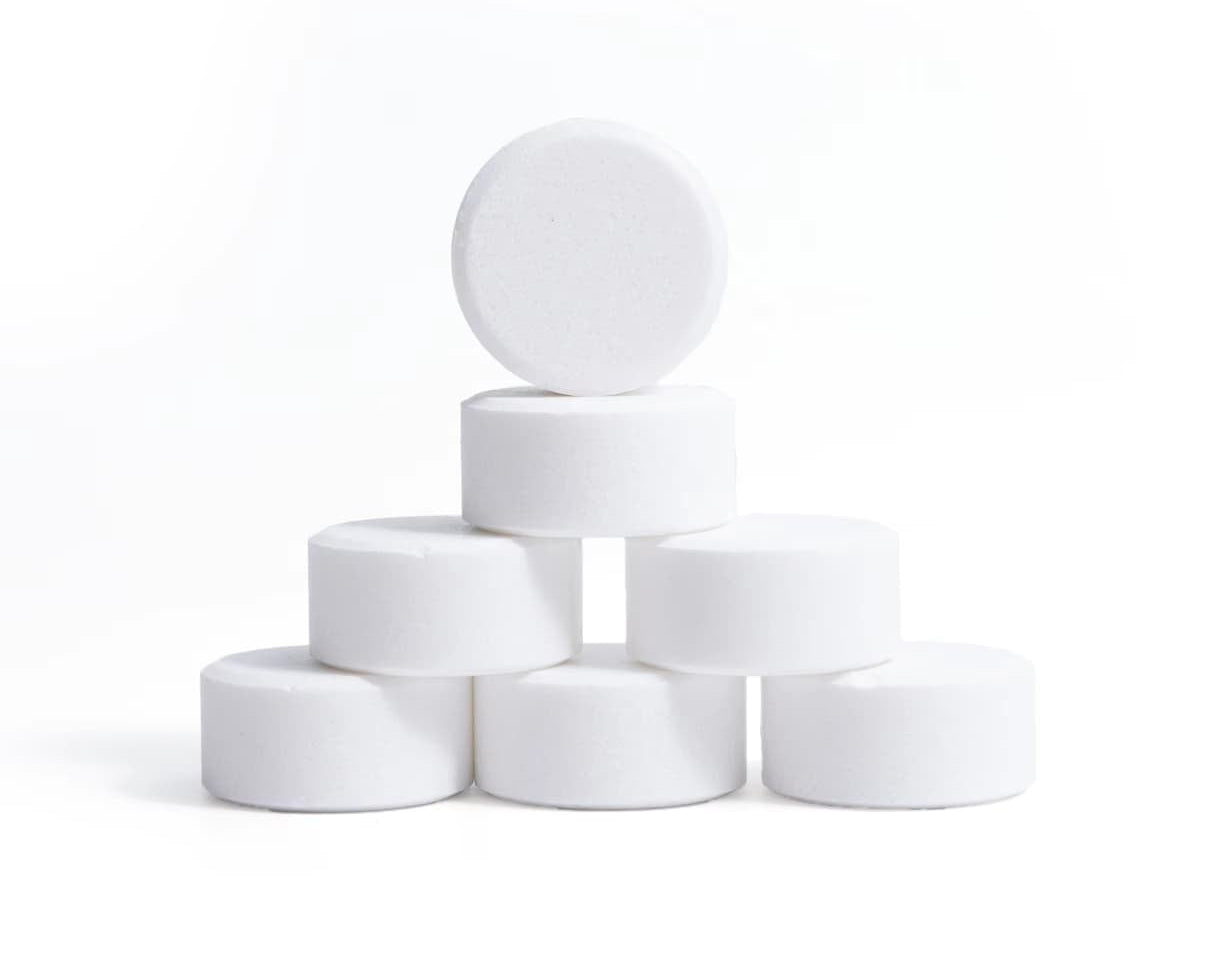
The intersection of "safe for stainless steel" and "safe for polycarbonate" is exactly the chemistry profile of Easy Jug Clean: food-grade, non-chlorine, non-acidic, non-corrosive, neutral pH after dissolution. Active oxygen oxidizes biofilm without attacking either substrate. Chelating agents dissolve mineral scale through ion binding rather than acid attack. Plant-based surfactants lift residue without solvent action.
✅ Cleaning That's Safe for Every Large Water Bottle Material
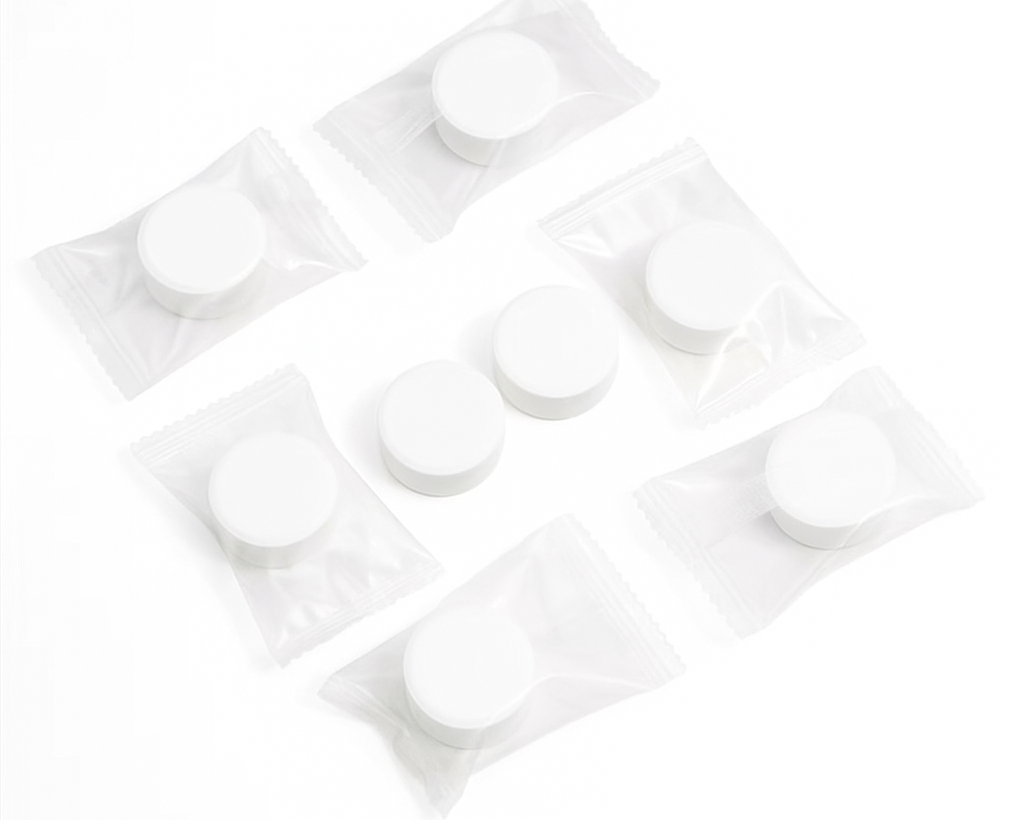
Stainless, polycarbonate, PET, glass — same protocol, same chemistry, no substrate damage. Two tablets, 20 minutes, rinse.
FAQ: Material-Specific Cleaning
Q: I have a stainless steel large water dispenser. Can I use bleach occasionally?
You can, and the steel will tolerate it. The reason to avoid bleach even on stainless is residue — chlorine residue is hard to fully rinse from a narrow-neck container regardless of substrate, and it affects taste and safety in subsequent stored water.
Q: My 5-gallon jug is BPA-free polycarbonate. Does that change anything?
BPA-free polycarbonate uses a different bisphenol (often BPS or BPF) but has similar mechanical and chemical properties. The BPA distinction matters for leaching, not for cleaning method.
Q: Can I tell if my jug is polycarbonate or PET?
Look for the recycling triangle on the bottom. #7 (with "PC" notation) is typically polycarbonate. #1 is PET. The cleaning approach is the same for both.
The Cumulative Damage Pattern
Material damage from harsh cleaning rarely shows up after one or two uses. It accumulates over months and years, and the consequences are invisible until the jug is well past restoration. A polycarbonate 5-gallon jug cleaned weekly with bleach for two years develops a cloudy interior, a faintly off taste, and surface micro-cracks that no further cleaning can address. A jug cleaned with active oxygen chemistry for the same period maintains optical clarity, neutral taste, and a smooth interior surface that continues to resist biofilm establishment.
The cleaning method doesn't just affect today's hygiene — it affects the lifetime of the container. Choosing a cleaning chemistry that's safe for the substrate is an investment in keeping the jug usable for its full service life rather than degrading it from the inside.
The Bottom Line
Stainless steel is forgiving; polycarbonate is not. The cleaning agent that's safe for your sports bottle may be slowly degrading your dispenser jug. The chemistry that works for both — and for every other large water bottle material — is the food-grade, non-chlorine, non-abrasive approach Easy Jug Clean is built around. Match the chemistry to the most sensitive substrate, and you don't have to think about which container needs which cleaner.


 Order now — get it by