The Difference Between Rinsing and Sanitizing a Water Cooler Jug
Reading time: ~6 minutes | Rinsing vs Sanitizing Water Cooler Jug Cleaning Science
The Difference Between Rinsing and Sanitizing a Water Cooler Jug
The Fundamental Distinction: Mechanical Removal vs. Chemical Kill
Before we dive into the specifics, let's establish the basic definition:
Rinsing is a mechanical process that removes loose particles, debris, and surface water through physical flow. It does not kill bacteria or penetrate protective barriers.
Sanitizing is a chemical process that kills bacteria, breaks down biofilm matrices, and inactivates pathogens through active chemistry. It requires contact time and chemical action, not just water flow.
This distinction is the entire reason why how to clean a water cooler jug properly is so much more involved than people think. Most people assume a thorough rinse equals a clean jug. It doesn't.
What Rinsing Actually Does (and Doesn't Do)
When you empty a jug and fill it with hot water, circulating the water and dumping it, here's what happens:
What Rinsing Removes
- Loose sediment: Particles floating freely in the water are flushed away.
- Surface water residue: The water itself is replaced with fresh water.
- Organic debris: Dead cells, dust, and large particulates can be physically dislodged.
What Rinsing Cannot Do
- Penetrate biofilm: Biofilm is a protective matrix of bacteria, polysaccharides, and proteins. Water flow alone cannot break through it. The bacteria inside biofilm are protected—they're not floating; they're anchored and embedded.
- Dissolve mineral scale: Hard water deposits create crusty buildup on jug walls. These mineral deposits don't rinse away; they require acidic chemistry to dissolve.
- Kill anchored bacteria: Bacteria that have attached to surfaces are orders of magnitude more resistant to environmental stress than free-floating bacteria. Water flow won't kill them.
- Remove mold spores: Mold spores have dormancy mechanisms that allow them to survive water exposure. Simple rinsing doesn't eliminate them.
- Achieve microbial kill: Bacteria aren't harmed by water movement. They reproduce and establish biofilm while you're rinsing. The bacteria count may temporarily drop, but it rebounds within hours.
This is why the safest way to clean a 5 gallon water jug requires chemistry, not just mechanical action. Your jug's geometry makes rinsing even less effective than it would be for a wide-mouth container.
The Biofilm Problem: Why Rinsing Fails
The core reason rinsing doesn't work for shared water cooler jugs is biofilm.
Biofilm is a community of bacteria held together in a protective matrix. Think of it as a bacterial city. The bacteria secrete polysaccharides and proteins that create a glue-like structure. Inside this structure, bacteria are protected from antibiotics, chlorine, and environmental stress by up to 1,000×.
When you rinse a jug with biofilm on the walls:
- The water flow doesn't penetrate the biofilm matrix.
- The bacteria inside are completely sheltered from the water.
- The outer layer of the biofilm might be partially dislodged, but the core remains intact and continues reproducing.
- Within 12–24 hours, the biofilm re-establishes and thickens.
So a rinse-only approach creates a false sense of security. The jug looks and tastes clean. But the biofilm is still there, still growing, and still shedding bacteria into the water you're drinking.
The Narrow-Neck Geometry Problem
Water cooler jugs have a small opening at the top. This geometry is excellent for preventing contamination during storage—but it makes mechanical cleaning nearly impossible.
You can't fit a brush deep into the interior to scrub biofilm away. You can't insert your hand to wipe down the walls. You can't visually inspect the bottom of the jug where biofilm typically clusters thickest. This is why water jug cleaning tablets vs. bottle brushes shows tablets as the clear winner. Brushes can't reach where the contamination is.
With narrow-neck geometry, your only realistic option is chemical sanitization. The sanitizing agent must be able to flow throughout the entire jug, making contact with biofilm in places a brush could never reach. This requires:
- Active chemistry: The sanitizing agent must be able to kill bacteria without requiring mechanical scrubbing.
- Circulation: The liquid must reach the entire interior surface, including the bottom, the sides, and the spigot mechanism.
- Contact time: The chemical must sit with the biofilm for long enough to penetrate and break down the matrix.
Rinsing vs. Sanitizing: Side-by-Side Comparison
| Aspect | Rinsing Only | Chemical Sanitizing |
|---|---|---|
| Removes loose debris | Yes | Yes |
| Kills free-floating bacteria | No (temporarily removes, but bacteria regrow) | Yes |
| Penetrates biofilm | No | Yes |
| Dissolves mineral scale | No | Yes (if acidic formula) |
| Kills anchored bacteria | No | Yes |
| Eliminates mold and mildew | No | Yes |
| Time required | 5–10 minutes | 20–30 minutes |
| Results last how long? | 12–24 hours | 7–30 days (depending on usage) |
| Actual microbial kill? | No | Yes |
Why People Confuse Rinsing with Sanitizing
In many settings, the distinction between rinsing and sanitizing gets blurred. Office buildings might have someone "clean" the water cooler by dumping the jug and rinsing it. That person—and everyone drinking from the cooler—assumes it's now clean.
But look at the timeline: why office water cooler jugs are the most contaminated in any building is partly because the rinse-only approach creates a false sense of cleanliness. The jug looks pristine. Nobody sees the biofilm. So months pass without proper sanitization, and contamination reaches critical levels invisibly.
This is dangerous because:
What Actually Works for Sanitizing Water Cooler Jugs
Chemical sanitizing requires:
1. Active Chemistry
The sanitizing agent must actively kill bacteria. Common options include:
- Chlorine-based: Kills bacteria through oxidation. Works fast but requires careful handling.
- Oxygen-based: Breaks down biofilm and kills anaerobic bacteria. Gentler, generally safer.
- Acid-based: Dissolves mineral scale and biofilm matrix. Creates inhospitable environment for bacteria.
2. Proper Contact Time
The sanitizing agent needs time to work. This typically means 15–30 minutes of the chemical sitting inside the jug, with the jug tilted or rotated to ensure all interior surfaces contact the solution.
3. Full Distribution
The chemical must reach all interior surfaces, including the bottom, the spigot mechanism, and any crevices. How to clean a water cooler jug the right way requires the jug to be fully filled with sanitizing solution and left undisturbed (or gently rotated) to allow the chemistry to work.
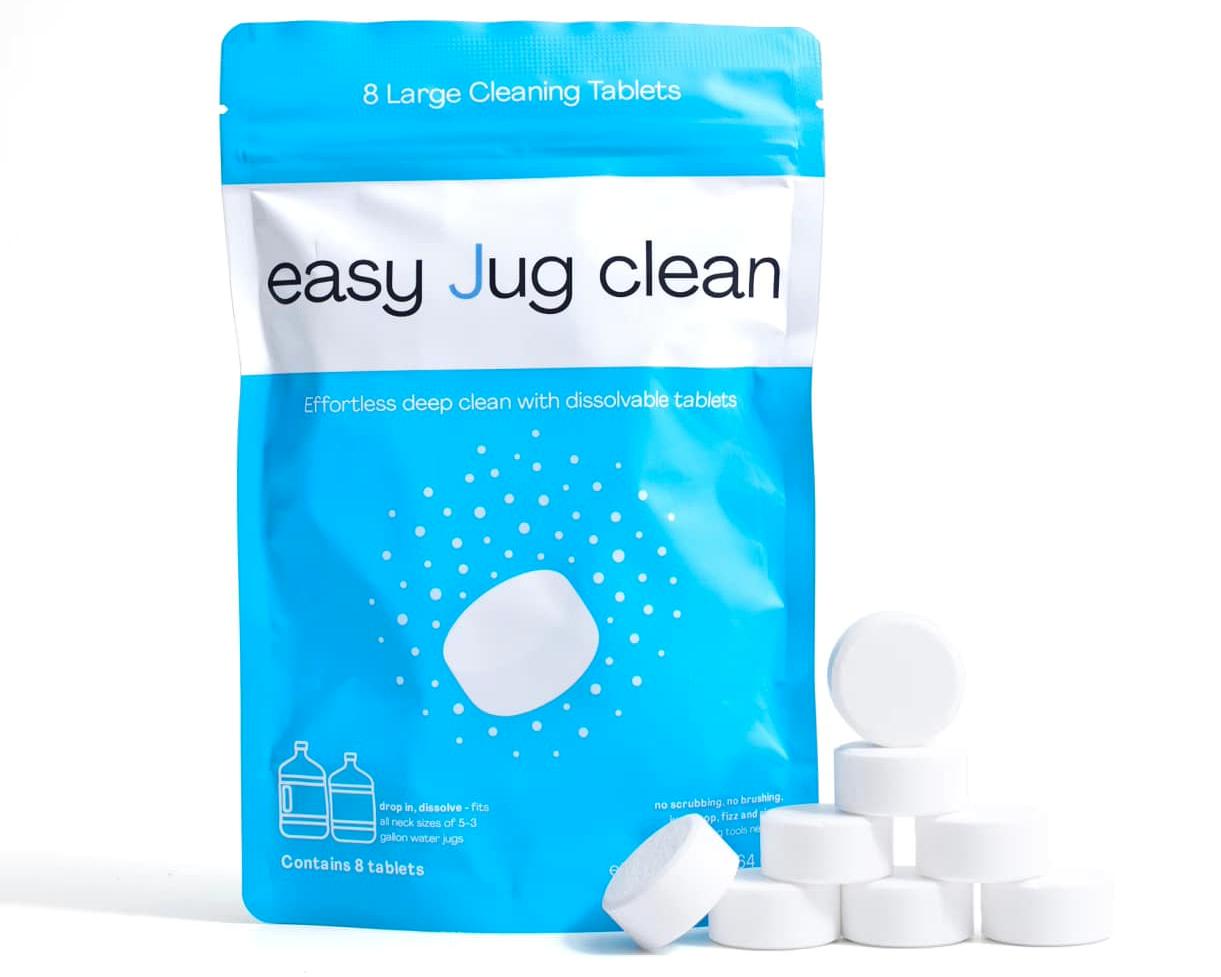
Easy Jug Clean: Sanitizing Without the Complexity
The challenge is that most people don't have time or expertise for complex sanitizing procedures. Bleach is dangerous. Acid cleaners require careful handling. Oxygen-based cleaners work but require longer contact times.
Easy Jug Clean changes the equation:
The result: a jug that's actually clean—not just empty and refilled with the appearance of cleanliness. How to sanitize a 5 gallon water jug the easiest way is now genuinely simple.
The Bottom Line
Rinsing and sanitizing are fundamentally different processes. Rinsing removes debris. Sanitizing kills bacteria and breaks down biofilm. For water cooler jugs—with their narrow necks and high-traffic usage—rinsing is not sufficient. You need chemical sanitization.
The good news: properly sanitizing a jug doesn't have to be complicated. It just has to actually happen.
✅ Stop Confusing Rinsing with Sanitizing
Rinsing leaves biofilm intact and bacteria thriving. Easy Jug Clean actually sanitizes—breaking down biofilm, killing bacteria, dissolving mineral scale—in 20 minutes with zero expertise required. Two tablets, proper chemistry, actual cleanliness.
See the difference between rinsing and actually sanitizing — Easy Jug Clean in action:


 Order now — get it by