The Mold-Biofilm Connection: Why They Almost Always Come Together
Reading time: ~5 minutes | Mold-Biofilm Microbial Ecology Cleaning Strategy
The Sequential Establishment
The contamination ecosystem in a water jug typically establishes in a predictable sequence:
- Stage 1: Bacterial attachment. Free-floating bacteria in the water make contact with the interior surface and form initial attachment via cell-surface proteins.
- Stage 2: Biofilm matrix formation. Attached bacteria begin secreting extracellular polymeric substances (polysaccharides, proteins, DNA) that form a matrix around the colony.
- Stage 3: Mature biofilm community. The matrix thickens, multiple bacterial species establish, and the community develops a defined structure with channels for nutrient flow.
- Stage 4: Mold spore arrival and germination. Mold spores landing on the now-established biofilm find an optimal substrate — moisture, organic nutrients from bacterial metabolism, anchor structure for hyphae, and protection from environmental stresses.
- Stage 5: Combined contamination ecosystem. Mold colonies grow on top of biofilm, contributing their own metabolic byproducts back to the matrix and accelerating the system's growth.
The sequence runs in this order because biofilm establishment doesn't require mold but mold establishment is dramatically easier on biofilm than on bare plastic. Mold can technically grow on plastic alone, but slowly and with difficulty. Mold on biofilm grows quickly and stably.
Why Mold Prefers Biofilm Over Plastic
Biofilm Provides Anchor Structure
Polycarbonate plastic is smooth and chemically inert — a poor anchor for fungal hyphae. The polysaccharide matrix of biofilm is fibrous and adhesive — an excellent anchor. Hyphae extending from a germinating spore find immediate purchase in biofilm; on bare plastic, they have to find micro-scratches or other texture to anchor in.
Biofilm Provides Nutrients
Mold species need organic carbon. Plastic doesn't have any. Water has trace organic compounds. Biofilm has substantial organic content — bacterial cells, secreted polymers, accumulated metabolic byproducts. The mold colony growing on biofilm has a constant local food source; the mold growing on plastic alone has to scavenge from the surrounding water.
Biofilm Provides Moisture Stability
The polymer matrix of biofilm holds moisture against evaporation more effectively than bare plastic surfaces. Mold colonies on biofilm experience more stable hydration, even during periods when the jug is partially empty or briefly inverted for drying.
Biofilm Provides Chemical Protection
The biofilm matrix interferes with the diffusion of cleaning agents — including bleach and most antimicrobials. Mold growing within biofilm is partially shielded from chemical attack. Bleach kills surface mold but struggles with biofilm-protected hyphae.
The Reverse Relationship: How Mold Reinforces Biofilm
The mold-biofilm connection runs both ways. Once mold colonies establish, they contribute back to the biofilm community in several ways:
- Mold metabolism produces organic compounds that bacteria can use as nutrients, supporting bacterial population growth.
- Mold hyphae provide additional structural complexity that biofilm uses for stability and that protects deeper biofilm regions.
- Mold-bacterial communities exchange genetic material in some cases, with potential consequences for resistance to antimicrobial agents.
- Mold-produced organic acids can subtly alter the microenvironment in ways that favor certain bacterial species.
The result is a self-reinforcing system. Bacterial biofilm enables mold establishment; mold establishment supports continued biofilm growth; the combined community is more stable and harder to remove than either component alone.
What This Means for Cleaning Strategy
Effective cleaning has to attack both the mold and the biofilm in a single treatment. The chemistry that does this is the active oxygen + chelation + surfactant combination — each component addressing a different element of the integrated contamination system:
- Active oxygen oxidizes mold cells, hyphae, and bacterial cells simultaneously.
- Chelating agents disrupt mineral scale that biofilm uses for stability.
- Plant-based surfactants release the broken-down biofilm matrix from the interior surface.
✅ Cleaning That Treats Mold and Biofilm Together
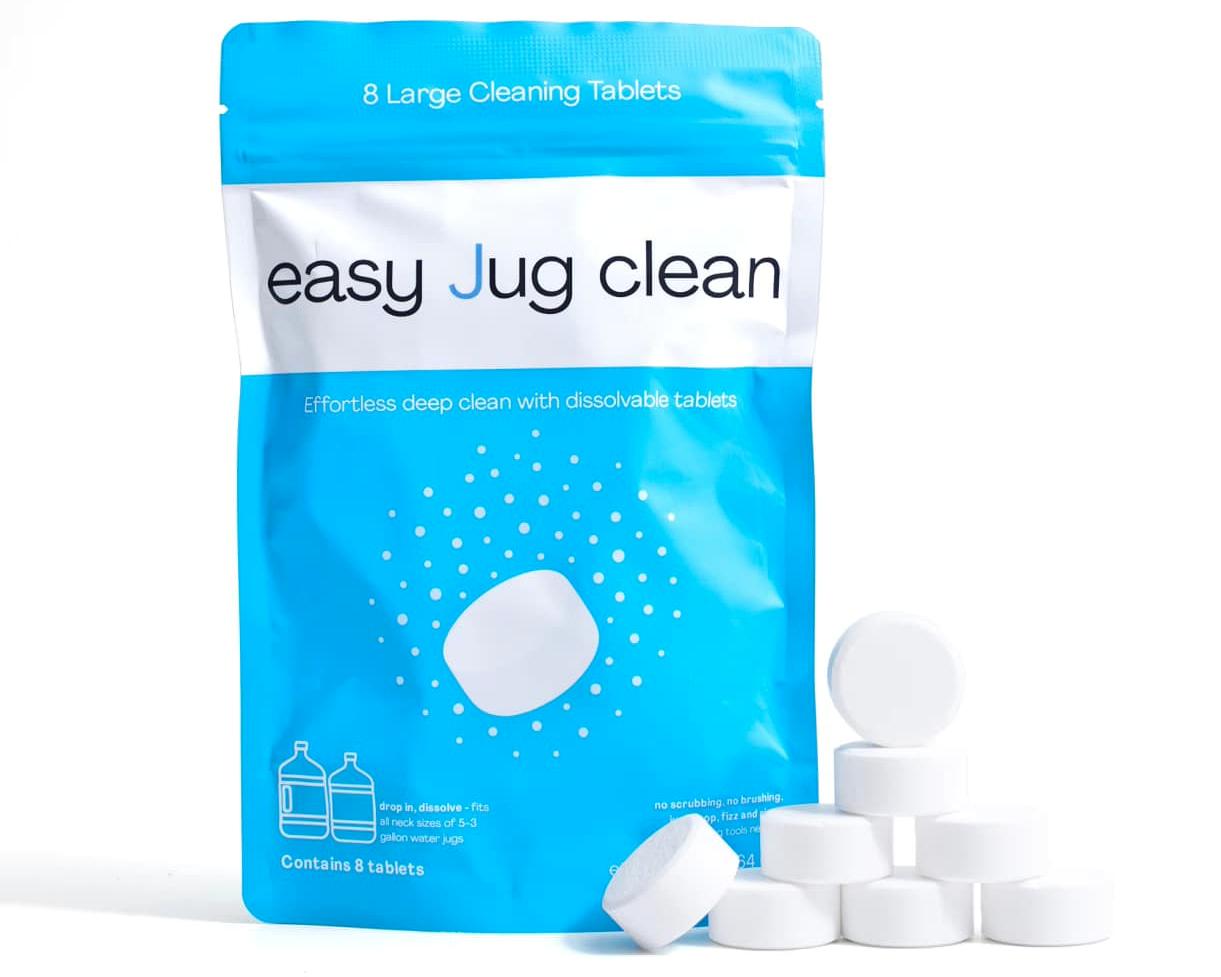
The integrated ecosystem requires integrated chemistry. Easy Jug Clean's active oxygen + chelation + surfactants address all components in one treatment. Two tablets, 30 minutes for first-time mold removal.
FAQ: Mold and Biofilm
Q: Can I have biofilm without mold?
Yes — and most jugs do, especially in earlier contamination stages. Biofilm establishes first; mold often arrives later. Biofilm without visible mold is still a hygiene concern and still warrants weekly cleaning.
Q: Can I have mold without biofilm?
Technically yes, on a freshly cleaned jug with bare plastic. Practically rare in established contamination — most water jug mold is biofilm-supported by the time it's visible.
Q: Does treating biofilm prevent mold from establishing later?
Yes. Without biofilm substrate, mold spores arriving in a clean jug have to anchor on bare polycarbonate, which is much harder. Weekly biofilm elimination is the most effective long-term mold prevention strategy.
The Bottom Line
Mold and biofilm in water jugs aren't separate problems — they're connected components of a single microbial system. Cleaning that addresses one without the other guarantees recurrence. Effective cleaning attacks the integrated ecosystem with chemistry designed for both organism types and the matrix structure that connects them. The pillar guide walks through the complete protocol.


 Order now — get it by