Best Cleaner for a 5 Gallon Water Dispenser Jug: What Actually Works
Reading time: ~8 minutes | Best Cleaner Product Review 5 Gallon Jug
Best Cleaner for a 5 Gallon Water Dispenser Jug: What Actually Works
What Makes a Water Jug Cleaner "Actually Work"?
Before comparing products, let's define the objective. An effective water jug cleaner must:
- Eliminate biofilm—the protective bacterial layer that plain water can't remove
- Reach every surface—inside curves, the narrow neck, and hard-to-access spots
- Not leave residue—any leftover cleaning chemicals contaminate your drinking water
- Be safe for food contact—no toxic compounds that harm health
- Be convenient—fit into a realistic routine
- Be cost-effective—reasonable price per use
Once you've chosen the right cleaner, follow our complete step-by-step cleaning method for the full 5 gallon process. Most cleaners excel at 2-3 of these criteria and fail at the others. Let's break down each option.
Option 1: Dish Soap
What it does: Breaks down surface oils and removes loose debris. Easily accessible. Cheap.
What it fails at: Dish soap cannot penetrate biofilm. Biofilm is not just a surface layer—it's a complex community of bacteria protected by an extracellular matrix of polysaccharides. Soap is a detergent designed to break down oils, not to attack bacterial colonies. Additionally, dish soap leaves a soapy residue that's nearly impossible to rinse completely from the inside of a 5-gallon jug. Even small amounts affect taste.
Cost per use: ~$0.10
Verdict: Better than nothing for light maintenance between proper cleanings, but inadequate as a primary cleaning method. You'll rinse repeatedly and still taste soap.
Option 2: Chlorine Bleach
What it does: Kills bacteria on contact. Oxidizes organic compounds. Powerful and fast-acting.
What it fails at: Bleach is a reactive oxidizer that destroys whatever it touches immediately. The problem: once the initial bleach concentration drops (which happens fast), residual bacteria deeper in the biofilm survive and regrow. Bleach also leaves chemical residue that's dangerous to ingest, even in small amounts. Bleach degradation products accumulate in plastic over time, and the chemical taste is nearly impossible to fully rinse away. Bleach also corrodes certain plastic types and degrades jug materials.
Cost per use: ~$0.05 (cheap, but not worth the risk)
Verdict: Dangerous for drinking water containers. The risks outweigh any cleaning benefit. Not recommended.
Option 3: White Vinegar
What it does: Dissolves mineral scale through acidity (acetic acid). Mildly antimicrobial. Safe and non-toxic.
What it fails at: Vinegar is excellent for hard water mineral deposits but completely ineffective against established biofilm. Biofilm bacteria are protected from acidity by the extracellular matrix. Vinegar's acidity also leaves an acidic residue that affects water taste. Vinegar cleaning creates a false sense of security—the jug looks clean but biofilm survives underneath. Additionally, vinegar doesn't self-distribute throughout the jug; you still need to manually scrub or agitate, which defeats the convenience purpose.
Cost per use: ~$0.15
Verdict: Good as a supplementary step for mineral deposits, but inadequate as a primary biofilm cleaner. Leaves taste residue. Better than bleach but inferior to tablets.
Option 4: Generic Effervescent Tablets
What it does: Fizzing action self-distributes cleaning ingredients throughout the jug. Convenient. Many formulations work reasonably well.
What it fails at: Generic tablets vary wildly in chemistry and effectiveness. Some contain chlorine-based oxidizers (risky for residue). Others use weak acid chemistry that's insufficient for biofilm. Quality control is inconsistent. The fizzing mechanism is sound, but without the right active ingredient, the result is mediocre cleaning. Many generic tablets also leave a slight chemical aftertaste. Cost per use runs $0.50–$1.00, which adds up.
Cost per use: $0.50–$1.00
Verdict: Convenient and better than brush-cleaning, but effectiveness is questionable and inconsistent across brands. You're paying for convenience without guaranteed results.
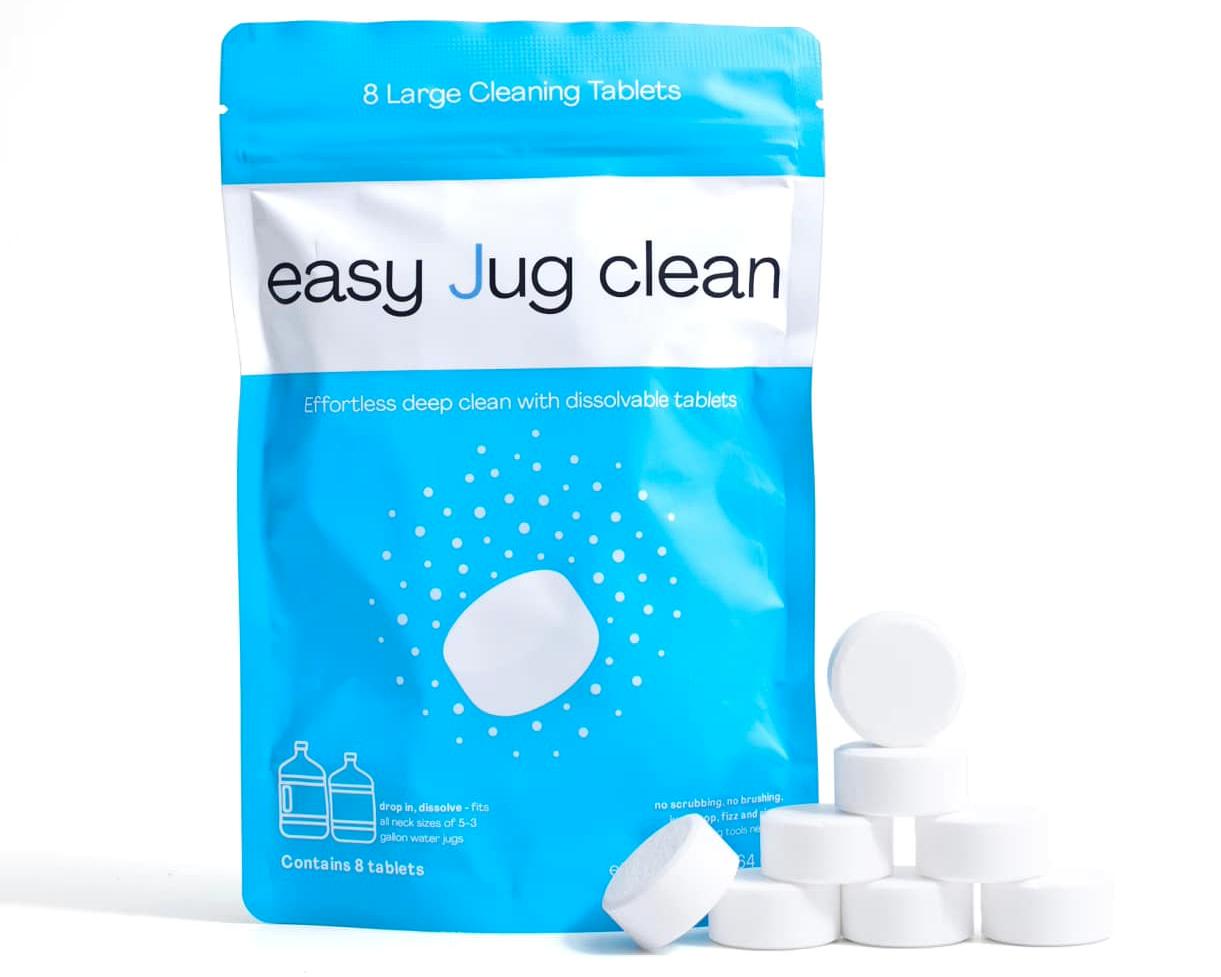
Option 5: Easy Jug Clean Specialized Tablets
What it does: Uses active oxygen chemistry (sodium percarbonate) to attack biofilm at the cellular level. The fizzing mechanism self-distributes the cleaner throughout the jug, reaching every surface. Effervescent fizzing reaches spots no brush can touch. Leaves zero chemical residue—breaks down into water, oxygen, and sodium carbonate (a food-grade compound used in baking).
What it excels at: Complete biofilm elimination. No residue risk. Safe chemistry. Proven effectiveness. Easy Jug Clean ingredients are food-grade and designed specifically for drinking water containers. Additionally, the formula includes chelation chemistry to dissolve hard water deposits, addressing both biofilm and mineral scale simultaneously. The tablet dissolves completely, requiring zero scrubbing and zero guesswork.
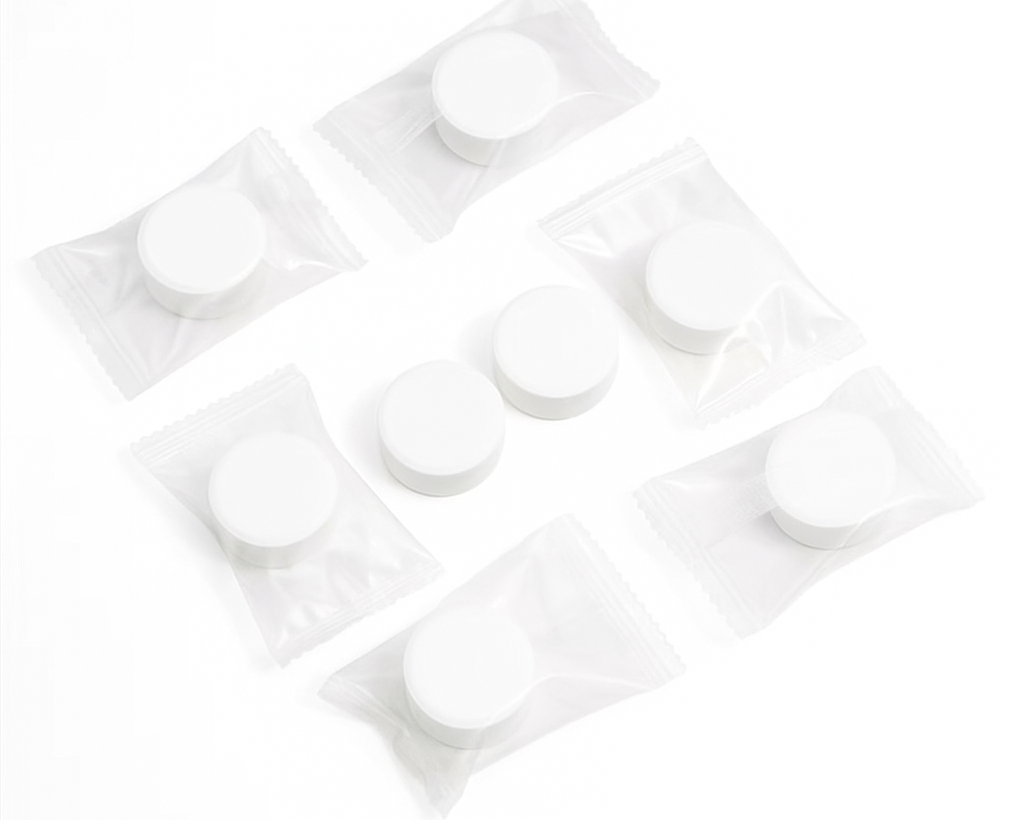
Cost per use: $0.62 (2 tablets from a pack of 8)
Verdict: The clear winner. Highest effectiveness, safest chemistry, most convenient, and reasonable cost. This is what "actually works" looks like.
Head-to-Head Comparison Table
| Criteria | Dish Soap | Bleach | Vinegar | Generic Tablets | Easy Jug Clean |
|---|---|---|---|---|---|
| Biofilm Elimination | Poor | Good (temporary) | Poor | Fair-Good | Excellent |
| Mineral Scale Removal | None | None | Good | Fair | Excellent |
| Residue Risk | High (soapy taste) | Very High (toxic) | Moderate (acidic taste) | Low-Moderate | None |
| Safety Profile | Safe (annoying residue) | Dangerous | Safe | Variable | Food-Grade Safe |
| Convenience | Moderate (requires scrubbing) | High (fast-acting) | Low (manual agitation needed) | High (self-distributing) | Highest (drop & wait) |
| Cost Per Use | $0.10 | $0.05 | $0.15 | $0.50–$1.00 | $0.62 |
| Overall Effectiveness | 2/10 | 7/10 (unsafe) | 4/10 | 6/10 | 10/10 |
What to Look for When Buying a Water Jug Cleaner
If you're evaluating any cleaner—whether it's Easy Jug Clean or another product—ask these questions:
1. What's the Active Ingredient?
Active oxygen (sodium percarbonate) or peroxide-based chemistry is ideal for water jugs. Avoid chlorine-based oxidizers. Avoid acids that leave taste residue. Look for formulations specifically designed for food-contact surfaces.
2. Is It Self-Distributing?
Fizzing, foaming, or diffusing action is essential. Manual scrubbing defeats the purpose. The cleaner should reach every surface without human agitation.
3. What Does It Break Down Into?
After the cleaning reaction, what's left behind? Ideal cleaners break down into food-grade compounds (like water and baking soda-type compounds). Avoid cleaners that leave toxic residue.
4. Is It Tested for Biofilm?
Generic mineral-focused cleaners aren't adequate. You need a product tested specifically against biofilm-forming bacteria in water containers. Look for efficacy data.
5. What's the Cost Per Use?
Calculate actual cost-per-treatment, not just unit price. A cheap cleaner that doesn't work is infinitely expensive. A moderately priced cleaner that eliminates biofilm completely is economical.
Why Most People End Up With the Wrong Cleaner
The barrier to using the right cleaner isn't knowledge—it's habit and past purchases. People reach for what's already in their cabinet (vinegar, bleach, dish soap) because it's convenient. But convenience of purchase is different from convenience of use. Easy Jug Clean is more convenient to use (drop tablets, wait 20 minutes) even though it might require ordering online.
The cleaner that actually works is the one you'll actually use.
✅ Choose the Cleaner That Guarantees Results
Easy Jug Clean was engineered specifically for 5-gallon water jugs. Food-grade active oxygen chemistry eliminates biofilm completely, leaves zero residue, and costs just $0.62 per treatment. This is what thorough cleaning actually looks like.
Frequently Asked Questions
Q: Can I mix cleaners for better results?
No. Mixing cleaners can create dangerous chemical reactions. Mixing bleach with anything is especially hazardous. Use one cleaner and do it properly. A single good cleaning beats multiple mediocre attempts.
Q: Do I need to use a specific brand, or will generic tablets work?
Generic tablets vary wildly in quality and ingredient chemistry. Some work reasonably well; others are ineffective. If you're going to invest in tablets, invest in ones engineered specifically for water jugs—like Easy Jug Clean—rather than gambling on generic products.
Q: If bleach kills bacteria faster, why isn't it recommended?
Bleach does kill bacteria quickly, but the process doesn't eliminate biofilm completely and leaves toxic residue. You're trading faster killing for persistent contamination and chemical danger. Active oxygen is slower but more thorough and food-safe.
Q: Can I clean my jug with baking soda and dish soap?
You can combine them, but neither addresses biofilm effectively. Baking soda is a mild abrasive (helpful if you're hand-scrubbing) but doesn't self-distribute. Dish soap leaves residue. Together, they're still inferior to tablets designed specifically for biofilm elimination.


 Order now — get it by