What Bleach Does to the Inside of Your Water Jug Over Time
Reading time: ~8 minutes | Bleach Damage Plastic Water Jug Safer Alternatives
What Bleach Does to the Inside of Your Water Jug Over Time
The Bleach-Plastic Interaction: Chemistry at Work
Bleach (sodium hypochlorite) is an oxidizing agent. This is why it works as a sanitizer—it chemically oxidizes and destroys cellular structures. But here's the problem: the plastic in your water jug (typically polycarbonate or polyethylene) is also vulnerable to oxidation. You're not selectively targeting bacteria. You're triggering oxidative reactions that affect both the bacteria and the plastic simultaneously.
How Oxidation Damages Plastic
Polycarbonate plastic has carbon-carbon double bonds and carbon-hydrogen bonds as part of its polymer chain structure. When chlorine from bleach comes into contact with these bonds, it creates oxidative stress. The polymer chains break down, creating smaller molecular fragments. The plastic becomes more brittle, less transparent, and develops structural weakness.
This isn't a visible process on treatment 1 or treatment 2. But it's cumulative. Each exposure weakens the material slightly. Over dozens of treatments, the weakness compounds.
The Timeline: Progressive Damage Over Multiple Treatments
Here's what actually happens to your water jug plastic as you use bleach repeatedly:
Treatment 1-3: Immediate Effects (Acute Damage)
Chlorine off-gassing occurs immediately. Dissolved chlorine gas escapes from the water into the jug's headspace. You smell the bleach. This creates two problems:
- Chlorine taste and smell in water: Some chlorine dissolves into the water itself and will be present in every glass poured from that jug for hours. This chlorine continues oxidizing substances in the water.
- Direct chemical contact with plastic: The chlorine in the headspace contacts the top inner surface of the jug, accelerating oxidation in that zone.
The plastic's surface begins micro-level oxidation. If you look at the plastic under a microscope, you'd see the very beginning of surface degradation. Your eyes won't see it, but chemistry is happening.
The pH shock is also present. Household bleach is highly alkaline (pH 11-13). This pH extreme causes the plastic to swell slightly and alters its surface properties. The plastic momentarily absorbs some of the bleach solution, and the osmotic pressure from this absorption creates microscopic stress.
Treatment 4-10: Surface Degradation (Progressive Damage)
After several treatments, the plastic's surface begins showing visible changes if examined closely. The surface becomes slightly hazy. If you run your finger along the inner surface after multiple bleach treatments, it feels slightly rougher—not smooth like a new jug.
What's happening: the oxidation is breaking down the outermost polymer chains. The plastic is losing structural integrity from the outside inward. The hazy appearance comes from micro-cracks and surface roughness developing across the polymer matrix.
More importantly, bacteria are starting to find new homes. Scratched and degraded plastic becomes a bacterial trap. The rough surface provides crevasses where bacteria can hide. Biofilm establishes faster on roughened plastic than on smooth plastic.
You're trying to sterilize your jug while simultaneously making it easier for bacteria to colonize.
Treatment 11-25: Accelerated Degradation (Cumulative Effect)
The damage accelerates. The plastic's molecular structure is now weakened. The polymer chains have been broken in multiple places. The material is becoming brittle. If you apply stress to the plastic (dropping the jug, over-tightening a lid), it's now more likely to crack or fracture.
The color changes become noticeable. The plastic takes on a slightly yellowed or cloudy appearance. This isn't dirt—it's a visible sign that the polymer is breaking down.
The leaching of chemical compounds increases. As the polymer breaks down, small molecular fragments can leach into the water. These include:
- Bisphenol-type compounds (if the plastic contains BPA-like structures)
- Oxidized polymer fragments
- Residual bleach compounds that have bonded to the plastic
You're no longer just drinking from a jug that's been bleached. You're drinking water that has micro-quantities of plastic degradation products in it.
Treatment 26-50: Structural Compromise (Advanced Damage)
At this point, the jug is noticeably compromised. The plastic is brittle enough that normal handling might crack it. The interior surface is rough and discolored. The water tastes slightly off—a combination of residual chlorine and leached plastic compounds.
Biofilm in this jug establishes extremely fast. The bacteria are thriving because the roughened, damaged plastic surface is ideal for colonization. You're sanitizing more frequently, but the jug is becoming harder to keep clean because the structural degradation is creating an environment where bacteria thrive.
This is the stage where many people replace their jugs. They might blame it on the water, or on biofilm, but the root cause is the cumulative chemical damage from repeated bleach treatments.
The pH Shock and Polymer Swelling
A specific mechanism of bleach damage deserves its own section: the pH effect.
How Extreme pH Damages Plastic
Household bleach has a pH of 11-13. The plastic in a water jug is designed for a pH of approximately 6-8 (neutral to slightly acidic, like drinking water). Introducing a solution with pH 11-13 creates an osmotic shock:
- The plastic absorbs some of the bleach solution through diffusion
- The polymer chains swell as they absorb the aqueous solution
- Internal stress develops as the material expands
- When the bleach is rinsed out, the plastic shrinks back
- This expansion-contraction cycle creates stress fractures at the molecular level
This happens on every single bleach treatment. The plastic is being squeezed and released dozens of times. Even if no chemical oxidation occurred, this mechanical stress alone would eventually degrade the material.
The Residual Chlorine Problem: Off-Gassing and Reactions
Bleach doesn't completely rinse out of a jug. Some residual chlorine remains trapped in the plastic itself or dissolved in water that clings to the interior surfaces.
Off-Gassing
Over the following hours and days, this residual chlorine slowly off-gasses. You smell chlorine in the jug for hours after a bleach treatment, even after multiple rinses. This indicates that chlorine is still present and still reacting with the plastic and water.
This off-gassing continues to oxidize the plastic during the interim period between treatments. You're getting continuous, low-level oxidative damage even when you're not actively bleaching the jug.
Reaction with Organic Compounds
The residual chlorine reacts with any organic compounds present: dust particles, mold spores, bacterial cell debris, plastic degradation products, or minerals in the water. These reactions create disinfection byproducts (DBPs)—compounds like trihalomethanes (THMs) that are known carcinogens in high concentrations.
You're not just getting residual chlorine in your water. You're getting chlorine reaction products. Some of these are more toxic than the chlorine itself.
The Microscopic Damage: Polymer Chain Breakage
Let's zoom in on what's happening at the molecular level, because this is where the real damage becomes obvious.
Before Bleach Treatment
The polymer chains in polycarbonate plastic are intact. Long-chain molecules stretch across the material, creating strength and structural integrity. The plastic is transparent because light passes through the undamaged material. The surface is smooth at the microscopic level because the polymer chains are properly aligned.
During Bleach Treatment
Chlorine atoms attack the polymer chains. They break carbon-carbon bonds and carbon-hydrogen bonds. These aren't subtle reactions—they're violent redox reactions. The polymer chain is cut into fragments.
After Bleach Treatment
The plastic is now composed of shorter polymer chain segments. These shorter segments:
- Have less mechanical strength (shorter chains can't distribute stress as effectively)
- Have different optical properties (light scattering increases, causing haziness)
- Are more mobile (shorter chains can move and rearrange, causing the material to become brittle)
- Can leach out of the plastic (small molecular weight fragments can diffuse into water)
This is progressive damage. You're not creating sudden catastrophic breakage on treatment 1. You're accumulating broken chains. By treatment 50, the average chain length has been dramatically reduced, and the plastic's properties have fundamentally changed.
Comparative Damage: Bleach vs. Other Sanitizers
| Sanitizer | Bacterial Killing Power | Plastic Damage | Residual Toxins | Cumulative Risk |
|---|---|---|---|---|
| Diluted Bleach (1:10) | Very High | Progressive degradation | Residual chlorine, DBPs | High risk after 20+ treatments |
| Strong Bleach (1:5) | Very High | Rapid degradation | High chlorine residue | Very high risk, jug may degrade in 10-15 treatments |
| Vinegar (undiluted) | Low-Moderate | Minimal | Residual acetic acid | Low, but ineffective |
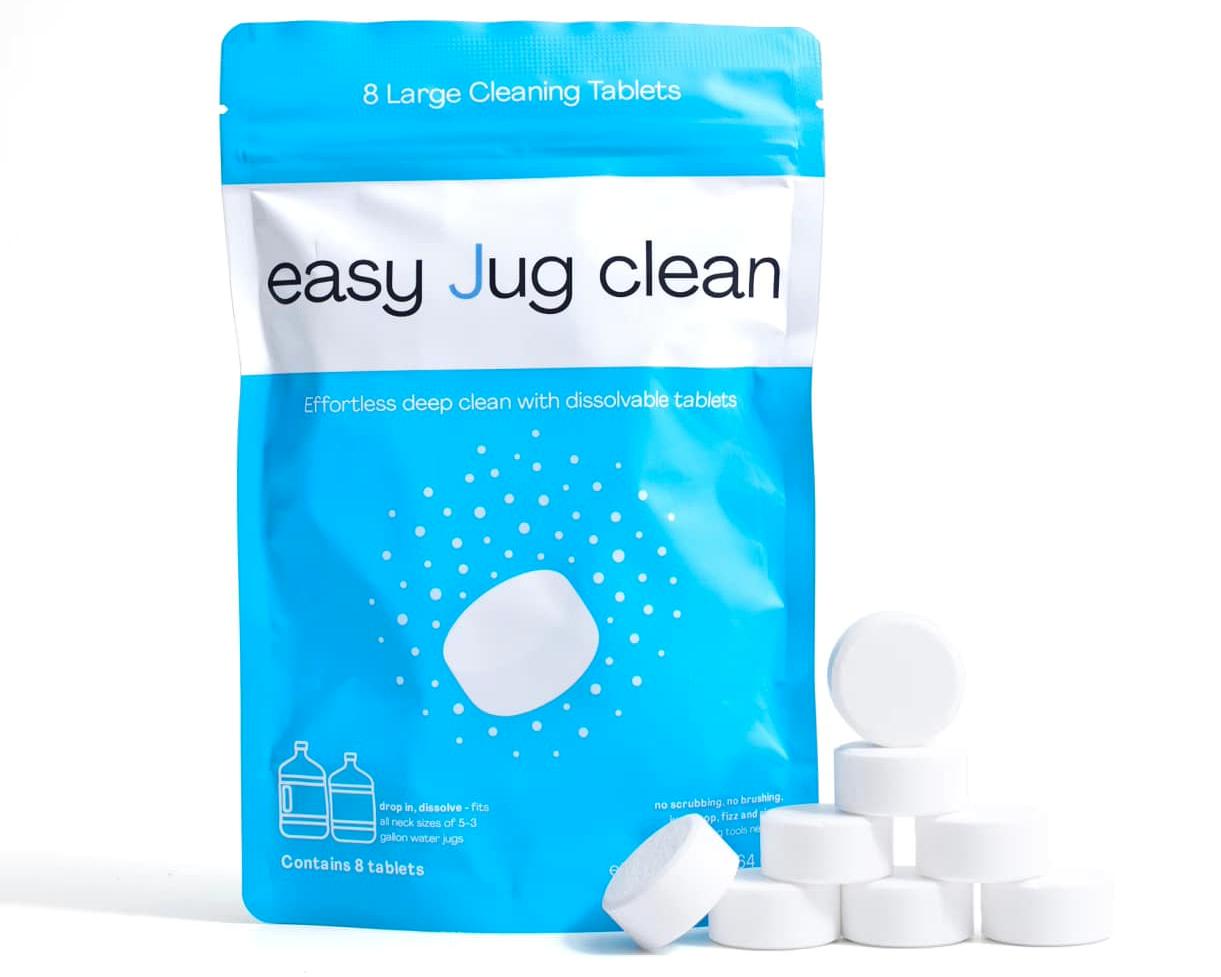
| Easy Jug Clean (Sodium Percarbonate) | Very High | None | None, breaks into oxygen and water | Very low, indefinite safe use |
Bleach works, but at a cost to the jug itself. Easy Jug Clean works without that cost.
Why the Damage Accelerates Over Time
The damage isn't linear. It accelerates. Here's why:
Reason 1: Weakened Material Absorbs More Bleach
As the plastic becomes damaged, its ability to resist chemical penetration decreases. Later bleach treatments penetrate deeper into the material than earlier treatments did. The damage compounds.
Reason 2: Surface Roughness Concentrates Bleach
As the surface develops microscopic roughness and cracks, bleach solution pools in these damaged areas, extending contact time and deepening oxidation.
Reason 3: Shorter Polymer Chains Are More Vulnerable
Once the polymer chains have been partially broken, the remaining shorter chains are more chemically reactive and more susceptible to oxidation. Each treatment has a progressively larger effect.
The Bacteria Rebound Problem: Making the Jug Harder to Keep Clean
Here's the tragic irony: as you use bleach repeatedly to try to keep your jug clean, you're making it progressively harder to keep clean.
The degraded, roughened plastic surface becomes a bacterial paradise. Biofilm establishes faster and thicker on damaged plastic. You find yourself needing to bleach more frequently. More frequent bleaching accelerates the damage. Eventually, you've created a situation where the jug is so degraded that it's permanently colonized by bacteria and you're in a endless cycle of frequent, futile sanitizing attempts.
Many people end up replacing their jug every 12-18 months if they use bleach regularly. A properly maintained jug treated with the right sanitizer (one that doesn't damage plastic) can last 2-3 years or longer.
What's Leaching Into Your Water
The degradation products leaching from a bleach-treated jug are not trivial. They include:
- Oligomers: Short polymer chain fragments that have leached out of the damaged plastic
- Chlorination byproducts: Compounds formed when residual chlorine reacts with organic matter in the water
- Bisphenol compounds: If the plastic contained BPA-like structures, degradation can release these endocrine disruptors
- Bleach reaction products: When chlorine reacts with minerals and organic matter, it creates various chemical compounds, some of which remain in the water
You're using bleach to make the water safer, but you're simultaneously creating new contamination vectors through plastic degradation.
The Safe Alternative: Active Oxygen Sanitizers
Sodium percarbonate, the active ingredient in Easy Jug Clean, works through a completely different mechanism that doesn't damage plastic.
How Sodium Percarbonate Works
Sodium percarbonate breaks down into hydrogen peroxide and sodium carbonate. Hydrogen peroxide oxidizes bacterial cells and biofilm (effective sanitizer), then immediately breaks down into water and oxygen (no toxic residue). The oxygen that escapes is just air—inert and harmless.
Why It Doesn't Damage Plastic
Hydrogen peroxide is a mild oxidizer compared to chlorine. It oxidizes bacteria effectively because bacteria are biochemically complex and vulnerable. Plastic polymer chains are more resistant to this level of oxidation. You get bacterial killing without plastic damage.
Additionally, the pH of sodium percarbonate solution is neutral to slightly alkaline (pH 8-9), not the extreme pH of bleach. There's no pH shock, no polymer swelling, no stress fractures from expansion-contraction cycles.
And there's no residue. Hydrogen peroxide leaves no chlorine off-gassing, no disinfection byproducts, no chemical compounds pooling in the jug after treatment.
The Long-Term Economics and Safety
Using bleach might seem cheaper initially. A bottle of bleach costs $3-5. But consider the real costs:
- Jug replacement cost: $6-10 per jug, needed every 12-18 months instead of every 2-3 years
- Health cost: Exposure to leached chemicals and chlorine byproducts
- Environmental cost: More plastic waste from more frequent jug replacements
- Frequency cost: You need to treat more often as the jug degrades and biofilm becomes harder to manage
Easy Jug Clean at for a month's supply ($60 annually) prevents all of these costs and keeps your jug in good condition indefinitely.
Sanitize without damaging the jug you're trying to protect
✅ Clean Your Jug Without Destroying It
Easy Jug Clean eliminates the bleach damage problem entirely. Active oxygen sanitizes bacteria without oxidizing plastic, with zero residual chemicals and zero cumulative damage. Your jug stays in good condition indefinitely.
Frequently Asked Questions
Q: How much dilution is required to make bleach safe for regular water jug use?
There's no dilution ratio that makes bleach completely safe for repeated use. Even heavily diluted bleach (1:100 ratio) still causes cumulative plastic damage over dozens of treatments. The oxidation and pH shock still occur; they're just slower. You're extending jug life, but still reducing it compared to using a plastic-safe sanitizer.
Q: Can I rinse my jug thoroughly to remove all bleach residue?
Not completely. Some bleach is absorbed into the plastic itself and can't be rinsed out. Some bonds with minerals in the water. Multiple rinses help, but they don't eliminate the residual chlorine problem. The plastic damage and oxidation have already occurred during the treatment; rinsing afterward doesn't undo that damage.
Q: Is the damage from bleach visible immediately after treatment?
Not usually. The damage is cumulative and becomes visible only after 10-20 treatments. This is actually part of the problem—people don't realize they're damaging their jugs because the damage isn't immediately obvious.
Q: Can I use a water filter to remove the leached chemicals from a bleach-damaged jug?
Standard water filters (carbon, sediment) aren't designed to remove leached plastic polymer fragments or chlorine byproducts effectively. You'd need specialized filtration (like reverse osmosis), and at that point, you're better off just using a different sanitizer from the start.


 Order now — get it by