Reading time: ~8 minutes | Vinegar Cleaning False Sense of Security Water Jug Safety
Why Vinegar Cleaning Your Water Jug Is a False Sense of Security
What Vinegar Actually Does (And Doesn't)
Understanding what vinegar does and doesn't do requires understanding its chemistry. This is where the gap between marketing claims and scientific reality appears.
What Vinegar IS Effective At
Vinegar is acetic acid, typically at 4-6% concentration in household vinegar. It's effective at:
- Dissolving mineral scale: The acid breaks down calcium and magnesium deposits. This is vinegar's actual strength. Hard water scale gets removed effectively.
- Reacting with organic material: The acid causes visible reactions with loose organic matter, mold residue, and some biofilm fragments.
- Creating a fresh smell: Acetic acid has a pungent smell. When people smell this strong vinegar smell in their jug, they associate it with "cleaning power." This is psychological, not chemical.
What Vinegar IS NOT Effective At
Vinegar is ineffective at:
- Killing biofilm bacteria: Studies show vinegar reduces biofilm by 10-30% at best. The polysaccharide matrix protects the bacteria inside.
- Penetrating biofilm structures: The weak acid can't penetrate the protective matrix effectively. Interior bacteria are untouched.
- Destroying pathogenic bacteria: Vinegar at household concentrations doesn't have the antimicrobial power to kill dangerous pathogens like E. coli or Salmonella. It might slow their growth, but it doesn't eliminate them.
- Reducing bacterial load sufficiently: For drinking water safety, you need to reduce bacteria to low levels. Vinegar doesn't achieve this.
- Leaving residual protection: After vinegar treatment, bacteria immediately begin re-establishing. There's no ongoing protection.
Here's the critical distinction: vinegar is a cleaning agent (removes mineral deposits), NOT a sanitizer (kills dangerous bacteria).
The Biofilm Penetration Problem: Why Vinegar Leaves 70-90% of Bacteria Alive
Biofilm is the core issue. Vinegar fails against biofilm specifically.
How Biofilm Resists Acetic Acid
Biofilm's polysaccharide matrix creates microenvironments with different pH than the surrounding solution. Inside the biofilm, the pH is actually more neutral even when you're treating it with acidic vinegar on the outside. The matrix physically barriers the acid from reaching interior bacteria.
Additionally, biofilm bacteria express different surface proteins when they're in community form. These proteins, called adhesins, include acid-resistant properties. Individual bacteria in the water column are vulnerable to acetic acid; the same bacteria in biofilm are protected by their communal adaptations.
Laboratory studies consistently show this pattern: vinegar treatment reduces planktonic (free-floating) bacteria by 40-60%, but only reduces biofilm bacteria by 10-30%. You're killing the vulnerable bacteria while leaving the protected ones untouched. The protected biofilm bacteria are exactly the ones you need to eliminate—they're the population that re-establishes after you stop treating.
The Rebound Effect
After vinegar treatment, the remaining biofilm bacteria (70-90% of the original population) immediately begin re-establishing. They secrete adhesive molecules. They multiply faster because they've been stress-activated. Within 48-72 hours, biofilm coverage returns to pre-treatment levels.
You've caused a temporary bacterial die-off followed by a rapid rebound. You're not breaking the contamination cycle; you're just interrupting it briefly.
Why the Fresh Smell Creates a False Sense of Security
This is the mechanism that makes vinegar dangerous—it feels like it's working when it isn't.
The Smell Effect
Vinegar's acetic acid has a strong, characteristic smell. When people use vinegar to clean their jug and then smell that vinegar smell, they mentally associate it with cleanliness and powerful action. The brain says: "I smell vinegar, therefore cleaning is happening, therefore my jug is now clean."
This is called the "halo effect"—attributing success to an action based on peripheral cues rather than actual outcomes. The smell is a cue that triggers confidence, but the smell has nothing to do with whether bacteria are actually being killed.
The Visual Effect
Vinegar removes mineral deposits and loosens some of the slimy biofilm on the surface. The jug looks visibly cleaner after vinegar treatment. This reinforces the false sense of security.
But remember: a jug that looks visually clean can still contain millions of dangerous bacteria. Visual cleanliness and microbiological safety are completely different things.
The Taste Effect
Water that was tasting slightly off (due to biofilm bacteria and their metabolic byproducts) often tastes fresher after vinegar treatment. Some of the taste-causing compounds have been removed or diluted. People taste improvement and assume sanitization has occurred.
But taste improvement ≠ safety. You're experiencing a temporary sensory improvement while the bacterial contamination remains.
What the Science Actually Shows About Vinegar
Scientific literature is remarkably consistent on vinegar's limitations:
Study 1: Biofilm Resistance to Acetic Acid (Journal of Food Protection)
Researchers tested vinegar against biofilm-forming bacteria. Result: Vinegar reduced biofilm by 15-25% depending on the strain. Free-floating bacteria showed 50-70% reduction. The biofilm protection was dramatic and consistent.
Study 2: Household Vinegar vs. Clinical Pathogens (Applied Microbiology)
Household vinegar was tested against pathogenic species including E. coli, Salmonella, and Listeria. Result: At typical household concentrations (4-6% acetic acid), vinegar showed minimal to no killing of these pathogens within a 20-30 minute contact time. Even extended soaking (overnight) showed less than 50% reduction.
Study 3: Vinegar as a Sanitizer for Food Contact Surfaces (Food Microbiology)
The conclusion was explicit: vinegar is not an appropriate sanitizer for food contact surfaces and should not be relied upon for pathogen elimination. It can be useful as a cleaner (mineral removal), but not as a sanitizer.
The Consensus
The scientific consensus is clear: vinegar is not a reliable sanitizer for drinking water containers. It has some antimicrobial properties against planktonic bacteria in limited conditions, but against biofilm bacteria—which is what actually contaminates water jugs—it's largely ineffective.
The Specific Pathogens That Survive Vinegar Treatment
Some bacteria are particularly resistant to acetic acid. These are exactly the pathogens that cause the worst water contamination illnesses:
- E. coli O157:H7: Acid-tolerant. Survives in vinegar solutions. Causes severe hemorrhagic colitis.
- Salmonella species: Moderately acid-resistant. Survives 4-6% acetic acid. Causes severe gastroenteritis.
- Listeria monocytogenes: Acid-tolerant. A significant concern because it's cold-water tolerant and can grow in refrigerated water.
- Campylobacter jejuni: Less acid-tolerant than others, but still survives vinegar treatment in biofilm form.
- Legionella pneumophila: Inside biofilm, highly resistant to acetic acid. Causes Legionnaires' disease, a serious respiratory infection.
You could have any of these pathogens in your water jug right now. Vinegar treatment would make you feel safe while leaving them alive. Someone drinks from the jug, gets sick, and blames food poisoning. But the water jug was the vector all along.
The Problem With the "Natural" Label
Vinegar is marketed as natural and safe. This marketing is effective but misleading.
Natural Doesn't Mean Effective
Many things are natural but ineffective for the job you're trying to do. Natural doesn't mean safe for drinking water containers—it just means it comes from nature. Natural ineffectiveness is still ineffectiveness.
Natural Isn't Safer Than Synthetic When Both Are Effective
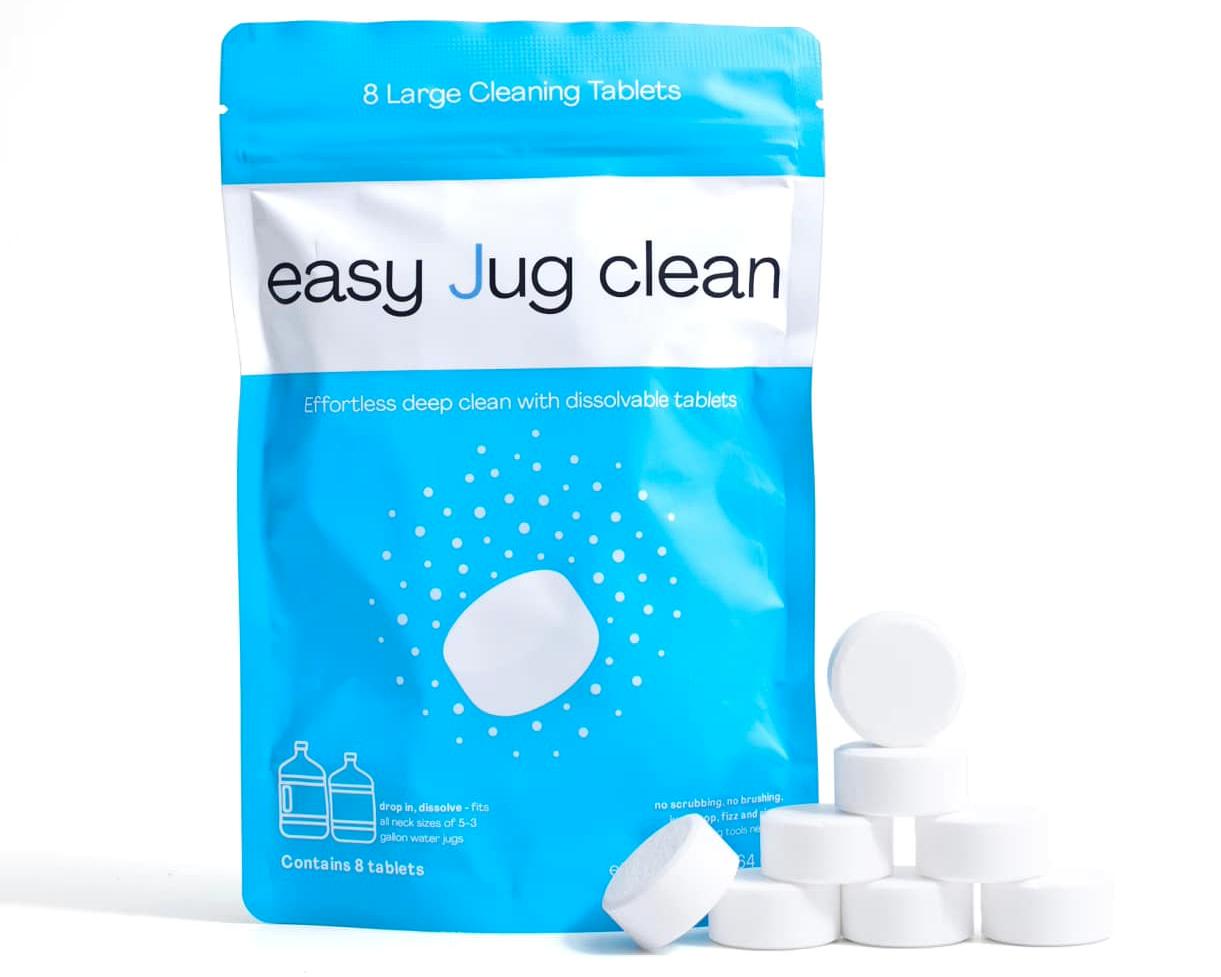
Sodium percarbonate (the active ingredient in Easy Jug Clean) is actually derived from natural processes (sodium carbonate + hydrogen peroxide). It breaks down to water and oxygen. It's simultaneously natural-derived and effective. The false choice between "natural but ineffective" and "synthetic and effective" doesn't exist.
What matters is: does it work? Does it leave harmful residue? Is it safe for human consumption? Vinegar fails on criterion 1. Easy Jug Clean passes all three.
The Overconfidence Trap
Here's the most dangerous aspect of vinegar cleaning: it creates overconfidence.
The Pattern That Leads to Illness
- You use vinegar to clean your jug
- The jug smells fresh, looks clean, tastes better
- You feel confident it's safe and clean now
- You extend the time before the next cleaning (overconfident, you "don't need to clean it so often")
- Bacteria that survived the vinegar treatment multiply unopposed
- Someone gets sick, and you're surprised because you "just cleaned it with vinegar"
The cleaning gave you false confidence, which led you to clean less frequently, which led to higher bacterial load, which led to illness.
People who use vinegar often report: "I cleaned it with vinegar last week and someone still got sick." This isn't a failure of vinegar application. It's a failure of vinegar as a sanitizer. The bacteria never actually died; they just went temporarily dormant or were temporarily reduced.
The Replacement Schedule Problem
Because vinegar is ineffective at sanitizing, people using it as their primary cleaning method often experience faster jug degradation and more frequent replacement.
Why? Because biofilm establishes faster when the sanitizer is ineffective. You're constantly dealing with active contamination. The bacterial load never drops below dangerous levels. Eventually, you replace the jug more frequently than someone using an effective sanitizer.
You think vinegar is saving you money by being cheap. But you're buying new jugs more often and dealing with recurring contamination issues that cost time and stress.
What Works Better: A Direct Comparison
| Method | Bacterial Reduction | Biofilm Penetration | Time to Re-contamination | Safety Margin |
|---|---|---|---|---|
| Vinegar (undiluted) | 30-50% | 10-15% | 48-72 hours | Very low, dangerously low |
| Diluted Bleach (1:10) | 70-85% | 20-30% | 72-96 hours | Moderate, but plastic damage accumulates |
| Baking Soda Paste | 40-60% | 15-25% | 48-72 hours | Low, minimal benefit |
| Easy Jug Clean (Sodium Percarbonate) | 95%+ | 80%+ | 7-10 days | Very high, true sanitization |
Vinegar is the worst option in this comparison. It's not just marginally worse than bleach (which has its own damage issues). It's dramatically worse at the actual job of sanitizing.
The Reaction That Creates the Cleaning Smell
Understanding the chemical reaction in vinegar treatment explains the false sense of security.
What's Actually Happening
Vinegar's acetic acid reacts with mineral deposits and some biofilm material. The reaction is:
CaCO₃ (calcium carbonate scale) + 2 CH₃COOH (acetic acid) → Ca(CH₃COO)₂ + H₂O + CO₂
The CO₂ bubbles create visible fizzing. The water-soluble calcium acetate dissolves. The mineral scale visibly decreases.
The smell intensifies because CO₂ is escaping, and acetic acid molecules are more volatile in the presence of active chemical reaction. The whole process feels and smells like powerful cleaning is happening.
What's NOT Happening
The bacteria inside biofilm are unaffected by this chemical reaction. While minerals are dissolving and CO₂ is bubbling, the bacteria remain metabolically active and alive. The reaction that's creating all the sensory signals (smell, bubbling, visible change) has almost nothing to do with bacterial killing.
This is why vinegar feels so effective while being so ineffective at sanitization. The visible/sensory parts of the treatment (mineral removal, bubbling reaction) are dramatic. The part that actually matters (bacterial killing) is barely happening.
Stop relying on feeling safe. Actually be safe.
✅ Replace False Security With Real Sanitization
Stop cleaning for comfort and start sanitizing for safety. Easy Jug Clean actually kills 95%+ of bacteria and biofilm, not just removes mineral deposits. Your water jug will truly be safe, not just feel safe.
Frequently Asked Questions
Q: If vinegar removes mineral deposits, isn't that a form of cleaning that's necessary?
Mineral deposit removal is useful for appearance and taste, but it's separate from sanitization. A jug can have clean mineral appearance while being contaminated with bacteria. Mineral removal is cosmetic; sanitization is safety. You need the sanitization part, and vinegar doesn't deliver that.
Q: Can I use vinegar in combination with something else to make it work better?
Vinegar combined with physical scrubbing (brush) spreads the remaining bacteria and creates the damage problems we discussed earlier. Combined with baking soda, you get a fizzing reaction that removes minerals but still doesn't sanitize effectively. There's no combination that makes vinegar an effective sanitizer because the fundamental problem—biofilm resistance—isn't solved by combining it with other weak cleaners.
Q: Doesn't vinegar work better if I let it soak overnight?
Extended contact time helps slightly. Overnight soaking might increase bacterial reduction to 40-60%, compared to 30-50% for shorter contact times. But it still leaves 40-70% of the bacteria alive. You'd be leaving your jug filled with vinegar for 12+ hours—impractical and still inadequate. And you're still not addressing the problem: the bacteria that survive are the strongest, most biofilm-adapted ones.
Q: If multiple online sources recommend vinegar, shouldn't it work?
The internet has spread vinegar advice widely, but much of it predates modern microbiology understanding of biofilm. The advice is passed along because it's "natural" and appeals to DIY instincts, not because it's scientifically validated. The internet myth vs. the science diverge significantly on vinegar. What's popular online isn't what's effective according to laboratory testing.


 Order now — get it by