Why Fizzing Tablets Clean Water Jugs Better Than Brushes
Reading time: ~7 minutes | Effervescence Tablets vs Brushes Cleaning Science
The Physics of Brush Cleaning: Why Leverage Fails You
The Physics of Effervescent Cleaning: Why Bubbles Beat Bristles
Four Ways Effervescence Outperforms Brushing
1. Complete 360° Interior Coverage — Without a Single Hand Movement
When you fill a jug halfway and drop in a tablet, the solution fills the bottom half entirely — every surface below the waterline is submerged in active chemistry. As the tablet fizzes, the circulation patterns created by rising bubbles create gentle convection currents that continuously refresh the solution against the walls. A gentle rotation of the jug at the 15-minute mark extends coverage to the upper walls and shoulder. No zone is inaccessible because the cleaning mechanism is fluid, not mechanical — it goes where the liquid goes.
2. Consistent Pressure Across All Surfaces Simultaneously
A brush applies pressure only to one surface at a time, and only where the bristles make contact. Effervescent cleaning applies chemistry to all surfaces simultaneously at consistent concentration — there are no "well-scrubbed" zones and "barely-touched" zones, no variation based on the awkwardness of reaching a particular area. The curved bottom corners that are impossible to reach with a brush are submerged in the same active solution as the flat bottom center.
3. Sustained Contact Time — 20 Minutes vs. Seconds Per Surface
In manual brush cleaning, the bristles make contact with any given area of the jug wall for approximately 1–3 seconds per scrubbing pass. Biofilm penetration — the chemical degradation of the EPS matrix by active oxygen — requires sustained contact time measured in minutes, not seconds. The 20–30 minute tablet soak provides the contact time that brief mechanical passes can never achieve. Chemistry that needs time to work is categorically incompatible with a brushing approach.
4. The Bubbles Target Where Cleaning Is Needed Most
The Two-Mechanism Advantage: Effervescence Plus Chemistry
The true superiority of tablet-based cleaning over brushing is not just physical delivery — it's the combination of physical distribution and chemical action working together in ways a brush cannot achieve:
🖌️ What a brush delivers
- Mechanical force — where the bristles physically reach
- Limited coverage of accessible surfaces only
- Disrupts (but doesn't destroy) biofilm
- No chemical action on scale or bacteria
- Adds contamination risk from the brush itself
💊 What a fizzing tablet delivers
- Physical distribution via bubble-driven convection — everywhere
- Active oxygen chemistry destroying biofilm matrix
- Chelating agents dissolving mineral scale
- Surfactant lifting disrupted organic material
- pH buffering neutralizing odor compounds
- Sustained 20-minute contact on every surface
Why the "Satisfying Scrubbing Feeling" Is a Trap
One of the most persuasive things about brush cleaning is the tactile feedback — you can feel the bristles making contact, see the motion, sense that effort is being applied. This creates a strong psychological impression of effectiveness. Research in behavioral psychology consistently shows that effort and effectiveness are conflated in our perception — we assume that doing more physically means getting a better result.
In jug cleaning, this is directly backwards. The cleaning method that requires the most effort (the brush) produces the least complete result. The method that requires almost no effort (the tablet drop) produces the most thorough result. The fizzing is quiet, hands-off, and invisible — which makes it feel less effective. The chemistry working inside that jug for 20 minutes while you make coffee is doing more cleaning work than 10 minutes of vigorous scrubbing ever could.
See why the tablet method beats manual cleaning on every single measure that matters:
✅ 20 Minutes of Fizzing vs. 10 Minutes of Scrubbing — The Fizzing Wins Every Time
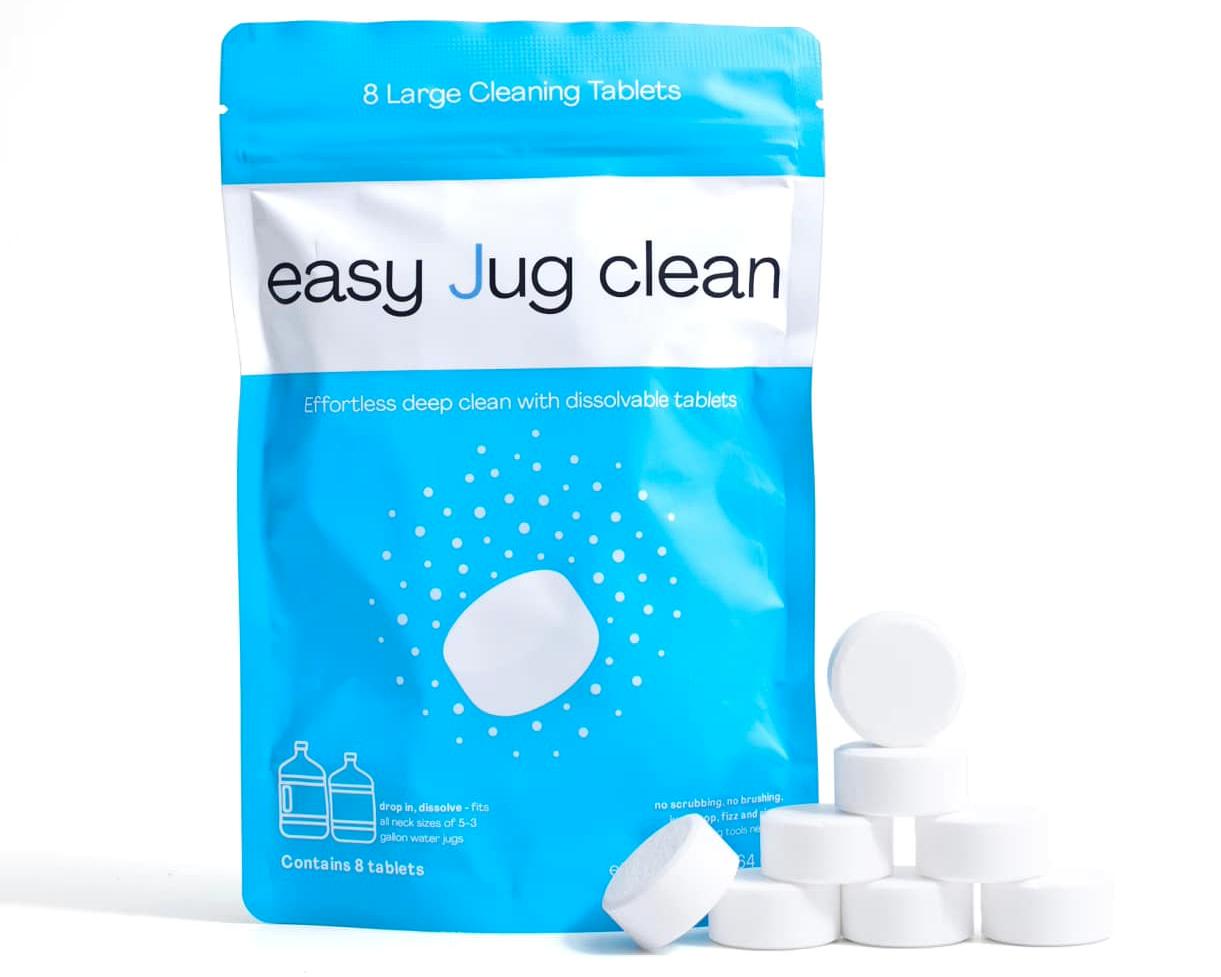
Drop 2 Easy Jug Clean tablets. The effervescent action does what no brush can do — complete coverage, active chemistry, 20 minutes, zero effort from you.
Frequently Asked Questions
Q: Does the amount of fizzing indicate how well the tablet is working?
The intensity of visible fizzing is primarily driven by the acid-base reaction (fumaric acid + sodium bicarbonate) rather than the active oxygen release from sodium percarbonate. A tablet that fizzes energetically isn't necessarily more effective than one with gentler fizzing — the sanitizing action from active oxygen is a slower, sustained release that continues throughout the 20–30 minute soak regardless of visible bubble intensity.
Q: Should I shake the jug while the tablet is working to increase the fizzing effect?
A gentle rotation at the 10–15 minute mark is beneficial — it redistributes the solution to ensure the upper walls and shoulder area receive adequate contact. Vigorous shaking is unnecessary and may actually reduce contact time on lower surfaces. The effervescent action is designed to work without agitation — let it do its job.
Q: Does the tablet work in cold water?
Yes, though warm water (40–50°C) is optimal because it accelerates both the effervescent reaction and the active oxygen release from sodium percarbonate. In cold water, allow the full 30-minute soak time for equivalent results. Avoid water above 60°C — it decomposes the active oxygen too rapidly.


 Order now — get it by