Why a 1-Liter Water Bottle Stays Cleaner Than a 5-Gallon (And What That Means for You)
Reading time: ~5 minutes | Bottle Comparison Cleanliness Math Container Size
The Counterintuitive Result
If you swab the interior of a daily-use 1-liter water bottle and the interior of a 5-gallon dispenser jug at any random point in their cleaning cycles, the dispenser jug will almost always show higher bacterial counts, more advanced biofilm, and more mineral scale buildup. Lab studies of household water containers consistently find this pattern across users, water sources, and jug ages.
The reason is structural, not behavioral. Five distinct properties of the smaller bottle work in its favor — and none of them have anything to do with how much you care about cleaning.
Five Reasons the Smaller Bottle Stays Cleaner
1. Faster Refill Cycles Don't Let Biofilm Establish
A 1-liter bottle is typically emptied and refilled within 24 hours. A 5-gallon jug typically sits on a dispenser for 5 to 14 days. Biofilm establishment begins within 24–48 hours of first contact, but it doesn't reach a mature, hard-to-remove state for several days. The smaller bottle is essentially never in contact with the same water long enough for biofilm to mature; the larger jug always is.
2. Daily Rinsing Catches Contamination Early
Even a casual rinse of a 1-liter bottle physically dislodges loose debris and the early stage of biofilm formation, before the bacteria have anchored deeply. A 5-gallon jug doesn't get rinsed between refills — it sits on the dispenser, gets unmounted, dropped at the depot, refilled, and remounted. There's no daily intervention to interrupt early-stage colonization.
3. Wide-Mouth Geometry Makes Mechanical Cleaning Effective
A 1-liter sports bottle has a wide enough mouth that you can fit a brush, a hand, or a scrubbing pad inside. The same routine cleaning effort produces a much higher percentage of surface contact than the equivalent effort on a narrow-neck 5-gallon jug, where brushes physically miss most of the interior.
4. Visual Inspection Triggers Cleaning Behavior
You can see inside a 1-liter bottle. When something looks off — discoloration, residue, a cloudy patch — you clean it immediately. You cannot see inside a 5-gallon jug. The contamination accumulates invisibly until water taste or smell changes, by which point biofilm is well established. Visual feedback drives cleaning frequency for sports bottles in a way that's impossible for large jugs.
5. Smaller Surface Area Means Less Bacterial Real Estate
A 1-liter bottle has roughly 100 square inches of interior surface. A 5-gallon jug has roughly 800 square inches. Bacteria colonize surfaces, not volume — so the 5-gallon jug offers 8 times more real estate for biofilm to establish. More surface area means more potential colonization sites at any given moment.
The Hidden Implication for Cleaning Habits
People naturally calibrate their cleaning habits to the visible state of their containers. A bottle that looks clean gets cleaned less often than a bottle that looks dirty. Because the 1-liter bottle's contamination is visible early — and the 5-gallon jug's contamination is invisible for weeks — the smaller bottle gets the more aggressive cleaning attention even though it has the lower contamination risk.
What "Stays Cleaner" Actually Means in Health Terms
Bacterial counts in a long-neglected 5-gallon jug can reach levels at which sensitive individuals — children, immunocompromised adults, elderly people — develop GI symptoms from drinking the dispensed water. Documented illness from contaminated water cooler jugs typically traces back to dispenser jugs neglected for months, not 1-liter bottles. The "stays cleaner" advantage of the smaller bottle isn't aesthetic — it's a real reduction in health risk.
Reversing the Pattern: How to Make a 5-Gallon Stay Clean
The five structural disadvantages of the larger container can be partially offset, but only by adjusting the cleaning approach to match the container's properties.
1. Treat at every refill, not on a calendar.
If you refill the jug every 7 days, sanitize it every 7 days. Don't let it accumulate two refill cycles' worth of dwell time before treatment.
2. Use a self-distributing cleaner, not a brush.
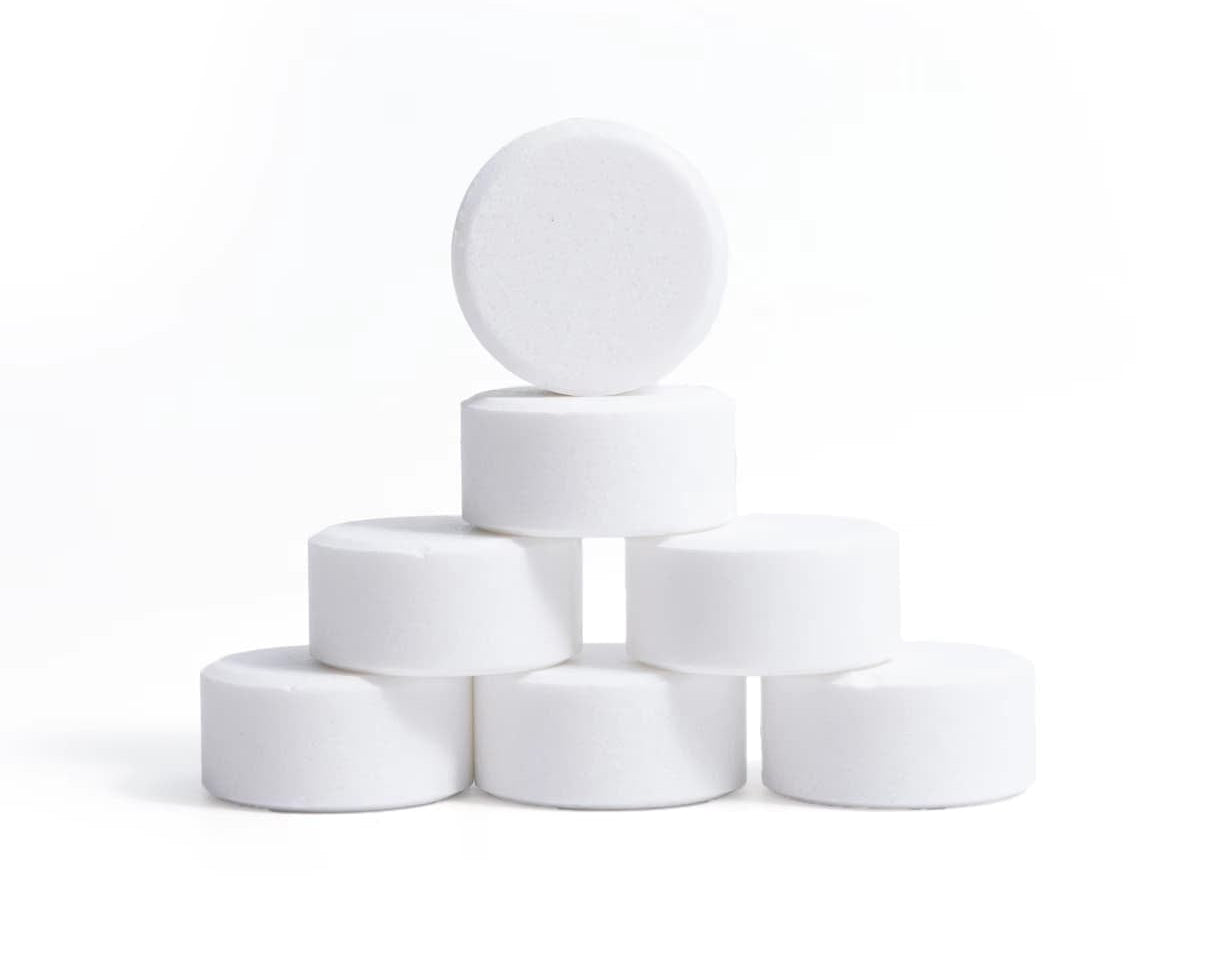
The brush limitation isn't a willingness problem — it's a geometry problem. Effervescent tablets reach surfaces brushes can't, which compensates for the mechanical access disadvantage.
3. Sanitize before signs are visible.
Schedule cleaning by use cycle, not by appearance. The 5-gallon jug never looks dirty until contamination is well-established.
4. Don't trust visual checks.
The interior is largely invisible. Treating cleanliness as a function of time-since-last-clean is more reliable than visual assessment.
✅ Make Your 5-Gallon Jug as Clean as Your Sports Bottle
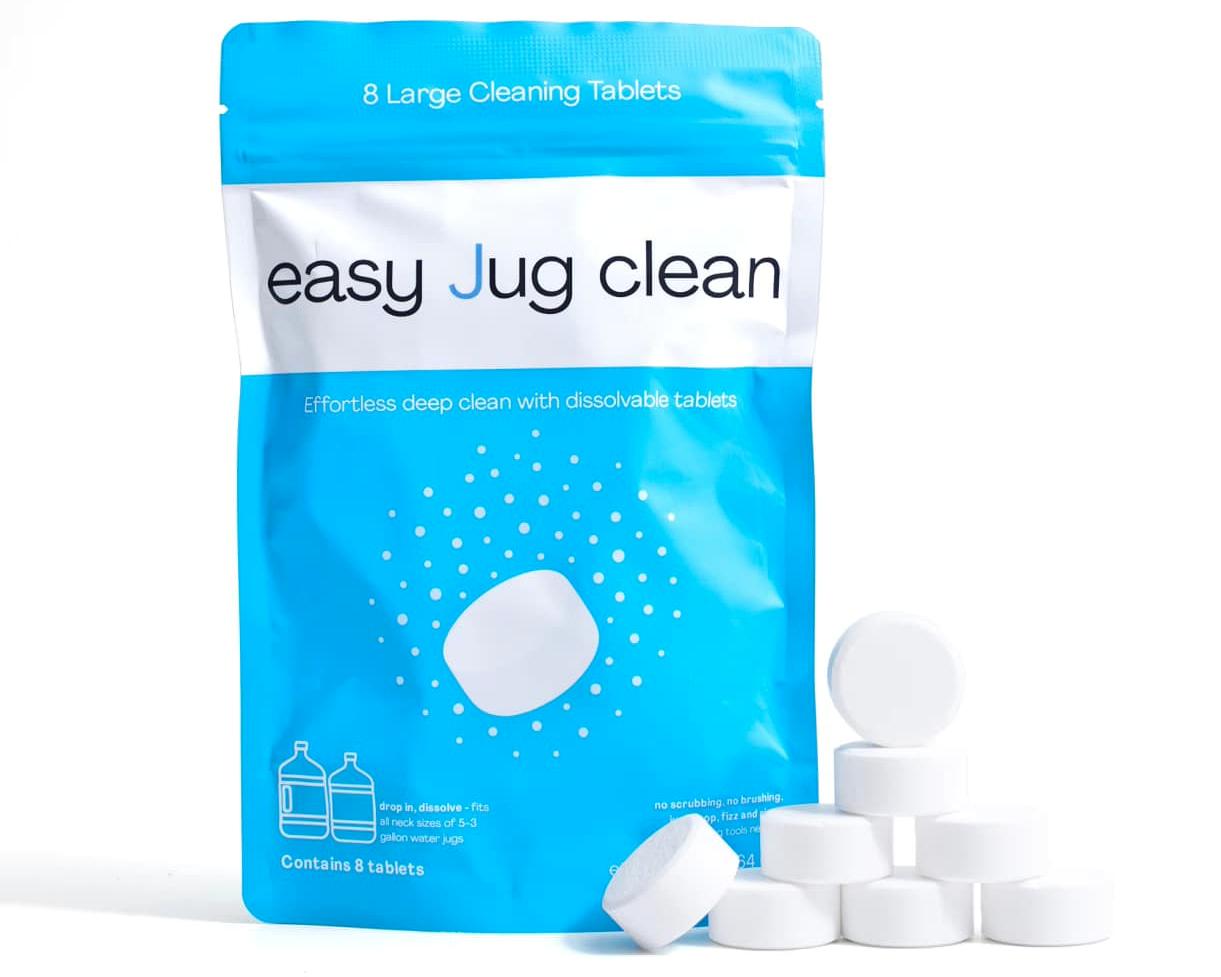
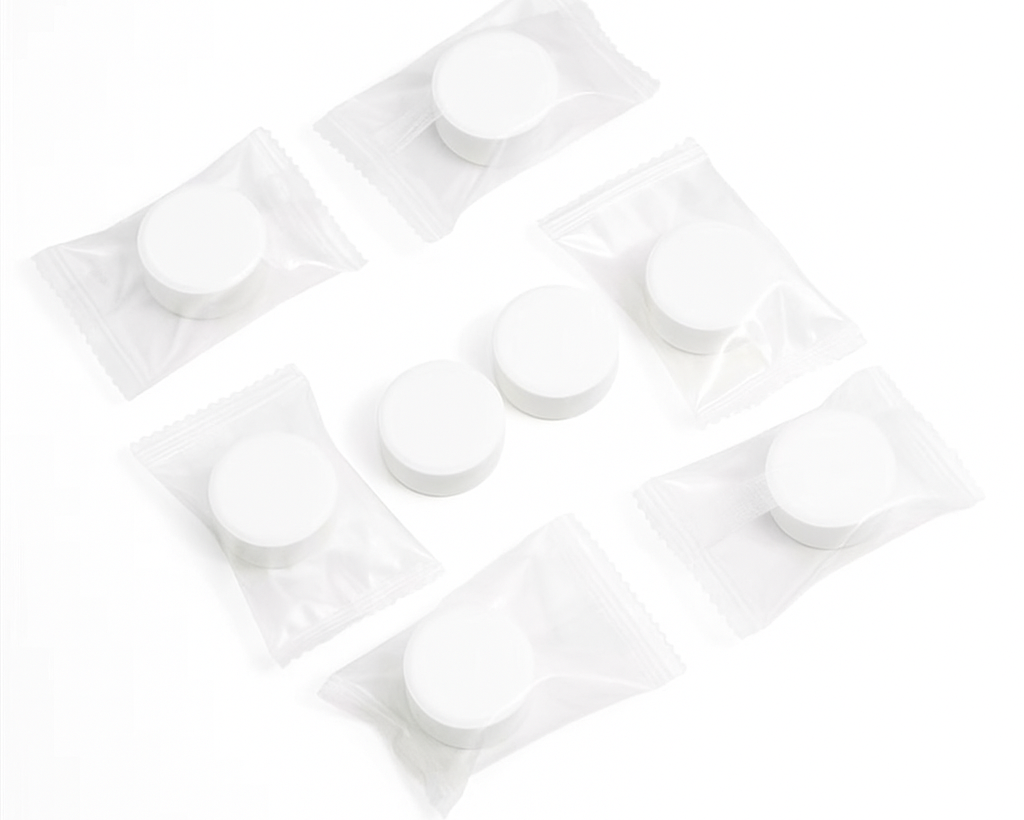
The structural disadvantages are real. The cleaning method has to match. Easy Jug Clean is built for the larger-container realities: long dwell, narrow neck, large surface area, no visual feedback. Two tablets, 20 minutes, weekly.
FAQ: Bottle Size and Cleanliness
Q: My 5-gallon jug looks fine. Is the contamination thing exaggerated?
"Looks fine" is the warning sign, not the all-clear. Visual cleanliness doesn't reflect microbial state in containers you can't see into. Sanitize on a schedule, not on visual judgment.
Q: Does the same logic apply to a 1-gallon jug?
Partially. A 1-gallon jug has narrow-mouth geometry like the 5-gallon, but smaller surface area and shorter dwell cycles than a typical 5-gallon dispenser. Cleaning frequency can be slightly less aggressive, but the method (tablet treatment) is the same.
Q: What about a 5-gallon jug that gets used heavily, like in a busy office?
Heavier use means faster turnover, which is actually slightly protective. But it also means more handling, more touches on the dispenser interface, and more daily exposure points. Net effect: needs even more frequent cleaning, not less.
The Bottom Line
The 1-liter bottle has structural advantages that keep it cleaner with less effort. The 5-gallon jug has structural disadvantages that require more effort and a different method to overcome. Treating both containers the same way — same cleaning routine, same frequency, same visual judgment — produces a clean small bottle and a contaminated large jug. Adjust the method to the container, and both can be reliably clean.


 Order now — get it by