Can a Dirty Water Jug Make You Sick? What the Science Says
Reading time: ~8 minutes | Water Jug Health Bacteria Illness Risk
Can a Dirty Water Jug Make You Sick? What the Science Says
The Direct Answer: Yes, Dirty Water Jugs Can Make You Sick
Water jug contamination is not a hypothetical risk. Numerous documented cases show that improperly cleaned water dispensers and jugs have caused outbreaks of infectious illness:
- Legionellosis (Legionnaires' disease): Linked to contaminated water coolers in office buildings, hospitals, and homes
- Pseudomonas aeruginosa infection: Opportunistic pathogen found in stagnant water systems
- Gastrointestinal illness from E. coli and Salmonella: Traced to contaminated water dispensers in workplace settings
- Campylobacteriosis: Associated with inadequately sanitized water systems
These aren't rare incidents. Public health agencies investigate water cooler contamination regularly, and contaminated home water dispensers are likely far more common than reported because people don't always connect their illness to their water system.
How Pathogens End Up in Your Water Jug
Water starts pure. Contamination happens through several mechanisms:
The Jug Itself
When a jug is manufactured, used, and returned for refilling, it's supposed to be sanitized. But if sanitization is incomplete—or if the dispenser's puncture probe is contaminated—bacteria survive and multiply in the fresh water. Within 24-48 hours, bacterial populations begin exponentially increasing.
Biofilm Formation
Biofilm in water jugs is the critical factor. Bacteria don't grow as individual cells in water; they form cooperative colonies protected by a self-produced matrix of polysaccharides and proteins. Within this biofilm:
- Bacteria are 100-1000x more resistant to antibiotics and sanitizers
- Bacteria share genetic material, accelerating adaptation and resistance development
- The biofilm traps nutrients and water, creating an ideal microbial habitat
- The matrix prevents immune system molecules from reaching inner bacteria
This is why simply rinsing a jug with water doesn't eliminate the threat. Biofilm bacteria survive rinsing and regrow rapidly.
The Dispenser Probe and Valve System
Every time you install a new jug, the dispenser's metal probe punctures the jug's plastic cap. If the probe is contaminated from the previous jug, it transfers bacteria directly into fresh water. This mechanism, called "probe contamination," is a documented vector for disease transmission in water coolers.
The Specific Pathogens You Need to Worry About
Legionella pneumophila
This bacterium causes Legionnaires' disease—a severe respiratory infection with fever, pneumonia, and high mortality in untreated cases. Legionella thrives in warm water systems, especially in stagnant water between room temperature and 45°C (113°F). Room-temperature water jugs are ideal Legionella habitat. Infection occurs through inhalation of contaminated water aerosols—which can happen when filling a cup or if a dispenser produces any mist.
Risk level: Moderate to high, especially for people over 50, smokers, and immunocompromised individuals.
Pseudomonas aeruginosa
An opportunistic pathogen that colonizes warm water systems. It causes urinary tract infections, wound infections, and respiratory infections in vulnerable people. Pseudomonas is naturally antibiotic-resistant and thrives in biofilm environments. A contaminated water jug is an ideal reservoir.
Risk level: Moderate for healthy people; high for elderly, immunocompromised, or hospitalized individuals.
E. coli (Enterotoxigenic and Pathogenic Strains)
Certain strains of E. coli produce toxins that cause severe gastrointestinal illness. Contaminated water is a documented transmission route. Symptoms include intense diarrhea, cramping, and dehydration—sometimes severe enough to require hospitalization.
Risk level: Moderate. Healthy adults usually recover; children and elderly are at higher risk for complications.
Salmonella and Campylobacter
Both cause gastroenteritis (food poisoning symptoms: vomiting, diarrhea, fever, abdominal cramps). Both have been linked to contaminated water systems. Both are protected by biofilm, making them particularly difficult to eliminate without proper sanitization.
Risk level: Moderate to high, especially for young children and elderly people.
Who Is Most at Risk from Contaminated Water Jugs?
Immunocompromised Individuals
People with HIV/AIDS, cancer patients undergoing chemotherapy, organ transplant recipients, or anyone on immunosuppressive medications cannot fight infections as effectively. A pathogen level that a healthy person's immune system would neutralize can cause serious illness in immunocompromised individuals.
Elderly People
Aging immune systems are less effective at fighting infection. Additionally, elderly people often take medications that suppress immune function or alter normal protective mechanisms. They're at especially high risk from Legionella and Pseudomonas.
Infants and Young Children
Developing immune systems are less capable of fighting pathogens. Dehydration from gastrointestinal illness is also more dangerous in young children. Contaminated water is particularly risky for households with babies and toddlers.
Pregnant Women
Pregnancy alters immune function to tolerate fetal tissue. This creates vulnerability to infections that would normally be controlled. Some pathogens (like Salmonella) can cross the placental barrier and affect fetal development.
People with Chronic Diseases
Diabetes, chronic lung disease, kidney disease, and other chronic conditions compromise immune function. Combined with a contaminated water source, infection risk increases substantially.
How Contamination Develops Over Time
Understanding the timeline helps explain why regular cleaning is essential:
This timeline explains why every-jug-change cleaning is critical. By the time a jug sits for more than a week, pathogenic biofilm has become established and is much harder to eliminate.
Why "Visually Clean" Water Can Still Be Dangerous
Water can appear perfectly clean while harboring dangerous pathogens. Biofilm bacteria are microscopic. Early-stage biofilm is invisible. Bacterial populations of 1 billion per milliliter can exist in perfectly clear water.
This is why you can't rely on visual inspection or taste to determine safety. You can't see Legionella. You can't taste pathogenic E. coli at low concentrations. The water looks fine while bacteria reproduce inside.
Clean water isn't visually clean—it's microbiologically clean. Here's how to ensure it.
✅ Eliminate the Pathogen Risk Completely
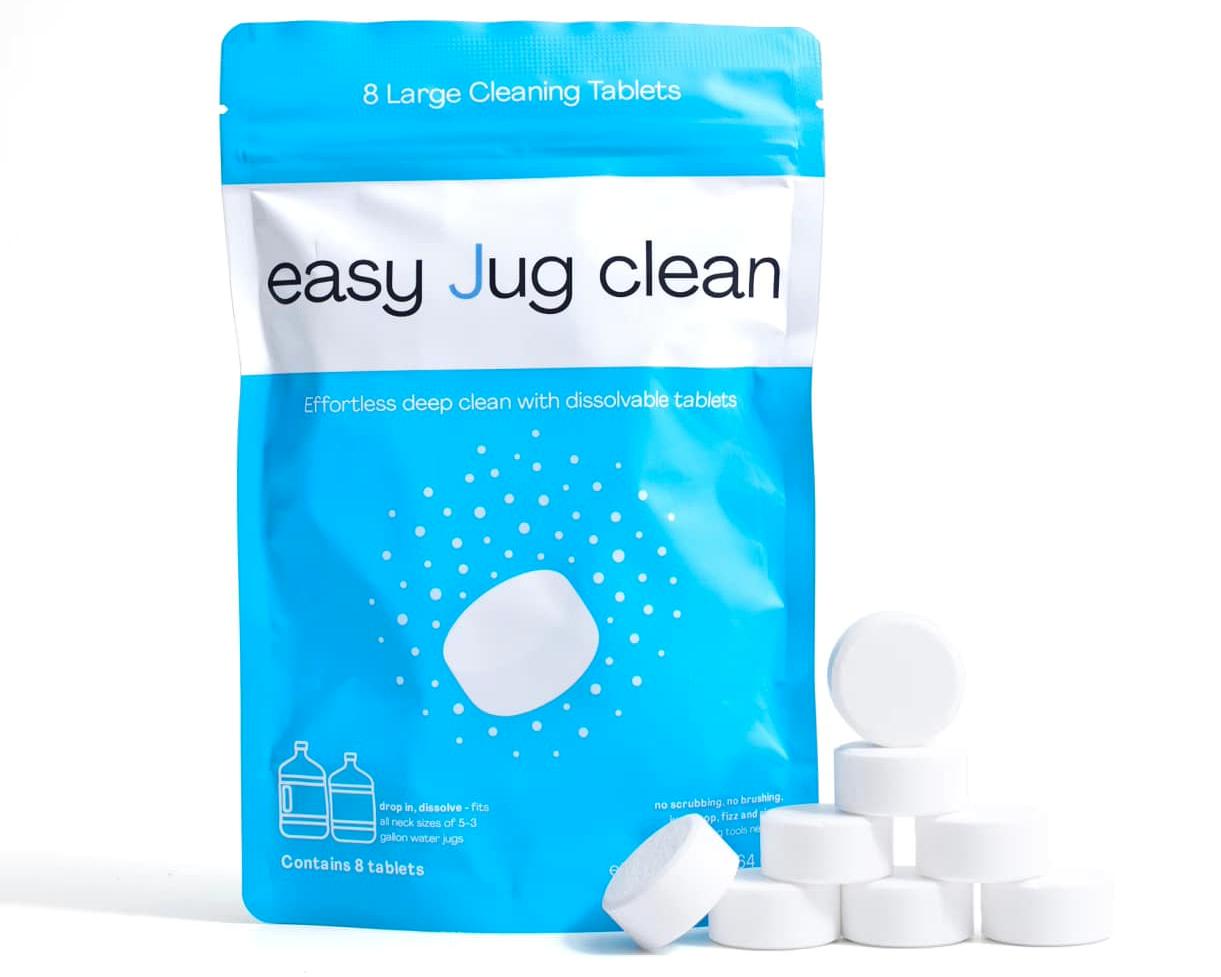
Easy Jug Clean uses active oxygen chemistry to destroy biofilm at the cellular level and eliminate pathogenic bacteria. Two tablets eliminate 99.9% of bacteria, leaving zero risk from contaminated water. This is food-grade sanitization that protects your household's health.
What Households Should Do Right Now
The answer is simple and actionable:
- Clean your current jug immediately with Easy Jug Clean tablets if you haven't in the past week
- Clean every jug change going forward (weekly to biweekly for most households)
- Wipe your spigot weekly to prevent visible biofilm buildup
- Deep clean your dispenser monthly to address internal contamination
- If anyone in your household is immunocompromised, elderly, or very young, increase cleaning frequency to every jug change without exception
These steps eliminate the pathogenic risk almost entirely. Contaminated water causes illness only when bacteria reach high concentrations. Regular cleaning keeps bacterial levels far below infection thresholds.
Frequently Asked Questions
Q: If water dispensers are so dangerous, why hasn't there been a massive outbreak?
There have been outbreaks—they're documented in public health records. But widespread outbreaks don't happen because most people don't drink from heavily contaminated systems. Those at risk are people with old, uncleaned dispensers. The risk is real but distributed across millions of individuals rather than concentrated in a single location.
Q: My family has never gotten sick from our water jug, so is it really risky?
Not getting sick doesn't mean you're safe; it often means your family's immune systems are strong enough to fight the infection if it occurs. But if someone immunocompromised lives in your home, or if someone develops unexpected gastrointestinal illness, a contaminated jug could be responsible. Regular cleaning eliminates the risk entirely.
Q: Do I need to boil water from my dispenser to make it safe?
Boiling eliminates some bacteria but not all toxins. Heat-resistant spores from certain bacteria survive boiling. Additionally, boiling doesn't eliminate biofilm or the protective matrix. Proper sanitization (with Easy Jug Clean tablets) is far more effective than boiling.
Q: Is the risk the same for tap water filtered through a pitcher?
No. Pitcher filters are designed for taste and sediment, not pathogenic bacteria. A contaminated water cooler is actually higher-risk than tap water because the jug's internal environment allows bacteria to multiply unchecked. Tap water is treated at the municipal level; your jug is not.


 Order now — get it by